To understand how the 427 Cobra Super Coupe fits into Cobra history it is necessary to place it in context. It didn’t just suddenly materialize one day in a puff of smoke. In 1963, the Cobra was reaching its stride as a race car. But Shelby always planned one step ahead. While the Cobra team was working to make the cars run reliably in this country against Corvettes, Jaguars and the odd Ferrari, Shelby was thinking about invading Europe the following year. Ferrari was the top dog over there and knocking him off the hill would establish the upstart Cobra as a world-class sports car.
Shelby American surreptitiously entered two cars at LeMans in 1963. One was entered under the AC banner and the other by one of Shelby’s first dealers, well-known SCCA racer Ed Hugas of Pittsburgh. Shelby wanted to assess the track and the competition without risking the factory team’s reputation the first time out. Both Cobra roadsters were fitted with special aluminum hardtops which improved the aerodynamics, but only marginally. The Hugas entry retired after 10 hours with a blown engine but the AC entry finished 3rd in class and 7th overall—behind six Ferraris. A credible finish for a newcomer, but Shelby had his work cut out for him.
As soon as he got back from France, Shelby asked Peter Brock if he could come up with a new body for the Cobra that would give it more top speed. Brock was itching to design a complete car and he jumped at the chance. FIA rules allowed non-stock bodies on GT cars as long as they were unchanged mechanically. Brock’s design became the Cobra Daytona Coupe. From initial idea to finished car, Brock’s coupe design took only seven months. The deadline was Daytona, in February of 1964, so everyone in the shop referred to the car as the “Daytona Cobra” or “Daytona Coupe.”
Following Daytona and Sebring in this country, the coupe was shipped to Europe to continue racing in FIA events. More coupes were ordered. They were built in Italy by Carrozzeria Gran Sport, a coachbuilder with experience in race car fabrication. As each subsequent coupe was finished it was immediately pressed into service. Carroll Shelby, of course, was already thinking about the following year—1965. Work was progressing on a new model Cobra to replace the existing 289 roadsters. It would be powered by Ford’s 427 NASCAR engine. However, by April of 1965 when the FIA inspection team arrived at Shelby American, the required 100 examples had not been built so certification of the 427 Cobra was withheld. Shelby would have to make due with “last year’s” 289-powered Daytona Coupes and FIA roadsters.
While the new 427 Cobra was being built, Shelby had realized that, like the 289 roadsters, he would need a 427 coupe to compete at LeMans. The long straight mandated a slippery coupe. As soon as the small block Coupe had been built, he asked Brock to come up with a coupe body based on the new 427 Cobra chassis. With the deadline a little farther away, a larger budget and some status provided by the success of the 289 Coupe, he set to work. Full-scale blueprints were made and a quarter-scale clay model was constructed. When the design was finalized the plan was to bring everything to Carrozzeria in Italy and have a chassis shipped from AC Cars. The car would be completed in Modena, Italy and delivered to LeMans in time for the race in June.
During the time all this was taking place, Ford was having terrible racing luck with their GT40s. They decided to move the entire project to Shelby American where it became Priority One. As the tempo increased, a steady stream of Ford engineers shuttled in and out of Shelby American’s Los Angeles airport facility. Shelby realized that Ford wanted their own cars to win the FIA endurance races, and they were willing to commit as much money as that would take. He could not turn his back on something like that. A second-generation Ford GT, powered by a 427 engine, was also in the works in Detroit at Kar Kraft. Engines were being built at Holman and Moody. Shelby also wanted the Cobras to be there in case the Ford GTs faltered. He would win either way. The only way he could lose was if his Cobras beat (and thereby eclipsed) Ford’s GTs. He clearly saw the tightrope on which he would have to walk.
Shelby American’s top fabricators and mechanics were shifted over to the Ford GTs while the Cobras dropped a notch on the food chain. Amidst this, the 427 Coupe project continued. Brock was unaware of the behind-the-scenes politics which were, as they say, above his pay grade.
No minimum number of cars were required for the FIA’s prototype class, but Ford wanted the GT40s to qualify for the GT class so 100 would have to be made to meet the minimum (for 1966 this number would be changed to 50). The Ford GTs were built in England and the interiors were subcontracted to Radford Coach builders. Radford had an excellent reputation and they even described themselves as “Coachbuilders to The Queen” on their letterhead and business cards. Peyton Cramer, a Ford lawyer and accountant who was dispatched from Dearborn to serve as a liaison between Ford and Shelby, made a trip to London about the time Brock was expecting to turn the 427 Coupe project over to Carrozzeria. In fact, Cramer was scheduled to deliver the 427 Coupe blueprints to Carrozzeria after his business in London. His purpose was to tell Radford that the prices they were charging to complete Ford GT interiors were too high and unless something was done, the contract would to be given to someone else. In the give-and-take of negotiations, Radford cut their price in half and for good measure agreed to build the 427 Coupe for nothing. It was an offer Cramer could not refuse. He left the blueprints with them and called AC Cars, Ltd, and arranged to have a bare 427 Cobra chassis shipped to Radford. That chassis turned out to be CSX3027.
As this was transpiring, Brock was concentrating all of his time on the new GT350 project. When Cramer returned, Brock asked him how things had gone in Italy. Cramer told him that there had been a change in plans and the Coupe would be built in England by Radford. The more questions Brock asked, the more concerned he became. Although Radford had an excellent reputation as a coachbuilder, they had never built a race car. That meant little to Cramer. His background was in accounting so not much trumped saving money.
Cramer reminded Brock that this had been a Ford decision (he was now wearing his Ford hat) and since Brock was, in effect, being paid by Ford, the decision was out of his hands. And besides, the Cobras had a much lower priority than the Ford GTs; they were no longer as important as they had been six months earlier. Not satisfied with what he was hearing from Cramer, Brock went above him, to Shelby. Shelby listened to Brock make his case but was unmoved. He saw the big picture very clearly whereas Brock saw only the part he was involved with. It had become Ford’s show. The Cobras were still there because they were Shelby’s cars and as they were not competing in the same class as the Ford GTs, they provided good backup in case something happened to Ford’s cars. But it would not help Shelby if his cars outshone the GT40s in heads-up racing.
TYPE 65
Peter Brock calls it the “Type 65” and that should be all there is to it. But it’s not. Brock stepped out of the picture in 1965 when the car, barely three-quarters complete, was shipped from Radford Coachbuilders in London to Shelby American in Los Angeles. It was pushed into a corner and never touched again. Brock left Shelby American shortly thereafter and the car was eventually auctioned off when Shelby American closed its doors in 1970.
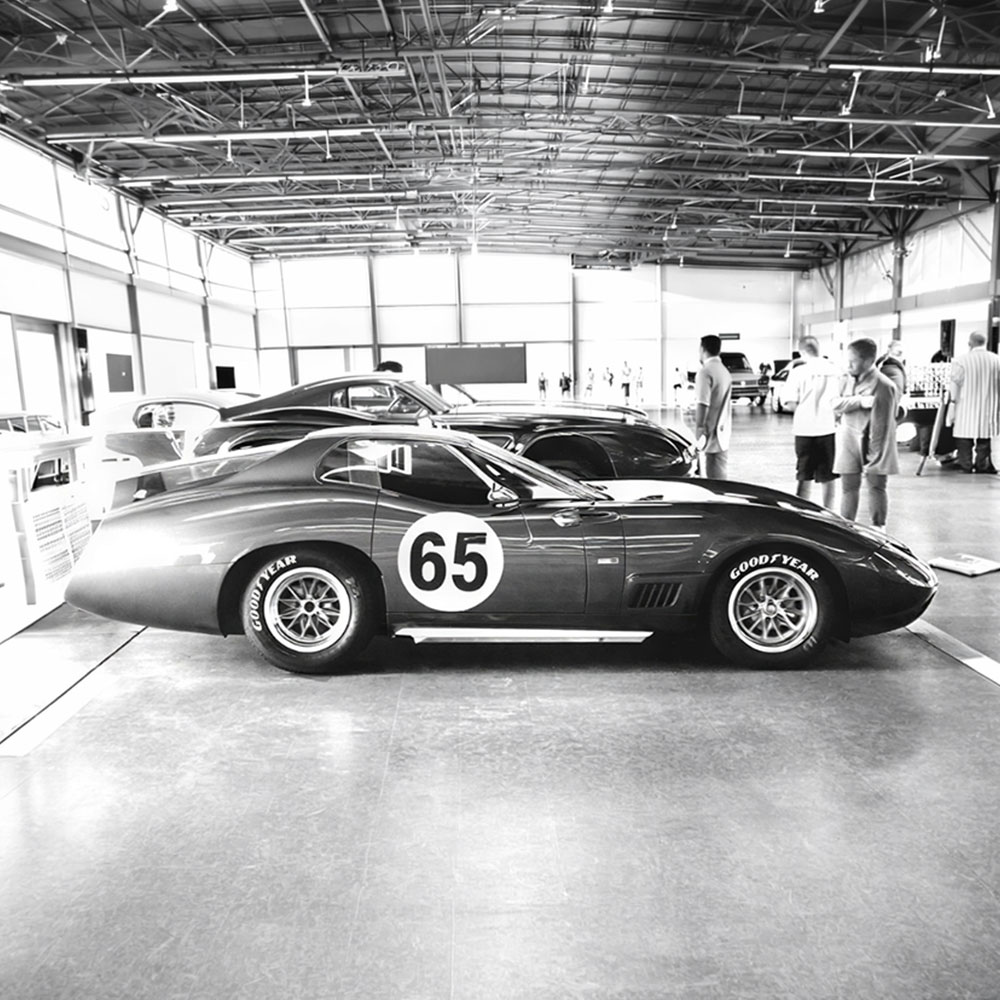
Since it was a 427 Cobra, and it was the offspring of the Daytona Coupe, it’s easy to see why it was called the “427 Daytona Coupe,” or just the “427 Coupe.” Although the car was never finished, there was no question that it represented the next level for Cobra Daytona Coupes; with its 427 engine it was a “super” coupe, so to speak. That name also stuck to the car.
After passing through a handful of owners over the next 17 years (and having its value hoisted up by 427 Cobra price escalation during that period of time), it finally landed in the hands of someone who saw it for the valuable piece of unfinished history that it was. It was brought to the high-end restoration shop of Mike Dopudja in Englewood, CO. Peter Brock was called in to supply the details of exactly how he had intended to finish the car. One of the things Brock did was provide rectangular blue and white cloisonne badge for the nose that said “PETER BROCK.” The car was completed and began its second life, that of a vintage racer, in 1981 —some 16 years after the 1965 LeMans 24 Hours, the race it had originally been intended for.
Shelby was a gambler, and if he excelled in anything it was keeping the odds in his favor. The 427 GT40s were being built at Ford’s in-house race shop, Kar Kraft. He did not actually have a contract to race them yet, so he was hedging his bet by keeping the 427 Coupe project alive. But as the Ford GT project began to tip the scale of importance, the Cobra coupe lost it in direct proportion.
Weeks became months and little news reached Brock about the coupe’s progress. He pressed Cramer about going to England to check on the car’s progress but got no response. Phil Remington had to go to AC Cars to check on some 427 Cobra details and Shelby asked him to stop by Radford and check on the coupe’s progress. A few days later he called Shelby and told him that things did not look good and he should come over and see for himself. Shelby told Brock to pack a bag and they were on their way to England the next day.
After landing at the airport, Shelby and Brock took a cab to Radford’s shop in Hammersmith. Brock described it as being in a dreary section of London and the fabrication area where the coupe was being built was something out of a Charles Dickens novel: cracked floors, low light and dust everywhere, all accompanied by an overpowering musty smell. Shelby stayed upstairs exchanging formalities with the principals at Radford while Brock was taken downstairs and shown the car. What he saw shocked him. Nothing looked right: it was larger than his plans and totally out of proportion. Since the drawings had not specified a bill of materials (race fabricators would know instinctively what was required) the “car” sitting before Brock was made from thick steel plate and iron pipe. He could not understand how it could have gotten this far along and be so wrong. He was immediately depressed because he realized there was a time window for finishing this car and it could close before it was completed. The 427 Coupe would be worthless after LeMans and who knew what 1967 would hold for last year’s race car?
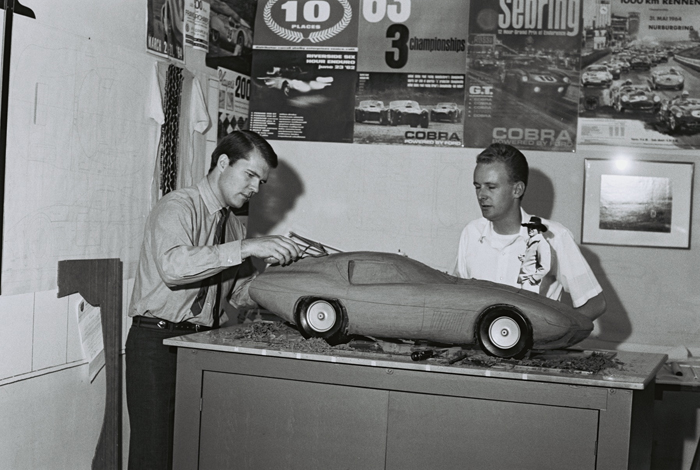
Peter Brock came to Shelby after working for GM’s styling department. At 19 he was the youngest stylist they had ever hired. He learned a lot at GM and saw how things were done. When he set out to design the 427 Coupe, he had no problem creating a quarter-scale clay model. He is pictured here with his assistant, Skeet Kerr [right].
Brock had been right—Radford had never built a race car. They completed a mahogany buck that was a work of art. It was perfect. But the actual car was nothing like it. Brock started measuring the car and found it was a full 8˝ too wide. He asked for Shelby to be brought downstairs. When Shelby saw the car he remained emotionless, but Brock recognized that he was upset. Brock showed him the buck in the next room and tried to explain to Shelby some of the problems. They were too numerous to list.
Shelby immediately realized the vise he was in. This was his car but by virtue of Cramer’s negotiation as a representative of Ford, he had no control over it. He and Brock were now Ford’s representatives, not Shelby American’s. There was nothing to be gained by pointing fingers of blame, and time was running out. Cramer was in California and could do nothing. When Shelby told the people at Radford that he was totally dissatisfied and wanted to pull out of the project, they saw their lucrative Ford GT contract evaporating.
Radford’s representatives acknowledged that the project was a “complete mess” and suggested that since the car’s designer was now there, why didn’t he remain to oversee the car’s completion? They did not want to lose their GT40 contract. Shelby looked at Brock who said nothing. Then Brock, who was emotionally sapped due to the combination of fatigue from the trip and seeing a disaster he had not expected, told Shelby he needed time to think. He checked into his hotel and went to sleep. He awoke a few hours later, due to jet lag, and tossed the problem around in his head.
Brock met Shelby for breakfast and they discussed the car. Brock wanted to go back to the original plan: have a bare chassis sent from AC Cars to Carrozzeria where a new car would be built from scratch. Brock was convinced it could still be finished in time for the LeMans test session in May. All they needed from Radford was the buck. They returned to Radford where everyone they spoke with was apologetic. Excuse after excuse was offered and finally they promised to hire a brand new crew which would work double shifts under Brock’s direct supervision to complete the car. They were worried about losing the GT40 contract and, at that point, would have likely promised Shelby just about anything.
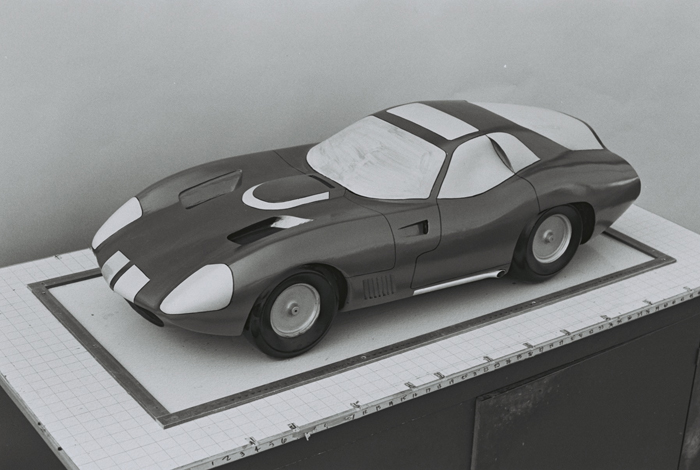
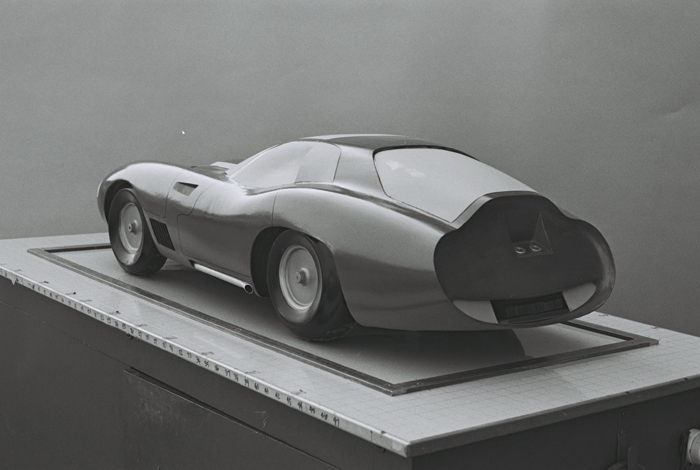
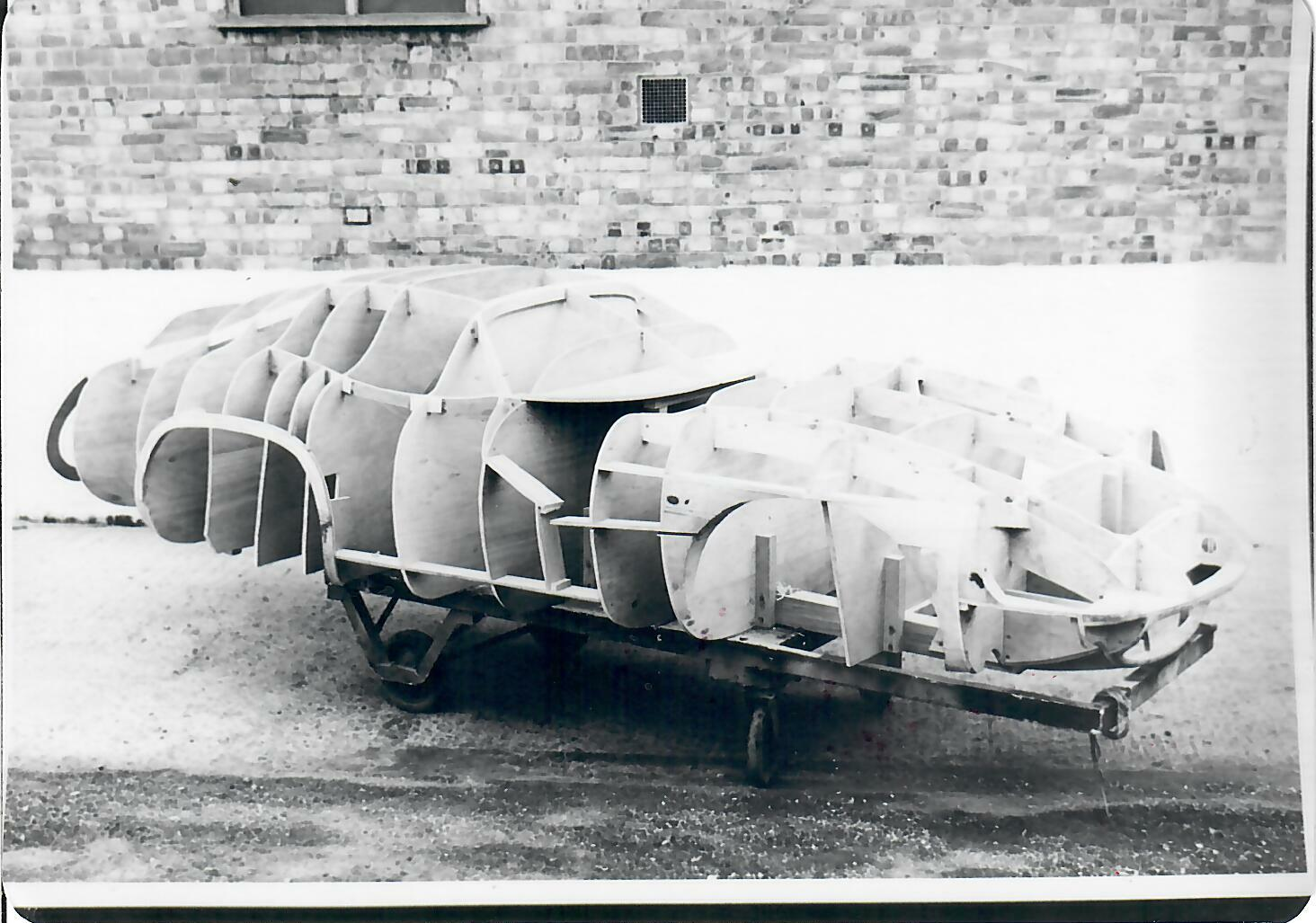
The dimensions of Radford’s body buck were taken from Brock’s blueprints and the lines were perfect. The car turned out to be another story. When word came to bring the car back to Los Angeles, Brock posed with the fabricators before leaving.
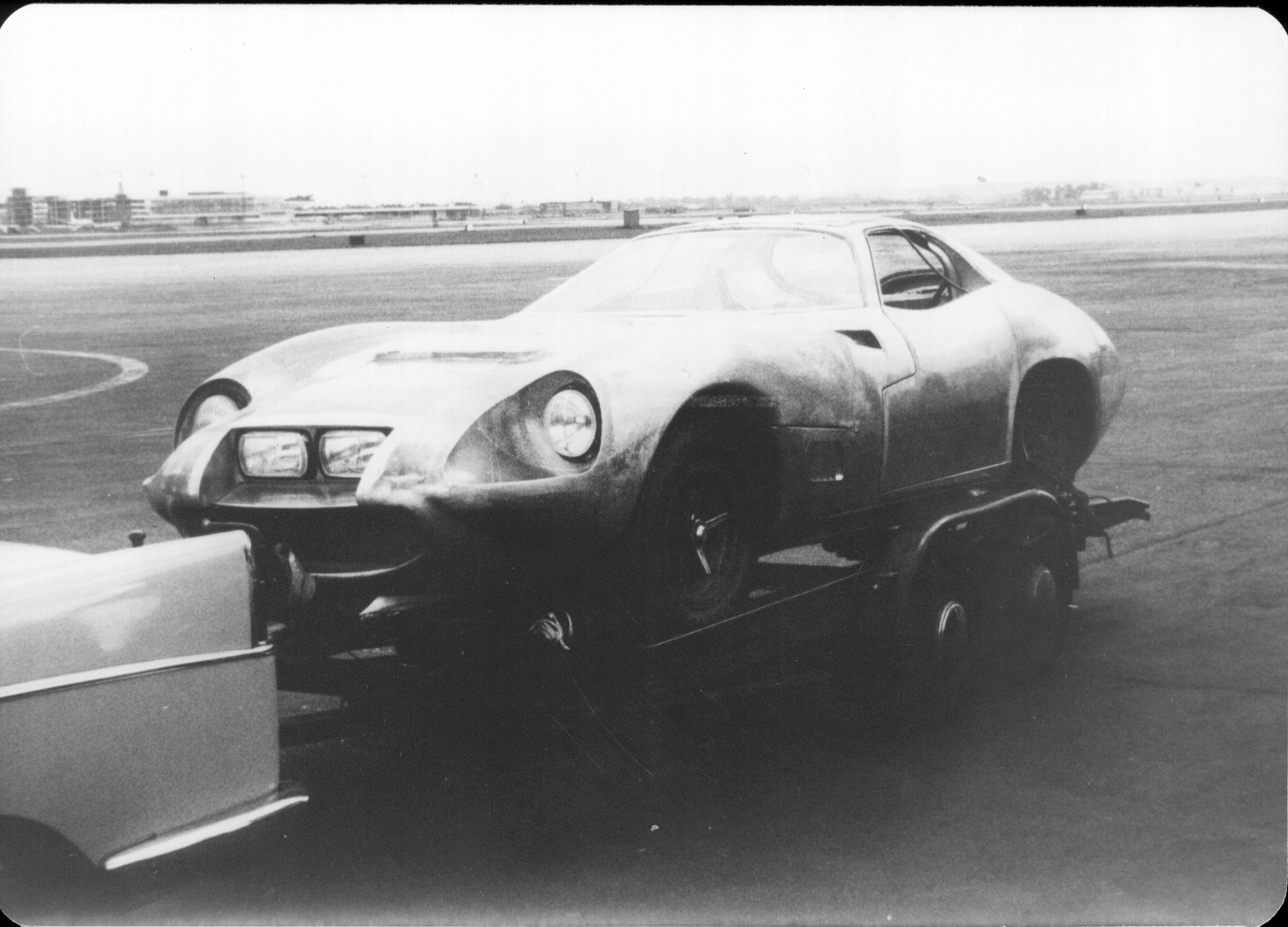
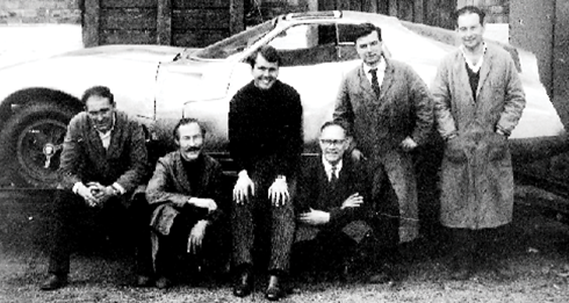
There was one problem which would keep the project at Radford. Italy was, at that very moment, experiencing labor unrest in the form of a “dock strike” which closed the airports and truck traffic as well. There was no way a 427 chassis and Radford’s body buck could be shipped from England to Italy and nobody knew how long the job action would last. The window was closing. Shelby was tired and irritated. He did not want to deal with the problem so he told Brock to stay there and finish the car. Radford promised to give him whatever he needed.
The existing car was scrapped and Brock had a new chassis delivered from AC Cars, Ltd. This chassis was CSX3054. The car was started again, from scratch, and the problems began immediately. Brock learned that the round and square steel tubing he needed was not immediately available in England. Orders took three to six weeks to be filled. Essentially the supplier waited until enough requests were received before putting through the order to the manufacturer. He also learned that while the craftsman who had made the buck had been Radford employees, they hired, right off the street, the “fabricators” to build the car and put them to work with no supervision. A new work crew was hired and Brock made sure they had some experience.
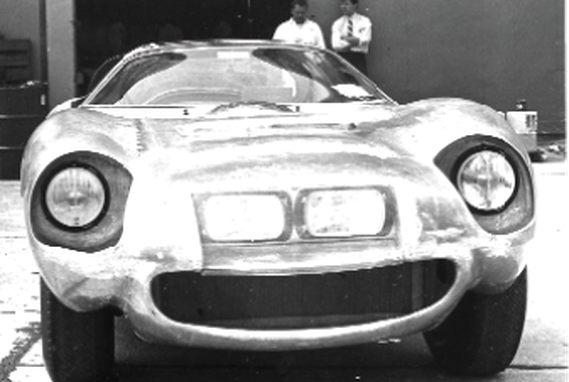
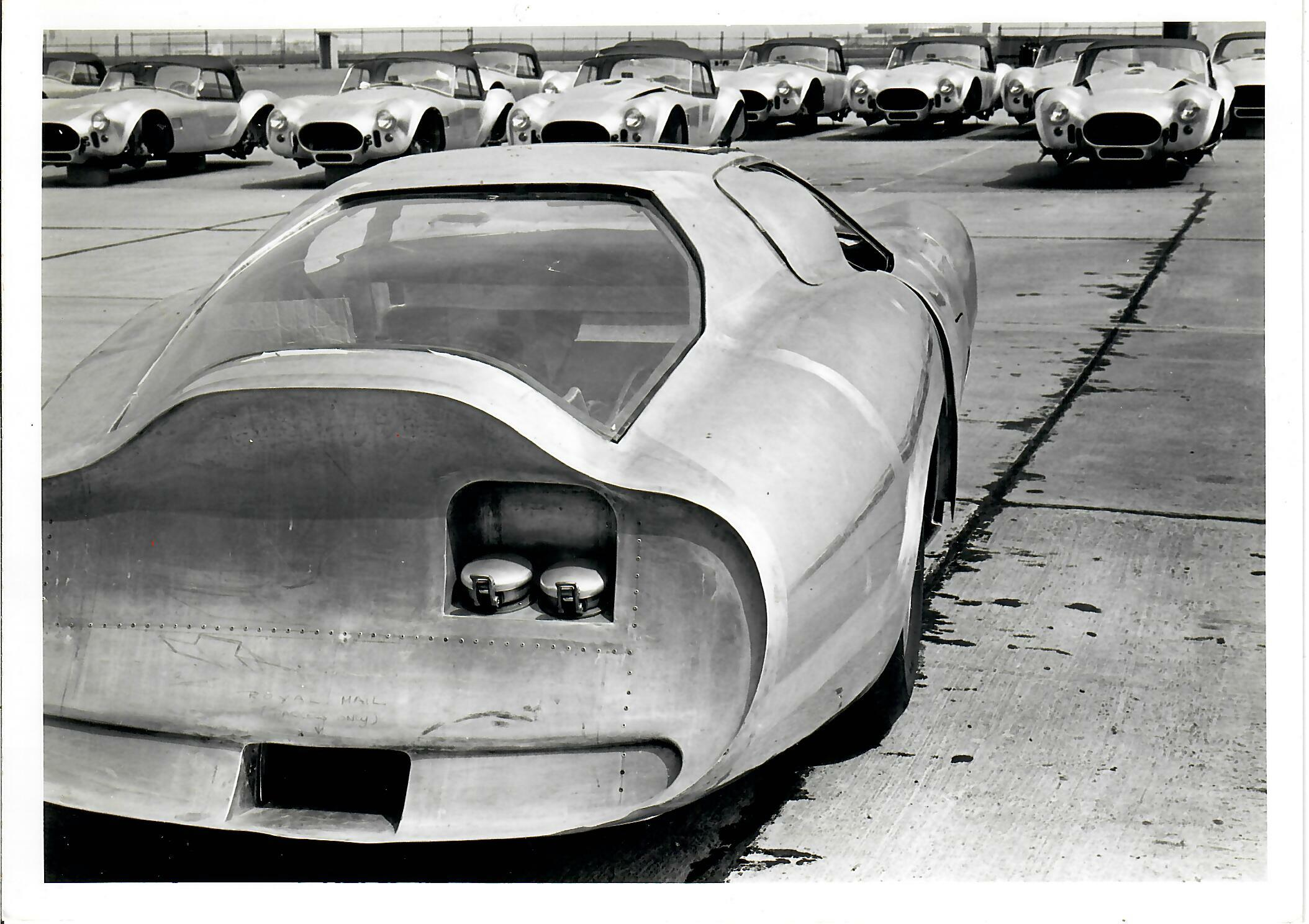
Once the Coupe arrived at Shelby American it was parked and all progress stopped because there was no way it could be finished for LeMans. Unsold 427 Cobras competition models are parked in the background.
Radford’s “fabricators” were able to make anything— as long as they had a blueprint of the part in front of them. Brock had been spoiled by the craftsmen in California as well as the Italians at Carrozzeria who could build parts almost by instinct. They didn’t need dimensions or prints. Progress was snail-slow and even though the new crew worked hard, the clock ran out. Brock received a call from Shelby telling to load up what he had and bring it back to Los Angeles. Brock was relieved this nightmare was finally over.
The plan had been to build the basic car at Radford’s but the engine, running gear, electrics, plumbing and detail work would be done back at Shelby American. When Brock returned to Los Angeles he was stunned to see the changes that had taken place in the short time he had been away. His office had been taken over by Ford engineers working on the GT40 program. In fact, there were Ford people everywhere.
The 427 Cobra Coupe was so low on the priority list it was practically invisible. All efforts were being directed toward the GT40s. The 289 FIA roadsters and Daytona Coupes received only the usual pre-race prep. And after Sebring, when they were to be shipped overseas, they would be raced under the supervision of Alan Mann and his crew. Shelby American would concentrate on the GT40s. With the 427 Cobras failing the FIA’s homologation inspection, if the 427 Coupe had been finished it would have been entered as a prototype—the same class as the Ford GTs. It didn’t take a rocket scientist to see what would happen if the Fords faltered and the 427 Cobra Coupe succeeded.
The unfinished car was pushed into a corner and was basically forgotten. Brock was disappointed and disillusioned with the way Shelby American was changing as it was overwhelmed by Ford personnel. It was no longer the same, small company of hot rodders and race fabricators it had been during those early days in Venice. As Ford moved in, Brock observed, the company had lost its soul. He decided this would be a good time for him to move on, and Shelby understood.
The 427 Coupe was shoved into a corner and nobody went near it. A Shelby American invoice dated 7/26/67 indicated the car was purchased by Lee Troxel of Playa Del Rey, CA for $3,000 but it was never picked up and he may have, in fact, cancelled the purchase. The car remained exactly as it had come from Radford until Shelby American (by then, The Shelby Racing Company) closed its doors in 1970. This coincided with Henry Ford II’s decision to pull his company out of racing. The Coupe was auctioned off along with everything else that remained of the once-proud company. Where it went has never been determined but it was found in 1973 by Mike Shoen of Phoenix, AZ, a Cobra collector and historian. He described it as a “shell” when he got it and it still had the parts listed on the original Troxel invoice: a complete steering column, two bucket seats and seven mag wheels.
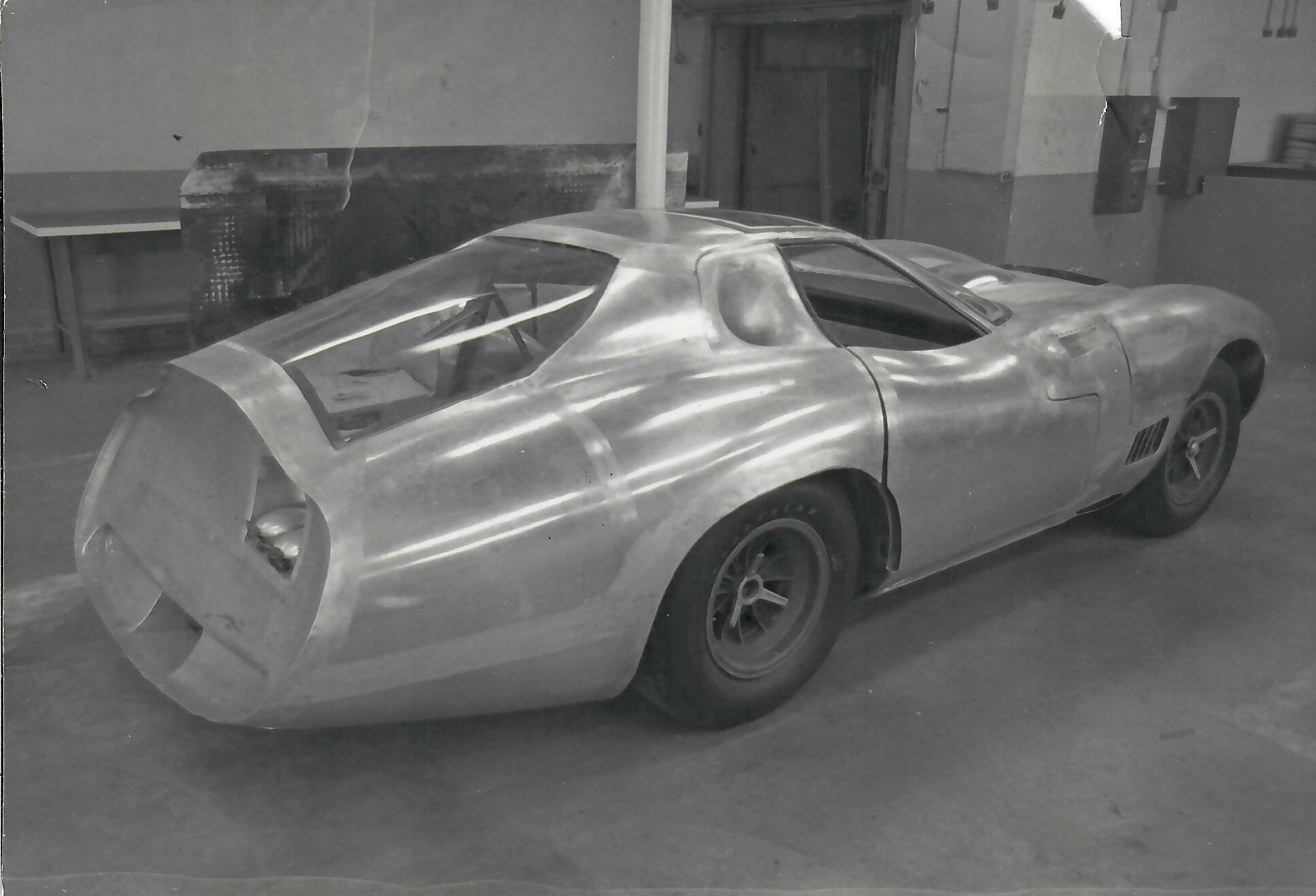
The Super Coupe at Shelby American, right after its arrival.
Shoen immediately sold the car to Don Spillaine of Pacheco, CA, who operated Cobra Performance, a shop which
specialized in Cobra repairs and selling Cobra parts (most of which were purchased when Shelby American was
liquidated in 1970). In the summer of 1974, a race car collector in Colorado named Bob Sutherland realized
the
car was a “one-of-one” competition Cobra and purchased the car but could not find the time or energy to
complete
it.
He sold it to his brother Craig, who was living in Kansas City, MO in 1979. Vintage racing was just beginning to take off at that time, so Sutherland enlisted the services of noted race car restorer Mike Dopudja of Englewood, CO. They contacted Peter Brock and succeeded in obtaining his guidance and assistance. He provided his input on how the car would have been finished (in that it never progressed any further after arriving at Shelby American).
CSX3054 goes together for the first time at Mike Dopudja’s shop in Englewood, CO. Peter Brock was instrumental in providing the specific details of how he had intended to complete the car in 1965 had things taken a different turn of events.
CSX3054 was painted by Bill Murray of Englewood, CO and tested for the first time in 1981. Dopudja had built a full-tilt 427 race engine for the car, topped by a set of 58mm IDA Weber carburetors (one of about only a dozen sets in existence). Brock had counseled that the finished car would have run a Holley 4V just like the Ford GT40 MK IIs but both Sutherland and Dopudja were seduced by the Webers. They discovered what Brock had predicted: the car’s aerodynamics worked against the carburetors’ eight air horns sticking up through the hood. Air flow sucked the fuel out at high speeds and covering the windshield with raw fuel at moderate speeds.
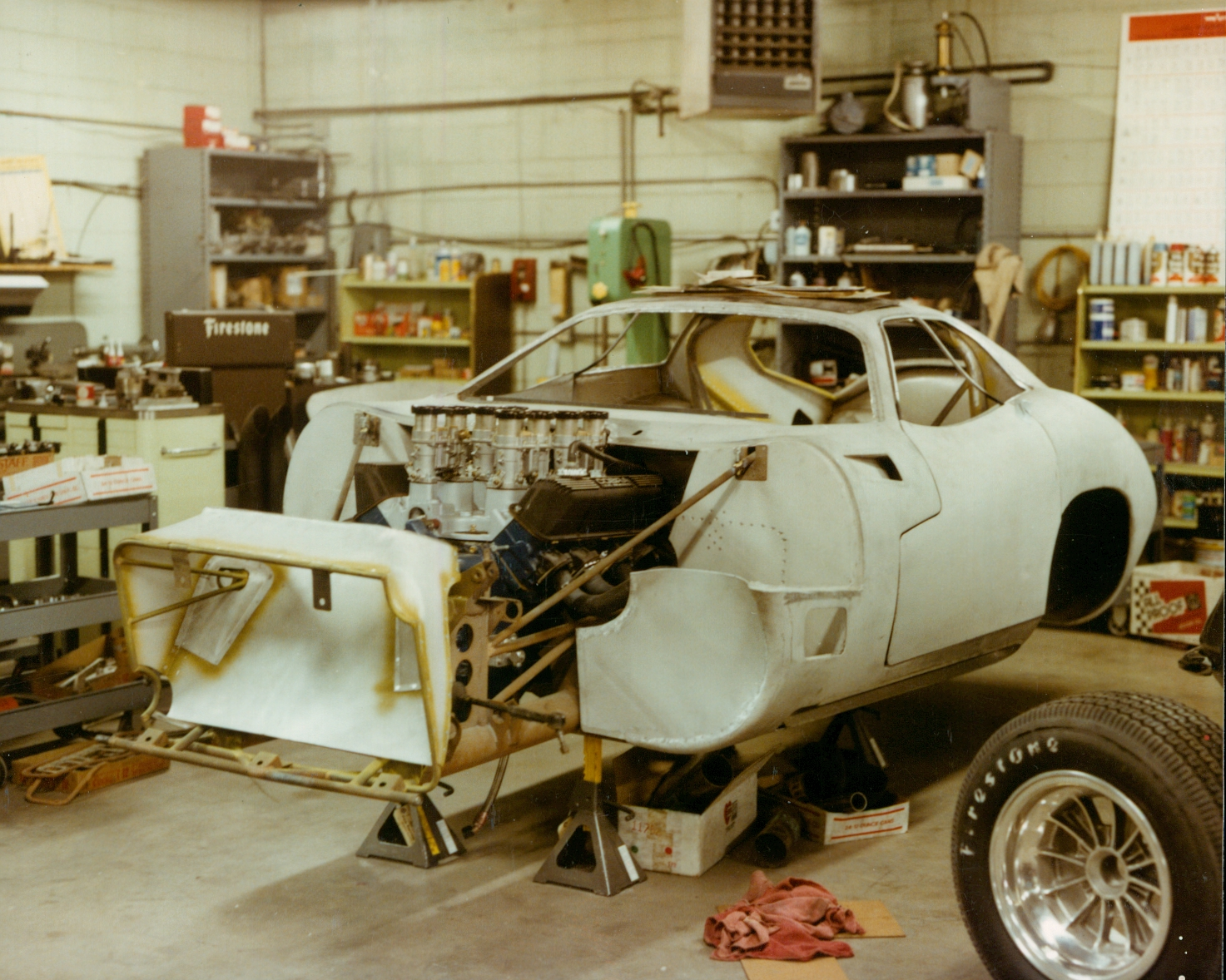
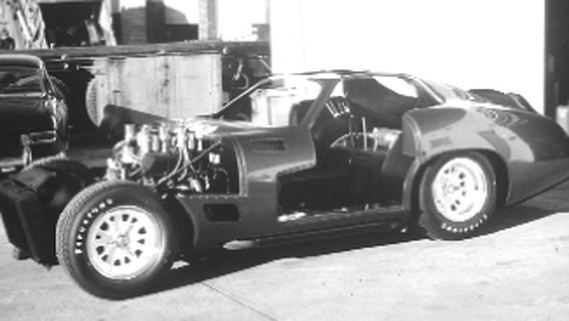
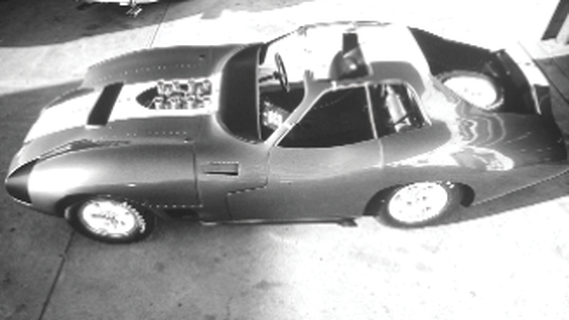
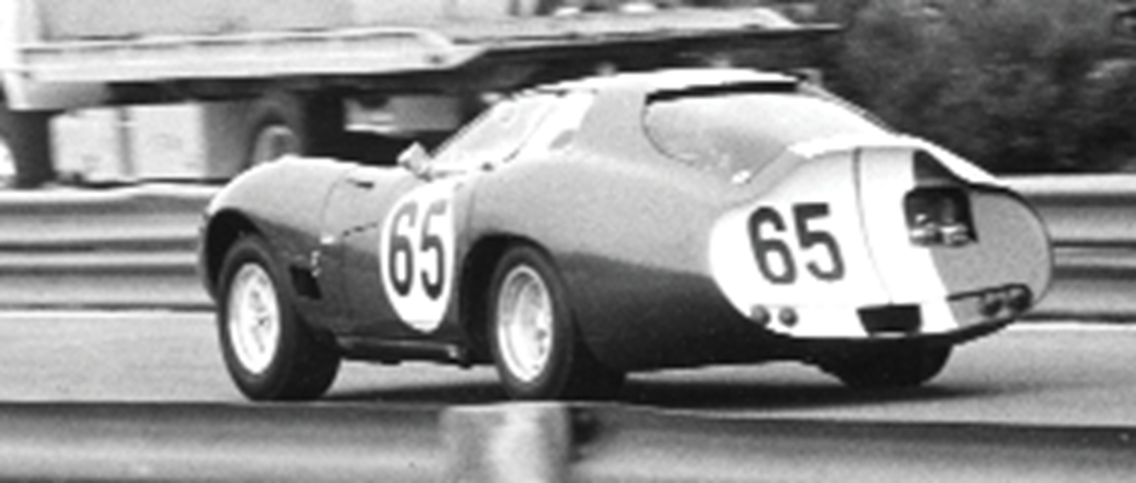
CSX3054 at the Monterey Historics, August, 1981.
Sutherland had been campaigning a 289 Cobra roadster on the vintage circuit and was probably unprepared for the speed and power of the 427. He brought the car out at the Monterey Historics in August, 1981, where it was driven by Bob Hindson. But it still had plenty of teething problems.
Sutherland wisely decided to enlist the aid of someone with 427 Cobra experience to help sort the car out. Dick Smith of Fresno, CA, the 1967 SCCA National Champion in his own Cobra, CSX3035 joined the project. The suspension required a lot of sorting and testing, and the ride height was wrong. To make matters worse, it was impossible to get the correct size race tires. The car was raced a few more times but Sutherland never really felt comfortable in the car. In the summer of 1987 it was purchased by George Stauffer of Blue Mounds, WI. Stauffer was a Cobra and GT40 collector, dealer and vintage racer and he made good use of the car, after additional massaging and now with a 4V Holley replacing the Webers.
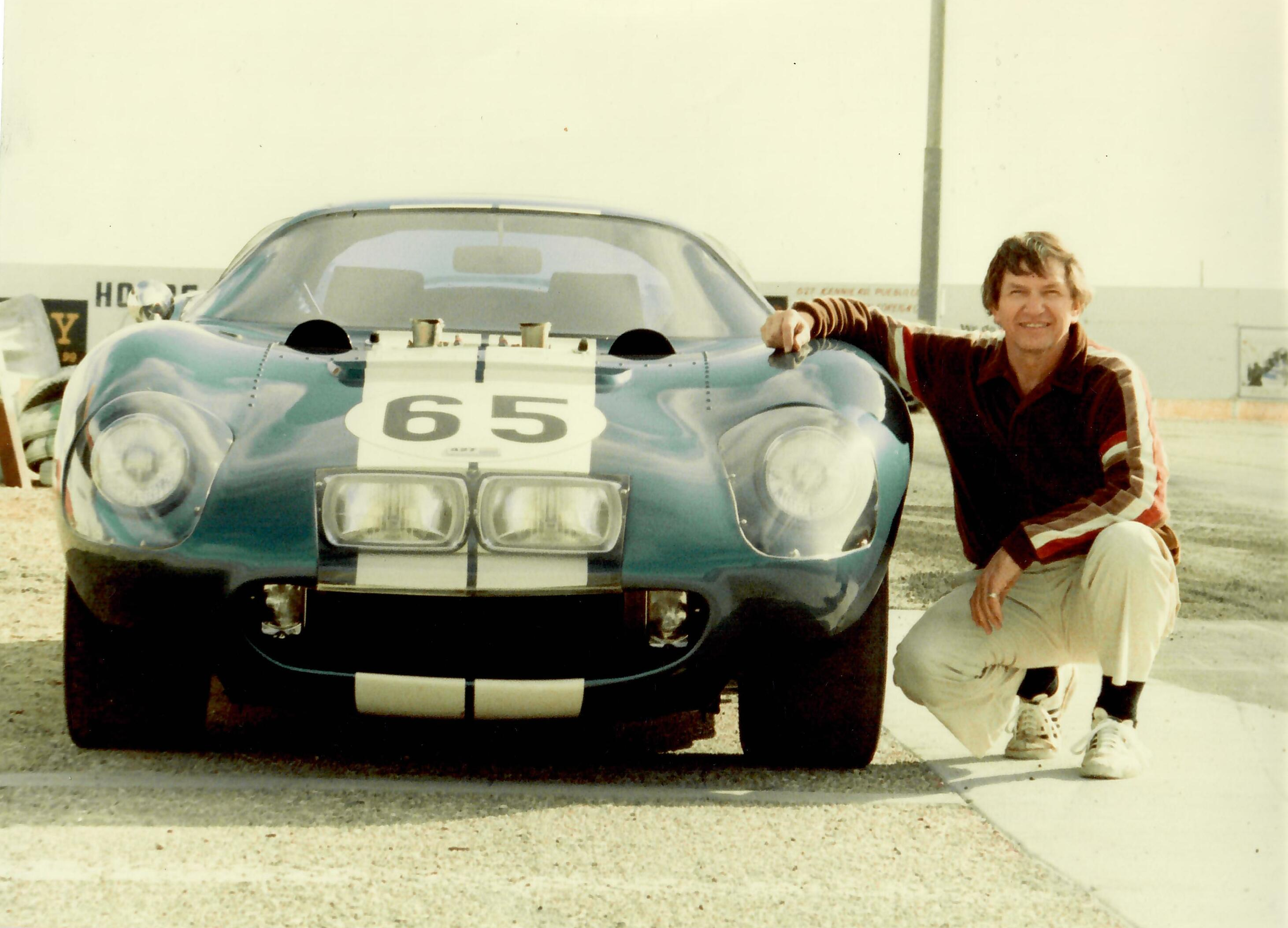
Dick Smith at one of the test sessions in Colorado, circa 1982.
The Super Coupe was purchased by Ken Quintenz of Columbus, OH in 1992. It was one of several competition Cobras and GT40s he campaigned on the vintage race circuit. Quintenz also made a point of bringing CSX3054 to as many SAAC conventions as possible. By the time he sold the car to Drew Alcazar (Phoenix, AZ) in the summer of 2005, the rising tide of Cobra values had brought this boat up into the $1 million-plus neighborhood. Alcazar ran it through his Russo-Steele Auction at Monterey in August of 2005 where it was purchased (the reported price was $1.4M) by Don Wallace in Florida. He has a large collection of supercars and CSX3054 is a worthy addition.
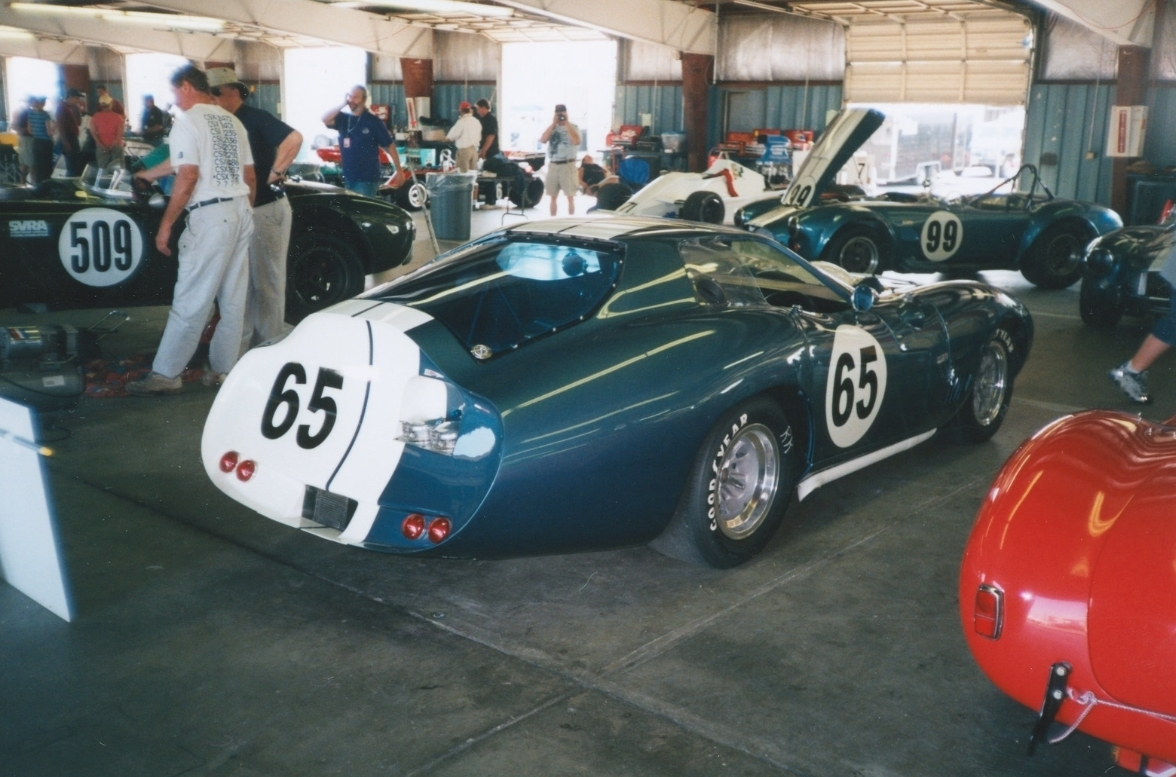
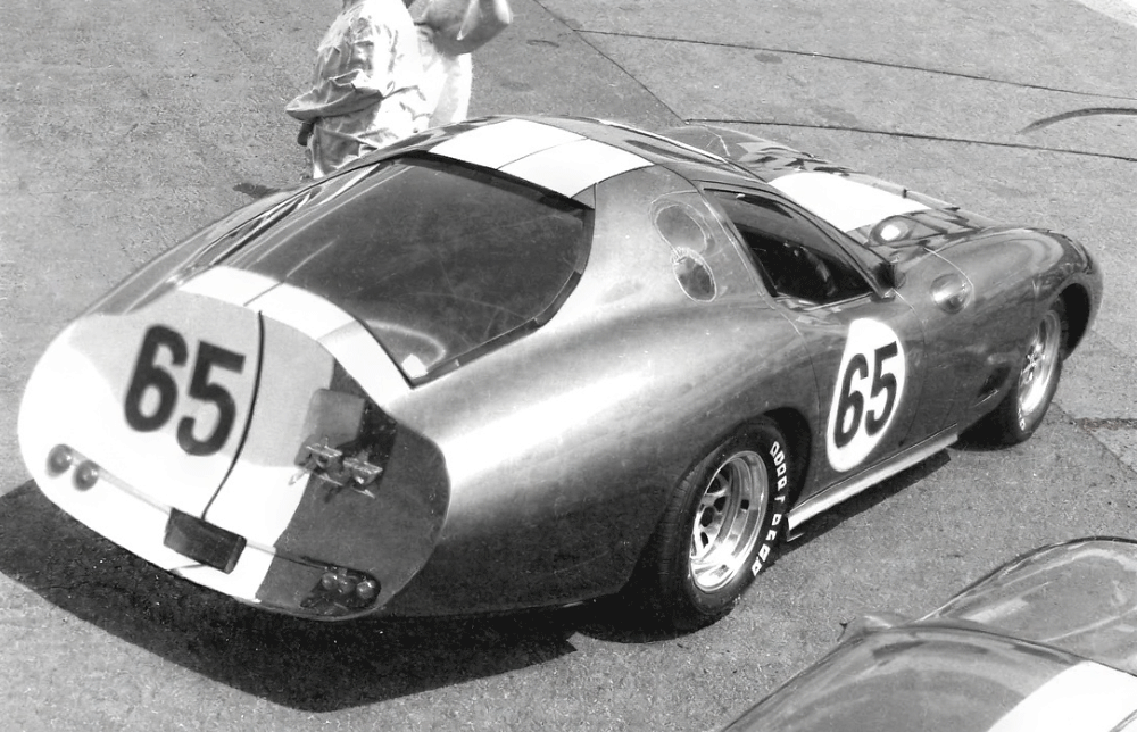
CSX3054 at SAAC-18 at Watkins Glen, July, 1993.