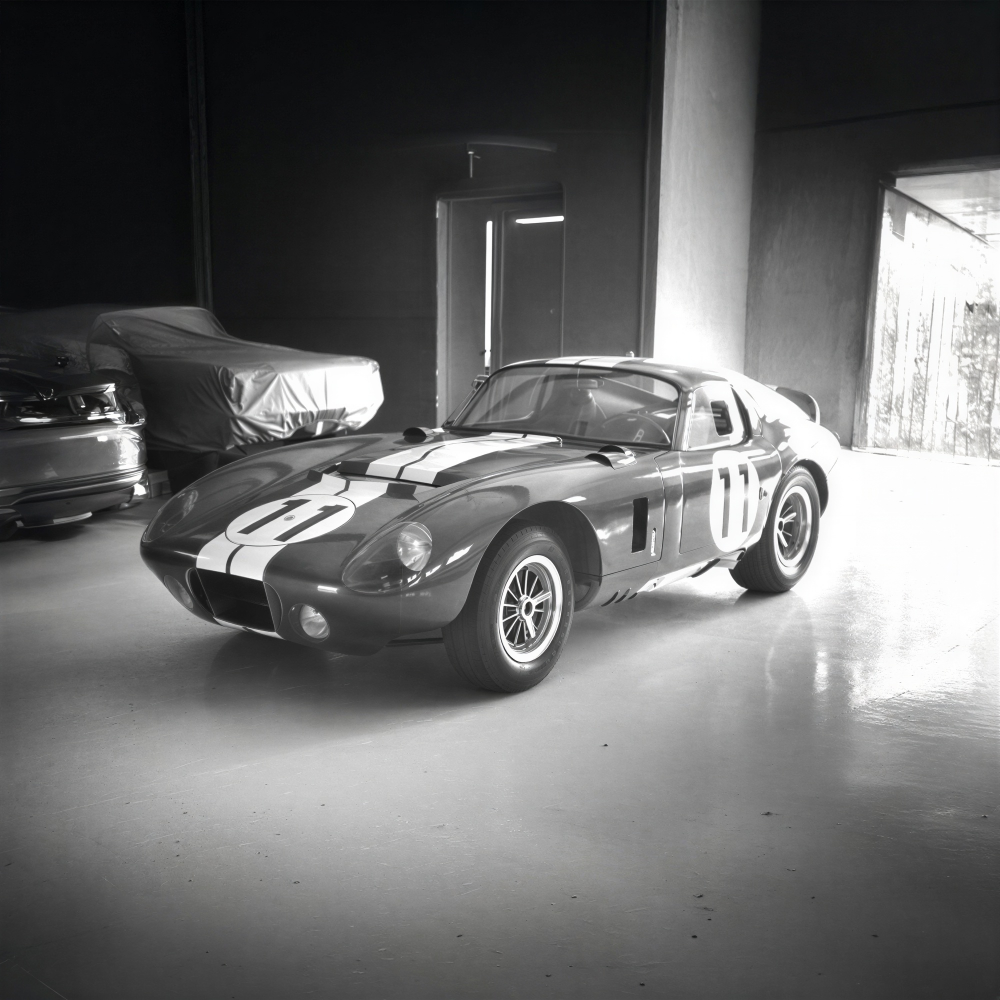
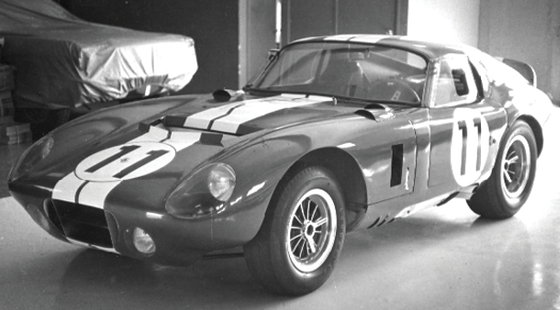
The most famous of all Cobras? That’s easy—the Cobra Daytona Coupe. And while those three words roll effortlessly off the tongue of any Cobra enthusiast, a little known fact is that the car was never formally given that name until the first one was almost finished. It was a coupe configuration, seemingly alone in a world of Cobra roadsters, so the word “Coupe” became its informal name. When that first car was being constructed, just saying “Coupe” left no question which car was being referred to. It wasn’t until later that “Daytona” was added.
The new coupe was targeted to be unveiled at the Daytona 12-Hour event, the first one on the Federation Internationale d’Automobile’s 1964 calendar. In actual fact, the Cobra Daytona Coupe was designed for the European race circuits which placed a high premium on top speed. Race tracks in the United States, like Sebring or Watkins Glen, were little more than a series of straights connected by sharp corners. Cars had to accelerate quickly, brake and negotiate a turn, and then accelerate again. Big, V-8 powered sports cars had to be man-handled—tossed through the corners using lots of horsepower and equal amounts of oversteer.
European circuits like LeMans, Spa and Reims were much longer and required cars to maintain high speeds for greater periods of time. Rather than violent braking for slow corners, drivers had to finesse their cars through kinks and curves at high speeds.
The Cobra roadsters were perfect for the shorter courses in the U.S. They were light, they accelerated like pinched watermelon seeds, and their massive brakes hauled them down quickly so they could be herded sideways through the corners. The blunt Cobra roadster had the aerodynamics of a snow plow, but that didn’t matter much on a short track. Slippery cars, however, had the advantage on the longer European circuits.
A loophole in the FIA’s rules for Grand Touring sports cars allowed non-production bodies to be fitted to production chassis, as long as at least 100 production chassis had been completed. Ferrari was a master of the special model and almost every spring a handful of specially-bodied, blood-red cars from Maranello were unleashed at the LeMans Trials in April. Enzo Ferrari was no stranger to victory circle and his specials were one of the reasons why.
When Carroll Shelby began his Cobra project, some of the people he hired were fabricators and mechanics who had acquired their experience working on aircraft. Those with race experience came to it by way of USAC Indy cars or sprint cars. Unlike Shelby, who had won LeMans as a driver in 1959, very few of his mechanics and fabricators had any experience racing sports cars in Europe. One of Shelby’s first employees was a young man named Peter Brock. Brock possessed a natural talent for styling and design and, in fact, had been the youngest designer at General Motors, where he designed the prototype that eventually became the 1963 Corvette Sting Ray coupe.
Brock was initially hired by Shelby to run his new Carroll Shelby School of High Performance Driving. When the Cobra was born, Brock stayed on—seduced by Shelby’s promise that he would eventually become one of the team drivers. He did the early testing on the cars but Shelby needed his unique talents for designing Cobra dealer literature and brochures, advertising, handling public relations and dozens of other “special projects” that no one else could do. Brock soon became too valuable to the Shelby organization to waste his time driving. There was already an overabundance of others who could do that, Shelby explained. None of them had the talent to do what Brock was doing. It was not what he wanted to hear, but he knew Shelby was right.
When Shelby decided to compete in Europe in 1964 he realized that an aerodynamic coupe body would be necessary. Brock sat down with a clean sheet of paper and the result was the now famous Cobra Daytona Coupe, of which only six would be made. The car was an instant classic. In fact, its lines are as fresh and crisp today as they were forty-three years ago when the first one was completed.
The success the coupes had when they were raced and the veneration they enjoy today provide absolutely no indication of the mountain of problems encountered in 1963, on the road to their eventual completion. At the time the coupe body was first envisioned, the Cobra roadsters were just beginning to acquire their reputation for reliability on the race track. They were winning virtually every race they entered and the Cobra mystique was beginning to take hold. When it came to “Brock’s coupe,” the feeling shared by almost everyone in Shelby American’s race shop was that a special body for the Cobra wasn’t necessary. “If it ain’t broke, don’t fix it.”
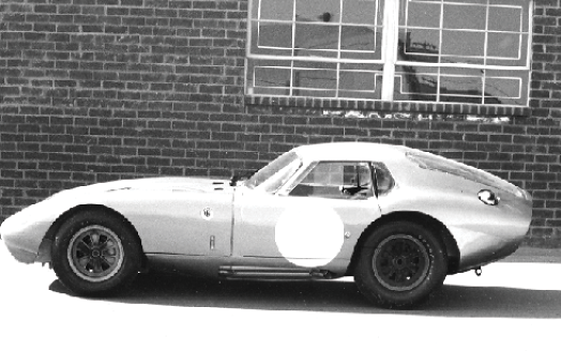
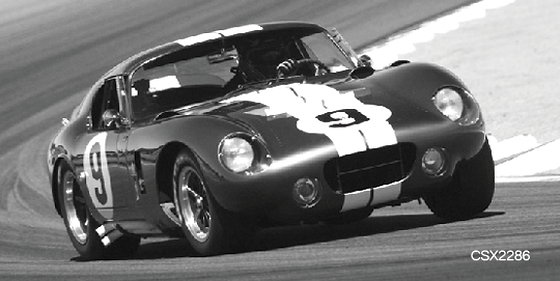
CSX2286, pictured here at Shelby American, was restored at the factory prior to its trip around the country
as
part of the Cobra Caravan. However, in 1965 the word “restoration” did not have the same meaning as it does
today. The car was disassembled, thoroughly cleaned, painted, reassembled and detailed.
Both Brock and Shelby knew that the successes at tracks across the United States in 1963 would not
automatically
translate into similar successes once the Cobra team got to Europe—and that was where the Cobras were headed
in
1964. A slipperier shape was needed but none of the race fabricators or mechanics could be convinced of
that. Nonetheless, Brock began
sketching what he thought a Cobra Coupe should look like. His designer’s eye and intuitive feel for
functional
shapes provided him with the basic form.
Brock was, in a sense, blazing his own trail because the concept of vehicular aerodynamics—the study of air flow as it applies to automobile design—was in its infancy. The thinking of the day was that all other things being equal, the more brute power an engine could produce, the faster the car would go. Brock saw that some of the things taken for granted in airplane design could be adapted to automobiles. With the right shape, a car could go faster using the same amount of power. It would also be more stable at high speeds. At LeMans, the famed Mulsanne Straight was three miles long and speeds were approaching 200 miles per hour. Stability there became a life and death matter.
As the 1963 season progressed, Shelby’s team drivers were becoming comfortable in the cars, which were now running like well oiled watches. Often there never was a question of whether a Cobra would win the race— it was simply which Cobra. Sometimes the team drivers secretly decided which one of them would take the checkered flag before the race even began!
The race shop had its priorities and very low on the list was cutting a couple of first-rate fabricators loose from Cobra roadster duties to work on Brock’s Fantasyland project. The coupe concept pitted Brock, one of the younger people in the shop, against Phil Remington, who served as Shelby’s chief engineer. In that role, Remington directed the energies of everyone in the race shop. He was a living legend even at that time (and has become even more of one in the ensuing years). There was absolutely nothing he could not make, often in less time than it took for someone to describe it. All of the fabricators and mechanics took their cues from him. If he didn’t think the coupe project was worthy of his mens’ time, that was reason enough for them to snicker and roll their eyes at even the mention of Pete Brock’s Cobra Coupe.
Ken Miles became Brock’s ally in the project. In fact, without his support the Coupe would have never been built. Miles was one of the best drivers on the West Coast and he was also a superb seat-of-the-pants engineer and fabricator. But his methods ran closer to the down-and-dirty, just-get-the-job-done style – in stark contrast to Remington’s work which was functional art and nothing short of perfection. Both Remington and Miles had Shelby’s ear. Shelby respected both of them and was careful not to play them off against each other. He supported Miles and Brock because he knew the Coupe would be needed in Europe. He also knew it would be a waste of his time to attempt to convince Remington of this; it would have to be proven to him when the team went overseas.
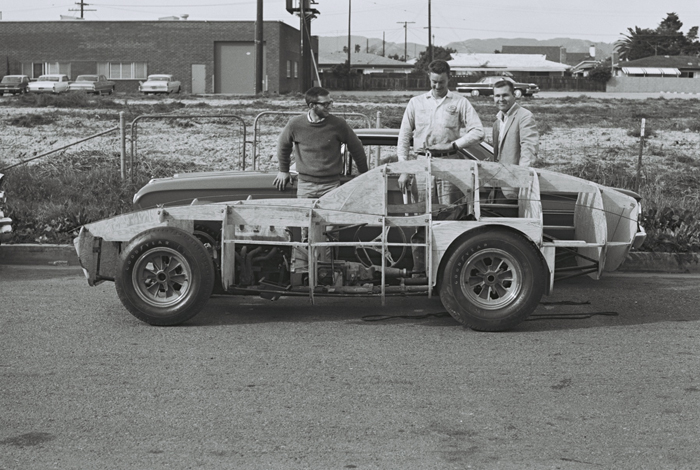
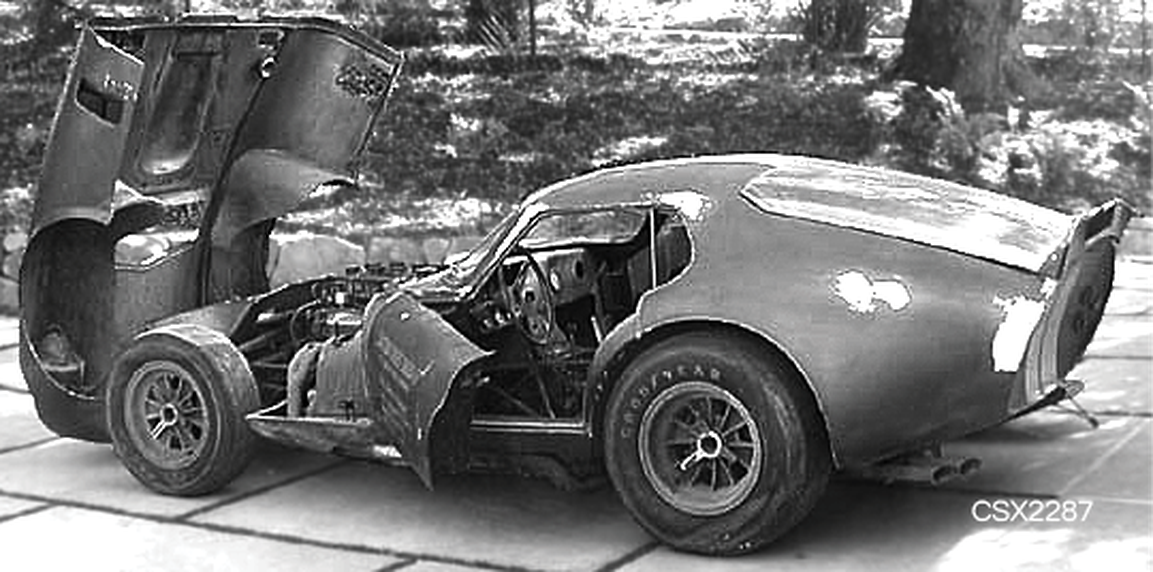
Prior to the first two pieces of aluminum being bent and welded together to form the coupe’s body, a plywood buck [top, left] was built by Peter Brock. The buck went to Cal Metal Shaping [above, right] in Los Angeles where aluminum sheet was bent to conform to the buck. Back at Shelby American in Venice [below], the first Coupe chassis, CSX2287, was completed and waiting for its skin. The separate pieces were trimmed and welded together to form a seamless body.
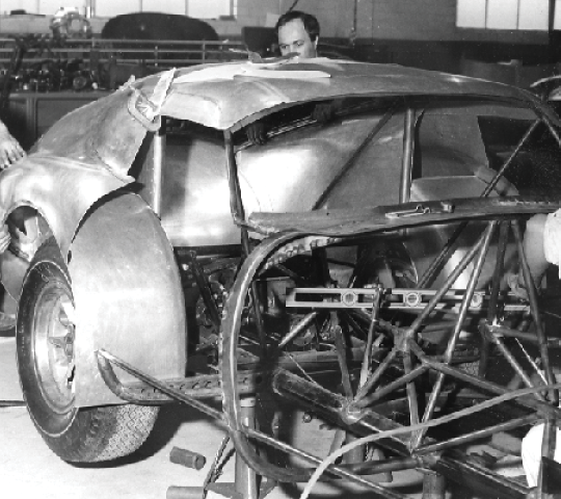
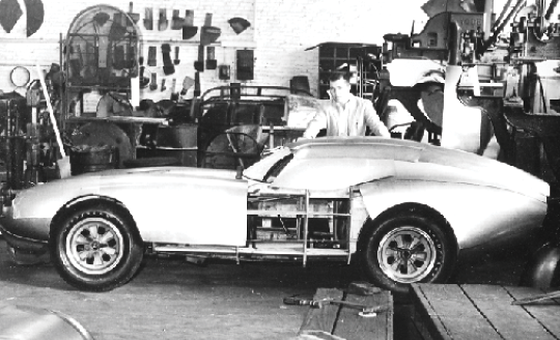
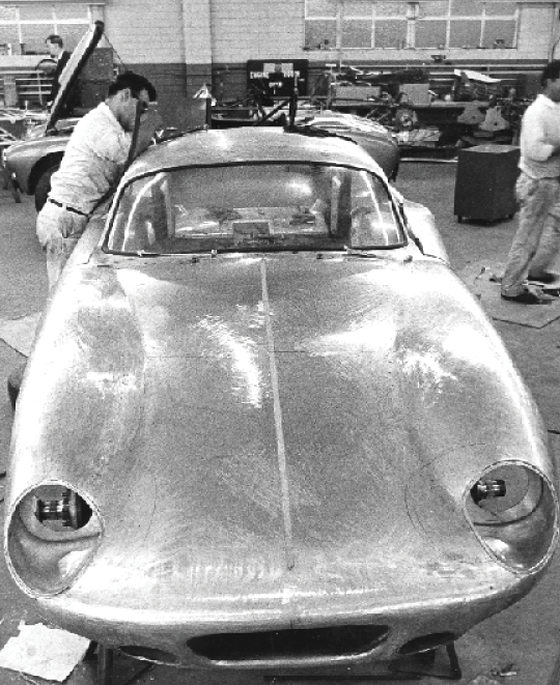
John Ohlsen, a New Zealander who had gained considerable experience working as a race fabricator in England, was hired as the Coupe’s chassis was being redesigned by Miles. He became the car’s primary fabricator and his hands-on experience racing in Europe helped deal with technical questions relating to some of the specifications allowable under the FIA’s rules.
While the chassis was being beefed up by Miles and Ohlsen to handle the new body, Brock was working on building a body buck. There wasn’t time to follow the usual progression of sketches to blueprints, to clay model, to prototype. Brock transferred the measurements taken from his quarter-scale drawings (done on butcher paper) directly to plywood. The buck was assembled like a giant egg crate, with sections every foot or so along the length and width forming the shape of the body’s exterior. The buck was bolted to the bare chassis of a Cobra (CSX2014) which had been damaged in a race accident. It was over this buck that the original aluminum skin was formed from large flat panels which would ultimately be welded together to form the seamless body.
One of the most well known incidents surrounding the Cobra Daytona Coupe took place about this time. A steady stream of people filtered through Shelby American to have a look around the nest where all of these exciting cars were being hatched. Shelby met an enormous number of people in his travels and always extended an invitation for them to stop by for a visit. Part of that was due to his down home, Texas hospitality and part was because he realized the value of publicity. One of Shelby’s acquaintances who took him up on his invitation was Benny Howard, one of this country’s leading aerodynamic consultants. He was to the aeronautical world what Carroll Shelby was to sports cars. Shelby invited Howard to look at the design of the new coupe body that was under construction. After studying the buck and Brock’s drawings, he began asking Brock questions about the car’s radical details such as the chopped-off rear and the angle of the roofline. He left no doubt of his opinion of Brock’s design. In order for the car to reach 180 mph, Howard stated it would need a minimum of 500 horsepower. At that time the 289 CID Cobra engines were capable of only 380 horsepower in racing trim if they were to be reliable, so when Shelby and Howard departed, Brock stood there in stunned silence. A hundred things ran through his mind at once.
Shelby returned alone and asked Brock what he thought about Howard’s critique. Brock commented that some of Howard’s criticisms could apply to aircraft but cars were a little different, and Howard had no experience with cars. Shelby asked Brock if he wanted to change anything. Brock replied that he thought the design was right on target. Shelby, realizing there wasn’t time to make any major changes, expressed his confidence in Brock’s design simply by saying, “You better be right.” That made it clear that, expert opinion be damned, the project would move forward.
The next step was to have the skin formed. That was done at an outside shop, California Metal Shaping, in downtown Los Angeles. It took all of a week and the end result was exactly what Brock had seen in his head when he first began designing the coupe’s shape. Shelby also liked what he saw and suddenly, so did everyone else. Overnight, opinions of Brock’s coupe turned around 180 degrees. All of a sudden the Cobra Coupe began to look like a winner.
When CSX2287 was finished and prepped for Daytona it was only the starting point for the Daytona Coupe evolution. The rear spoiler had yet to be added and the rear fenders required spats to cover the rear tires as per FIA rules. The car also suffered from ventilation deficiencies which were (mostly) solved by scoops on the cowl connected to ducting aimed at the driver.
When the inner panels were finished, the windows installed and the car was made drivable it was immediately taken to Riverside for testing. As a side note, the lightweight “Flip Top” was also brought to Riverside that same day for Miles to test. Before Miles got to the track, John Ohlsen, who had done most of the fabrication work on the Coupe, could not resist firing it up and taking it out for a few warm-up laps. In doing so, he became a footnote in Shelby American history as the first person to drive a Cobra Daytona Coupe. Miles arrived shortly thereafter and within two dozen laps on the brand new car he lowered the Cobra lap record at Riverside by three and a half seconds. That impressed everyone. Brock was vindicated and Shelby’s confidence in him had paid off.
The first Coupe was built for Ken Miles. He was seated in the driver’s seat when Brock figured the dimensions. He had been scheduled to drive it at Daytona (with Dave MacDonald) but Shelby took the ride away from him and gave it to Bob Holbert. His explanation was that, “Ken was too valuable as an engineer to lose.” The speculation around the shop was that Shelby didn’t want Miles to get more publicity than anyone else, so he used the driver assignments to balance things. Miles was, understandably, angry but he was a good team player (as he would later prove at LeMans in 1966). Shelby gave him the position of “Chief Engineer” (with no salary increase). Instead of racing the Coupe he continued overseeing the development of the 427 Cobra, a project deemed more important in the long run. Miles felt he had a good chance of winning Sebring in a big block roadster. Of course, things didn’t work out that way.
The first Coupe, CSX2287, was built in the United States but the other five were built in Italy. The stripped chassis were first shipped from AC Cars to Shelby American, where they were modified to Daytona specifications. As soon as this was completed they were shipped back across the Atlantic to Carrozzeria Gransport in Modena, Italy where the bodies were formed and the rest of the detail construction was completed. The cars were not finished in serial number order. The bare chassis were shipped from AC Cars to Shelby American as they were completed, two at a time and a few weeks apart. CSX2286 and CSX2287 were the first ones to arrived at Shelby American. One was chosen at random to begin the transformation—it turned out to be CSX2287—and the other one was set aside. When progress on CSX2287 had been made, CSX2286 was dragged out and its chassis modifications began. CSX2287 was used as a model to complete CSX2286, which was then kept as the “master” to guide construction of the other Coupe chassis. Several weeks later the next two chassis arrived, CSX2299 and CSX2300. Work on them began immediately.
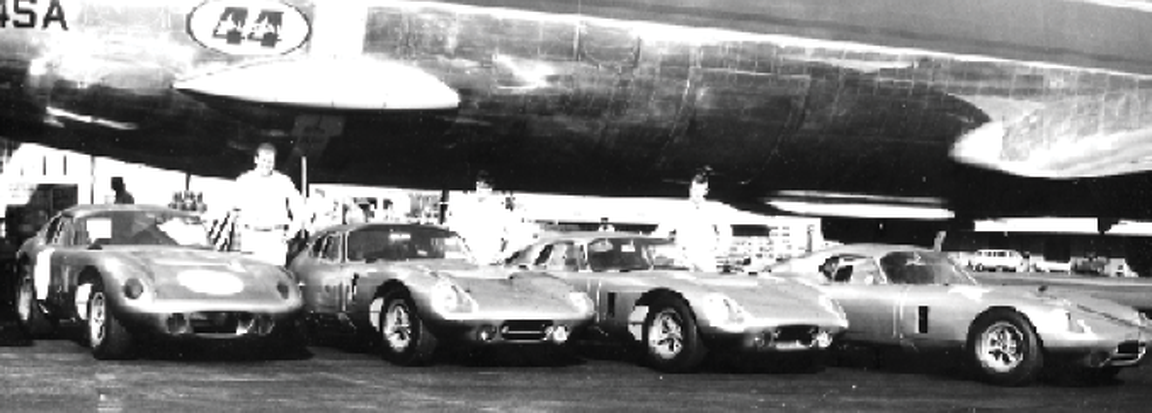
This photo was taken when the cars were returned from Europe prior in 1964. Pictured [left to right] are Allen Grant and CSX2300, John Morton and CSX2299, Earl Jones and CSX2287, and CSX2286.
CSX2287 was completed first and shipped to Florida for the Daytona Continental. While it was gone, work continued on CSX2286, CSX2299 and CSX2300. When CSX2287 was returned from Daytona it was immediately prepared for Sebring while work on the other three chassis continued. While CSX2287 was at Daytona, CSX2299 was receiving its substructure modifications. The fabricators left behind when everyone else went to Florida for the races had no blueprints to work from and did not have a complete car to use as a guide. They made one small miscalculation when they attached the front cowl hoop—the piece of subframe that rose up from the sides and wrapped around just ahead of the lower portion of the windshield edge. They installed it about three-quarters of an inch too high. No one caught the mistake and by the time CSX2287 returned from Sebring, CSX2299 and CSX2300 and the plywood buck were being readied for shipment to Italy.
When the two chassis arrived in Modena work was begun on one, again picked at random. It was CSX2299. CSX2300 was placed in storage across the street from the Carrozzeria Gransport shop. As the Italian metalsmiths began work, they immediately realized something was not right with this chassis. It did not match the dimensions in the drawings they had been given (which were in inches and they were using the metric system). It was also different from the plywood buck. Since no one from Shelby American was there at the time, they assumed the chassis was the way it was supposed to be and began working on the body. They assembled the pieces they had fabricated and when they were finished the windshield support structure—which was welded to the top of the already too high cowl hoop – ended up slightly higher yet. When it came time to attach the leading edge of the roof, it did not meet the top edge of the windshield as it was supposed to. Raking the angle of the windshield back to make it fit would have changed the dimensions of the side windows, which were a critical FIA dimension. So they ended up massaging the roofline, raising the forward portion until it met the top of the windshield. By the time John Ohlsen and Phil Remington arrived, most of the work was completed. The car had to be finished within a few weeks for LeMans, so there was no time to tear it apart and fix it. The incorrect roofline was later proven to limit that car’s top speed down LeMans’ Mulsanne Straight by several miles per hour.
While work commenced on the second Italian body (CSX2300), Ohlsen’s job at Carrozzeria was to work on CSX2286, which had recently arrived in Italy. Its chassis had been lengthened to accept a big block engine. This car was to be Shelby’s secret weapon at LeMans, entered in the prototype class and powered by an experimental 427 SOHC stock car racing engine. It was given a top priority and Ohlsen started working on it immediately. Since no 427 Cammer engine was actually available for construction, the Coupe was modified to accept what Ohlsen thought was a regular 427 pushrod NASCAR engine. Work on the body and inner panels continued while the Cobra Team (3 roadsters and CSX2287) competed at Spa. When Ohlsen returned from Spa an all aluminum prototype engine topped with four 58mm Webers was waiting for him in Modena. Not being able to get a 427 Cammer, Shelby sent the next best thing he could think of—the 390 engine used when CSX2286’s chassis had been stretched at Shelby American.
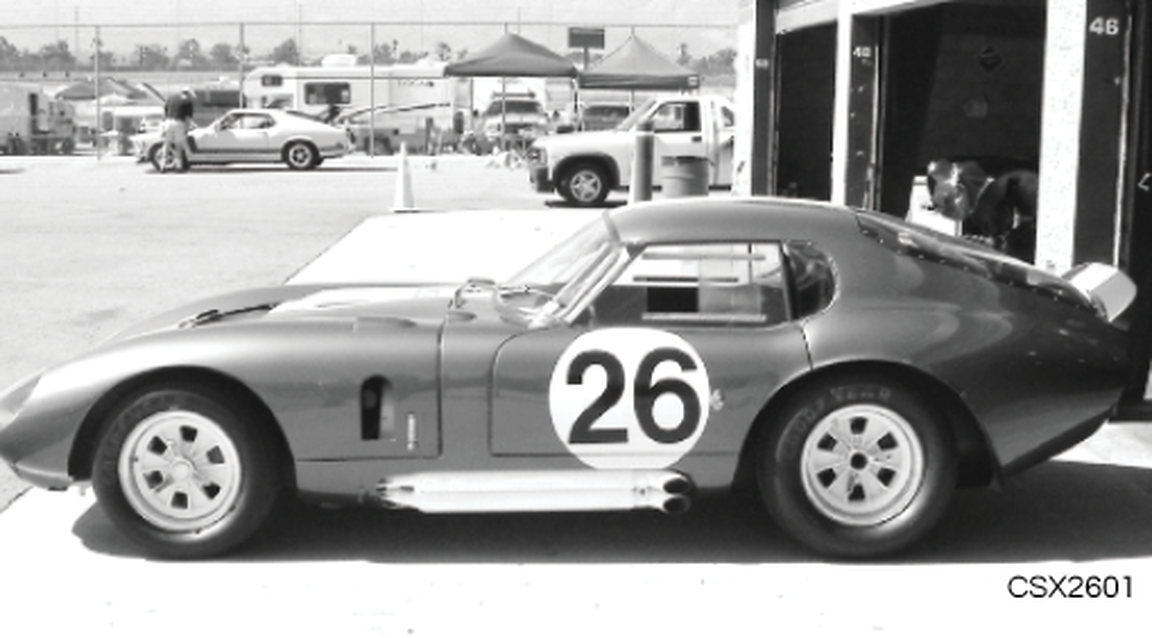
Ohlsen was working against the clock, trying to complete the 390 Coupe in time for LeMans but critical parts had yet to show up. During this time period, CSX2601 and CSX2602 had arrived at Shelby American from AC Cars, had been modified to Daytona specifications, and shipped to Italy. Ohlsen finally realized he had run out the clock. The 390 would not be completed in time to leave with CSX2287 and CSX2299, which were almost ready to be loaded on the factory transporter headed for France. A call to Shelby to update him on the 390 Coupe’s lack of progress and to ask for instructions yielded new priorities: finish CSX2299 for LeMans so it could join CSX2287. Then work on CSX2286 (the big block Coupe) to see if it could be finished for the 24 Hours. Work on CSX2300 was stopped. LeMans was two weeks away.
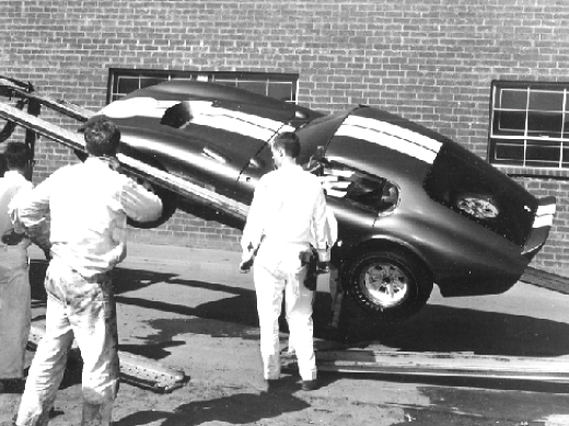
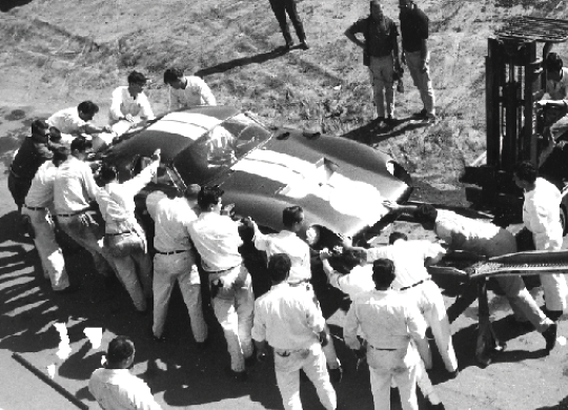
One of the most memorable incidents (and one Allen Grant surely wishes everyone would forget) involved loading the coupes prior to Daytona in 1965. Grant, working in Shelby American’s production department, had gotten a spot on the Cobra Team’s driver list by almost non-stop self promotion. In the shop he was called “Cassius Clay” because he often mimicked the boxing champion’s voice, poetry and mannerisms, telling everyone “I am the greatest.” Grant also made it a point to make sure the car he was assigned was better prepared and assembled than the other coupes, often staying into the night on his own time to polish pieces and detail items that race shop mechanics rarely had time to do. When it came time to load the cars onto the transporter to head to the track, it was usually left to the truck driver. After the first truck was loaded, the driver asked mechanic John Morton to load the second hauler. Grant’s coupe, CSX2300, was the last one because Grant was still polishing and primping. He had watched the other cars being loaded and was worried that his coupe’s clutch would be abused on the trip up the ramps (cars were driven up, not winched) so he decided to drive his own car up, determined to use just the right amount of speed which would eliminate clutch slippage. What happened next was Grant’s worst nightmare. He was warned that the rear tires were slightly wider than the ramps so positioning was important. Because his car was the last one loaded, it was the most difficult because the space on the trailer was was just enough for a roadster. The coupes were about 4” longer. There was no room for miscalculation. And to make matters even worse, the ramps were set at such a sharp angle that when the car was driven up, all you saw was blue sky. It was impossible to see the rear end of the car ahead of you until the very last second. Grant took a short run at the ramps and the alignment wasn’t perfect. The car began to slide sideways and he gave it a little gas but the Webers did not respond. He gave it a little more. Nothing. Finally he have the gas a good stab and the engine lit off, smoking the rear tires and sliding farther off the ramp. One ramp loosened and fell away. Fortunately the coupe’s chassis caught on a ramp support and the car came to rest with one rear wheel hanging in mid air, the car’s aluminum skin barely touching the other ramp. Most of the mechanics in the shop had been watching and they rushed out to lift the car up and reposition the ramps. A dozen pairs of hands held the car while a fork lift raised it up so the ramps could be reattached. The car was backed down and by some miracle there wasn’t a scratch on it. Grant was then subjected to merciless heckling (which was to last for months) as Morton drove the car up the ramps and onto the trailer. To make matters worse (if they could have been) photographer Dave Friedman was there to capture the event for posterity.
CSX2287 and CSX2299 were loaded on Shelby’s transporter and sent to LeMans and CSX2286, carrying the lightweight 390, was completed and shipped separately a few days later. A local Italian trucking firm was hired to transport the car on a flatbed truck. Along the way an accident on the road caused the truck’s driver to take evasive action. The truck ran into something solid and the Coupe broke free of its moorings. Its nose smashed into the back of the truck’s cab, also smashing Shelby’s LeMans surprise. The 390 Coupe was expected to top 200 miles per hour at LeMans. It never ran in its stretched 390 form and was returned to Modena for repairs. It was eventually converted back to a “standard” 289 Daytona Coupe.
The racing history of the Cobra Daytona Coupes has been well documented, so what follows is only the briefest recounting. The Coupe’s race history began at Daytona in February of 1964. The Cobra Coupe was much faster than the Ferraris in practice and that fact was trumpeted by the American motorsports press. An American entry challenging Ferrari was always news. One that was off to such a promising start was banner headline material.
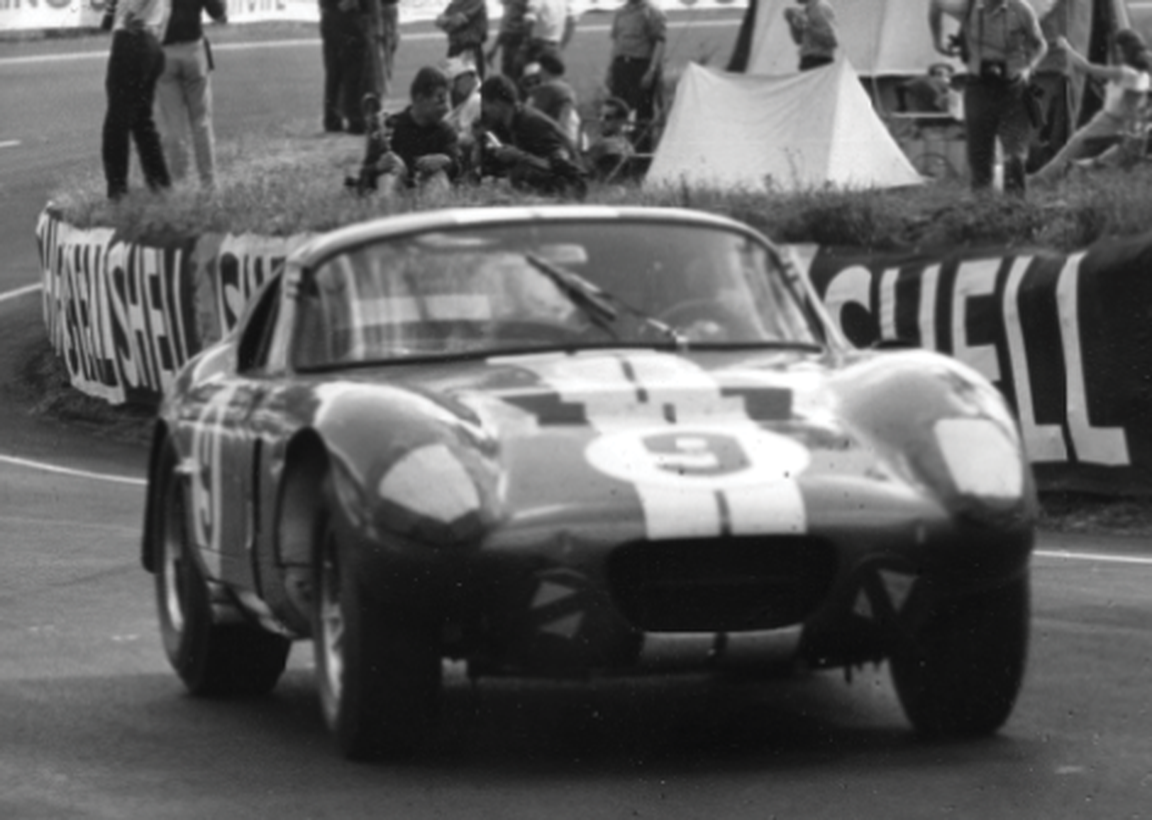
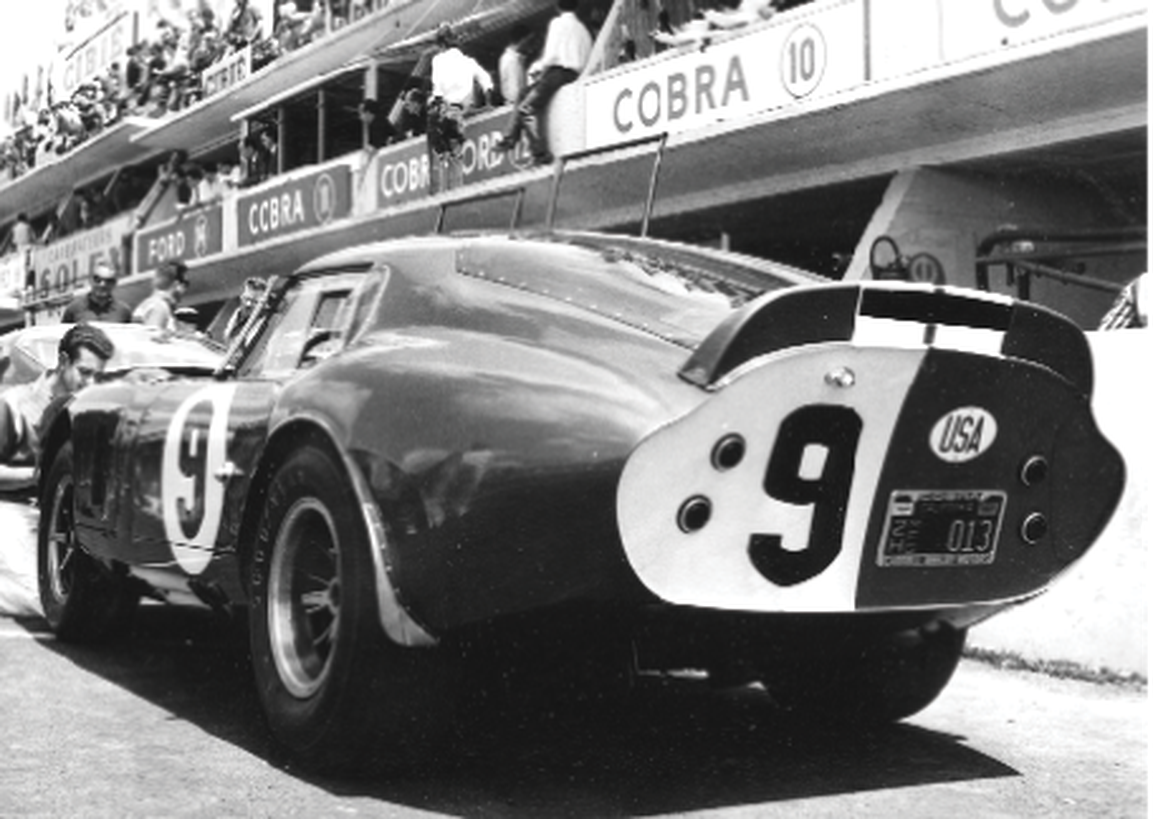
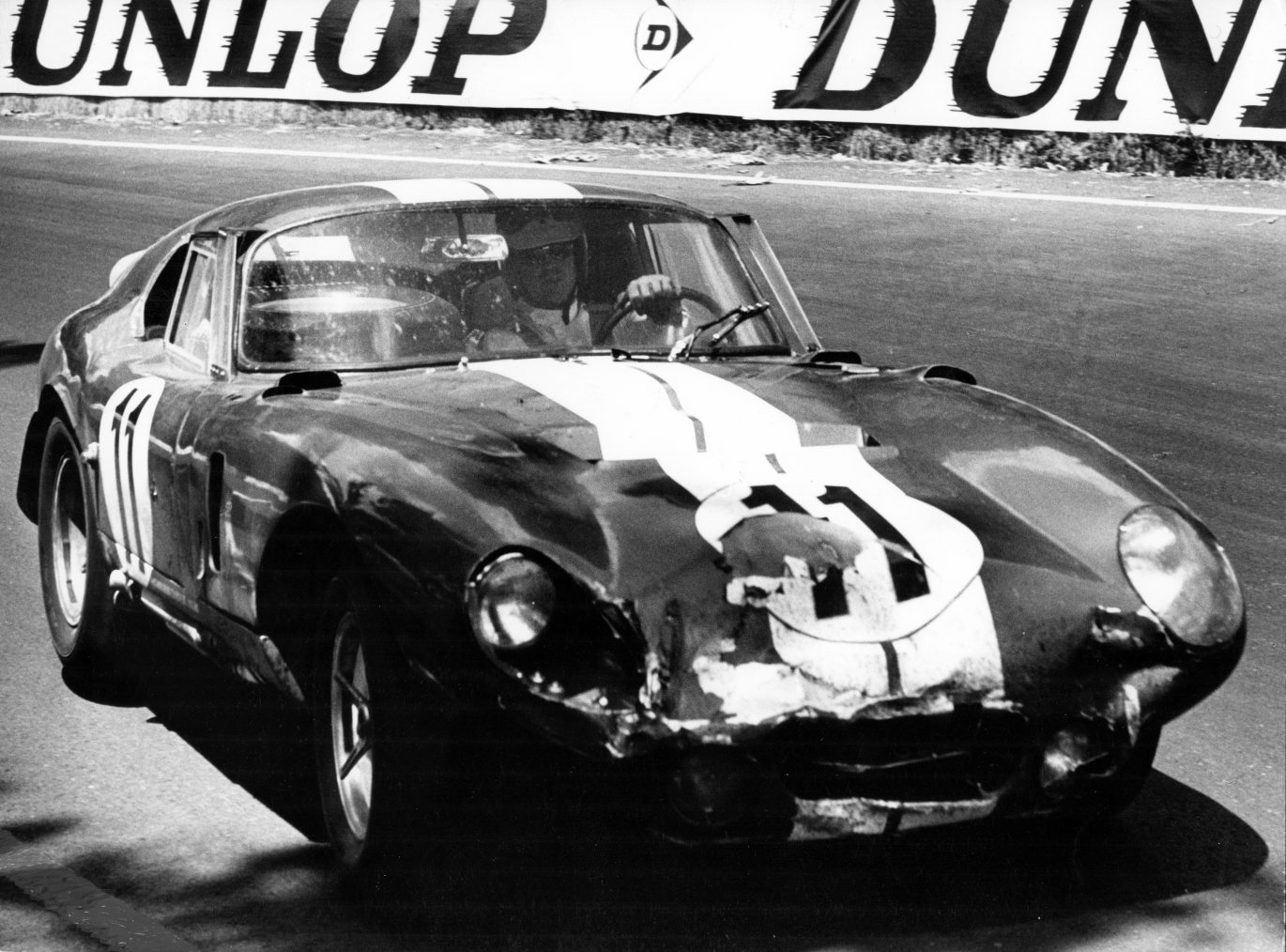
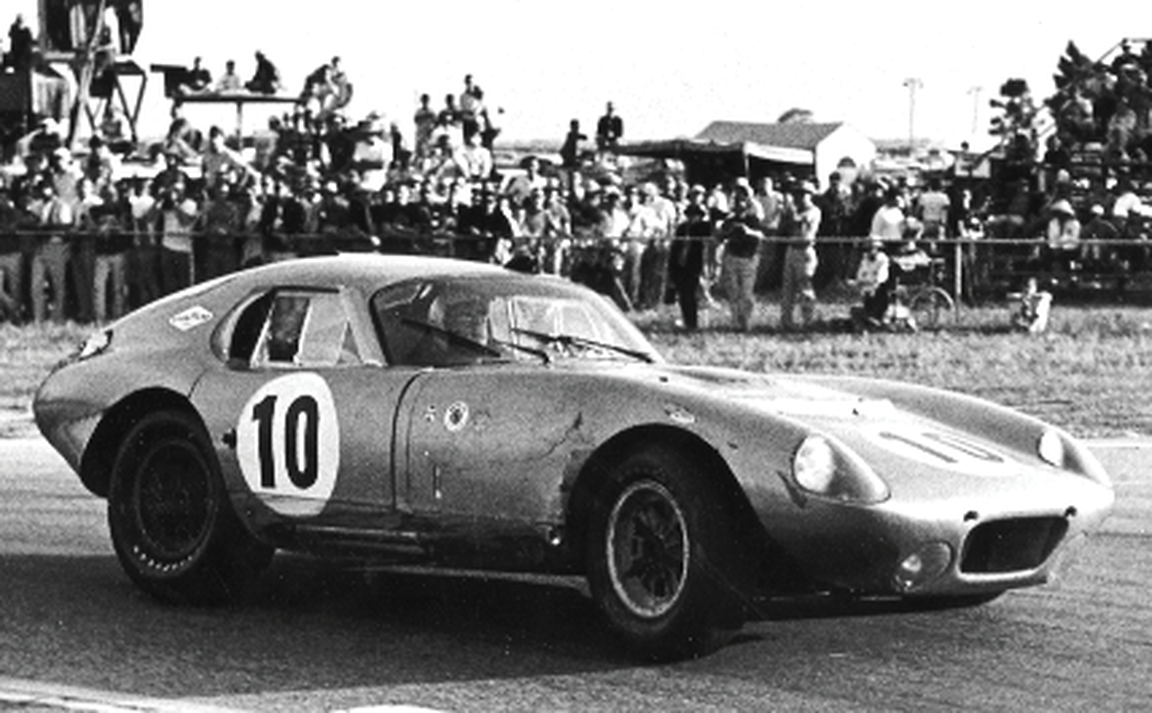
Today, the Daytona Coupe is a multi-million dollar icon. It’s hard to believe that, at one time, they were used as tools, driven fiercely, occasionally damaged, and considered expendable. This is CSX2299 at LeMans in 1965
Last year’s race cars, even when they’re world champions, are still last year’s race cars. They’re about as appetizing as yesterday’s coffee... and just as hot. Eventually all six Daytona Coupes competed in Europe in 1965. Five were entered at LeMans in June and following that race three were returned to Shelby American. The two remaining cars were entered in the last two events on the European FIA calendar—Rheims and Coppa de Enna in Sicily. Following those two races the cars were returned to Alan Mann’s race shop in England where they were practically forgotten by Shelby American because the main emphasis was now on the Ford GT40s. Photos of the Daytonas show them with cracked windshields and the paint literally blasted off their noses following their final race. Even though they had carried the Cobra name and American colors to victory, by the time the applause died down Shelby American was running flat out on its newest projects. The Ford GT40 MK IIs were consuming a great deal of time, the new 427 Cobra race cars were being readied and Shelby American was now producing a special version of the Mustang—the GT350, in both race and street versions.
As a result of the Cobras’ domination, the FIA changed its GT rules for 1966. The 100-car homologation
requirement was bumped up to 500 cars. No small manufacturer—neither Shelby American nor Ferrari—could meet
that. So GT racing and the Daytona Coupes dropped off Shelby’s radar screen. In fact, on several occasions Alan
Mann tried to initiate transportation paperwork to return the two battered coupes to the United States. It
wasn’t until customs agents appeared and began talking in legalese that Mann was able to convince Shelby to do
something. The cars had been imported to England on a temporary basis and their travel papers had expired. Mann,
facing heavy British fines, threatened to dump the cars into the North Sea. Shelby quickly sent word to ship
them back.
When the coupes arrived at Shelby American they were pushed into a back corner of one of the cavernous hangars
at LAX and almost forgotten. One car was cleaned up and repainted and became part of the Cobra Caravan, a 4-car
promotional display that crossed the country in November and December to publicize Shelby American’s FIA
victory. Another was dispatched to Bonneville, as a favor to Goodyear, to attempt to break some endurance
records. Actually it was a political move on Goodyear’s part to buy time for Craig Breedlove and Walt Arfons,
whose Goodyear-tired land speed record cars were experiencing mechanical problems. If Goodyear did not make use
of the salt they would have to turn it over to Firestone, who had Art Arfons scheduled to make an attempt on the
record. Goodyear was fearful that if they gave the salt to Firestone and Arfons broke the record, the weather
might turn bad, preventing Breedlove and Walt Arfons from making their attempts at the record. Firestone would
then have the entire winter to trumpet their achievement—and win the publicity war. So the Cobra Daytona Coupe
was quickly “prepared” to challenge the existing records. In effect, Goodyear was just holding the salt with the
Daytona until Breedlove’s and Arfons’ cars could be repaired.
The only Cobra coupe available was CSX2287. It had two seasons on it and the engine had not been touched since the car was returned from LeMans. Shelby assigned one of his race mechanics, Tom Greatorex, to take charge of the project. The only thing done to the car before putting it on a trailer and heading for Utah was to wash it, install a fresh engine and a new set of tires. It still carried the tall 2.88:1 LeMans rear end gears.
Once at Bonneville, it was apparent to the USAC officials that the whole enterprise was nothing more than a smoke screen for Goodyear to deny use of the salt to Firestone. But as Greatorex and drivers Craig Breedlove and Bobby Tatroe went through the motions, everybody soon realized that the Coupe had a good chance to actually break some records. It was initially timed at 187 mph and broke the class record. From there they ran it in a 12-mile circle, establishing new records for 3 hour, 6 hour and 12 hour durations. By the time they had finished, the Cobra Daytona Coupe had established 23 new national and international speed records! It had run flawlessly for ten hours and then, with a slipping clutch, had been nursed the final two hours. It was the last time a Daytona Coupe would compete under Shelby colors.
Although not a high priority, Carroll Shelby wanted to sell the Coupes. He had no use for them at that point, and apparently neither did anyone else. One of the maxims in the used car business that there is a buyer for every car, if only if the seller is willing wait long enough for him to find the car. The Bonneville car, CSX2287, was disassembled and the chassis and running gear sandblasted. Everything was repainted and a stock GT350 engine was installed with Weber carburetors. The car was purchased by Jim Russell, owner of American Russkit, a company that produced model cars and slot car kits. Russell specified that the car be given a stock GT350 clutch set-up and purchased the car for $4500. Once in his possession he had the car painted and then proceeded to drive it on the street. After about a year Russell advertised the Coupe for sale for $12,500 and it was purchased by SCCA racer and model car mail order business owner Oscar Koveleski. Koveleski drove it on the street for almost two years before selling it to rock ‘n roll record producer Phil Spector. Spector also drove it through the streets of Los Angeles, and after receiving enough speeding tickets to paper his garage wall, his agent succeeded in convincing him to sell the car.
Happy to be rid of the car, Spector sold it in 1971 to his bodyguard, George Brand for a reported $1,000. Brand discovered that driving a race car on the street was more grief than enjoyment, so he made a gift of the car to his daughter, Donna. She maintained ownership of the car through a marriage and a divorce. She eventually put it away in a nondescript storage facility in Anaheim, CA. Over the next fifteen years, when the reclusive Donna Brand O’Hara could be found, she expressed no interest in selling the car at any price (although most offers were lowballs). In October of 2000 she committed suicide by pouring gasoline on herself and striking a match. CSX2287 was subsequently discovered in the storage facility and a feeding frenzy immediately ensued. Before too many sharks could move in, dealer/broker Martin Eyears purchased the car from Donna’s mother for a reported $3 million. While legal wrangling over the car’s ownership and who had the legal right to it began, Eyears quietly sold it to Philadelphia surgeon Fred Simeone, for a reported $3.75 million. Mrs. Brand was going through the windfall like it was play money, so a judge enjoined her from spending any more of it until the ownership questions could be sorted out. In the meantime the car had been spirited away to an undisclosed location while everyone lawyered up. Phil Spector even unleashed his legal beagle, Robert Schapiro (one of OJ Simpson’s famed Dream Team of lawyers) who attempted to make the case that Spector never sold the car to Brand; it was just given to him for safe keeping. The judge sent Shaprio packing in short order. When the dust settled not much changed. Mrs. Brand had to share some of the money she received with Donna’s boy friend, one Kurt Goss, who had tried to make the case that she wanted him to have the car. Dr. Simeone retained the possession of the car and it presently sits in his collection in a Philadelphia warehouse.
The second Daytona Coupe, CSX2286, was restored in the fall of 1965 and it joined the Cobra Caravan in November of that year, on a tour across the United States promoting Shelby American’s World Manufact-urers Championship. It was purchased in early 1966 by Bill Kozlow in Pennsylvania. Kozlow sold it to Don Andrews, who flipped it to exotic car dealer Kirk F. White in 1967. White eventually sold it, in 1970, to drag racer Ed Mullins in Denver, Colorado. Mullins disassembled the car and painted it 1964 team colors—Viking Blue with two narrow white stripes. He lost interest in it and sold it to Mike Gaffney of Bloomington, Illinois. Gaffney had to spend two weeks in Colorado reassembling the car in order to bring it home. He brought the car to a few Shelby club events but it was just not practical as a street car so he eventually sold it to Corvette dealer Larry Megibow of Butler, New Jersey for CSX3163 and some cash.
Megibow had built up a business buying and selling Corvettes, and CSX2286 became part of his personal collection of eleven Cobras. He created duplicate titles for some of the Corvettes and Cobras and was using them as collateral for bank loans to purchase additional cars. When the scam began to unravel, Megibow sensed Federal Marshalls were one step behind him. He put the coupe in the back of a box truck and escaped into the night, headed for parts unknown. He abandoned the truck and its cargo at an intersection near the New York State Thruway and disappeared. Four days later the truck was spotted by Howard Landau, a Cobra owner who knew Megibow. Landau tipped the authorities and CSX2286 was recovered. Megibow had disappeared and was later declared legally dead. The Coupe (and a handful of Megibow’s Cobras) were auctioned off in Federal District Court in Newark, NJ in November of 1979.
High bidder on CSX2286 was Nick Soprano, an exotic car dealer from nearby New York. He provided the car to Car and Driver magazine for a road test at Bridgehampton which was featured in their April, 1981 issue. Cobra and GT40 dealer George Stauffer purchased it next and restored it to its 1965 livery (its only race had been LeMans) and campaigned it in several vintage races, often with Bob Bondurant handling the driving. While in Stauffer’s hands, CSX2286 probably spent more time in the public eye, at vintage races and SAAC conventions, than any other Daytona Coupe. In 1996 the car was quietly sold to Rob Walton who continued to vintage race it.
As a side note, Megibow turned up in central Canada in 1985, selling cars at a Honda dealership. He was arrested on an outstanding warrant in New Jersey, taken into custody and extradited to that state where he stood trial. He died of a heart attack in prison in August, 1986, three days before he was to be sentenced. He took with him the details of his Ponzi scam which was said to have involved some $20 million, most of which was never accounted for.
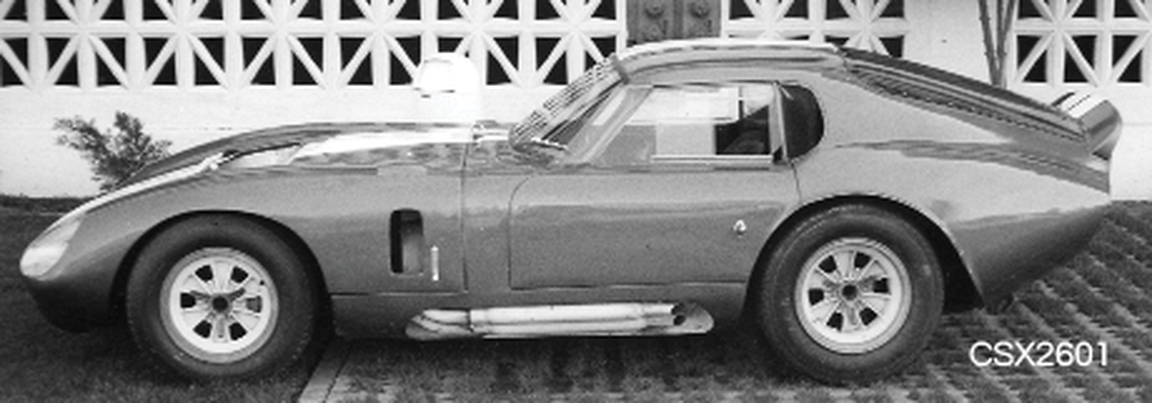
In 1966, Carroll Shelby managed to talk Bob Bondurant into purchasing CSX2601. Shelby, it has been said, could sell sunshine in Arizona. It was the same car that Bondurant had driven to the championship at Rheims a year earlier, and it was in excellent condition, having been cleaned up for use in the movie “Redline 7000.” Bondurant had the car restored under the supervision of Peter Brock. Mufflers were installed and Bondurant drove the car occasionally on the street. A serious racing accident at the Watkins Glen Can-Am event in 1967, in a McLaren, put him in the hospital and it was there that he decided to start his own driving school.
He sold the coupe in 1969 to John Simonsen of North Dakota. Simonsen and the Coupe were the subject of a brief article in Motor Trend in 1970. Simonsen owned six gas stations, the farthest one some 340 miles from his home. He used the Coupe to travel between them on the North Dakota interstate. He sold the car to racer Rob Dyson of New York in 1973. Dyson did little more than store the car until it was sold by his brother (while he was away on a business trip) to Steve Forrestall, a Texas exotic car dealer in 1987. Upon his return, Dyson tried to cancel the sale but could not. Forrestall sold the car in 1989 to Bob Rubin, owner of the Bridgehampton race circuit. Rubin shipped the car to Colorado where it was restored by David Sanderson.
CSX2601 was then purchased by Peter Livanos, of Connecticut, in 1989. The car was used for vintage racing, car shows, SAAC conventions and exhibitions. It was then purchased by Gary Schaevitz, of Mt. Kisco, New York in 1993. Schaevitz also made good use of the car, bringing it to vintage races at Daytona and Lime Rock, a couple of SAAC conventions, a re-creation of the Tour de France in 1994, and the 30th Anniversary Cobra Reunion at Sears Point in 1995. It was then acquired by Symbolic Motors in La Jolla, CA and was purchased in 2001 by Bernard Carl of Washington, DC. It is maintained and stored at Harley Cluxton’s Grand Touring cars in Scottsdale. It was at SAAC-32 and SAAC-33.
CSX2602 was purchased by Richard Jones of California in April of 1966. It was another $4000 sale. The car was still painted red and white (as it had been when it was last raced at LeMans in 1965 by Scuderia Filipinetti). Jones drove it on the street briefly but he also discovered that a race car is not really worth the trouble as a street driver. So he put it into storage for about five years. In 1971 it was purchased by Mike Shoen in Phoenix, Arizona. Shoen had the car repainted a proper blue and white and put it on display at the Petersen Motorama Museum in Hollywood in 1974. It was also displayed at SAAC-1 in Oakland in 1976. In 1980 Shoen sold it to Rick Nagle of Dallas, Texas. Nagle was attempting to convince anyone who would listen that he was going to create a Shelby museum and a coupe gave him instant credibility.
The car appeared in Motor Trend in 1983. Nagle sold it in 1987 to exotic car dealer Michael Sheehan of Costa Mesa, CA. Two years later Sheehan sold it to a Mr. Maruyama of Tokyo, Japan. Maruyama brought the car to Mike McCluskey for a full restoration which was completed in 1992. The car was then shipped to Japan, where it remains today.
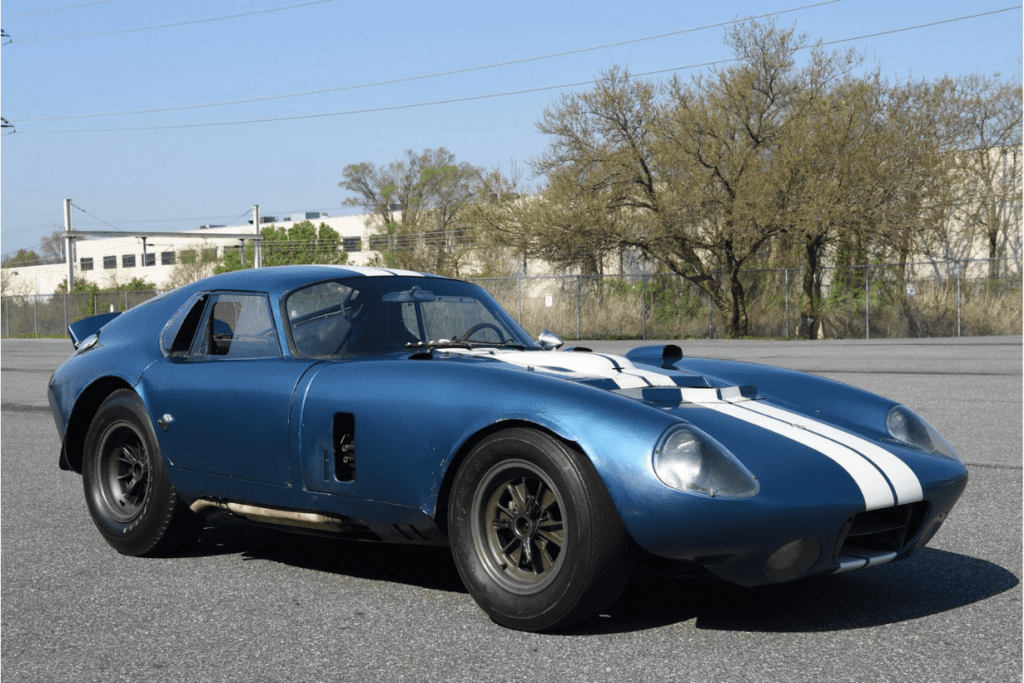
Oscar Koveleski, long time SCCA racer, owner of the model car mail order business called Autoworld and esteemed President of the Polish Racing Drivers of America purchased CSX2300 after it was advertised in Shelby American’s famous “garage sale” in 1966. The selling price was $4,000. He kept the car for a couple of weeks before selling it to Don Nichols, director of NASCAR racing in Japan. Koveleski claims the flat spot on his forehead is from slapping himself every time he thinks about that. Nichols, who later headed the Shadow Can-Am and F-1 racing teams, took the car to Japan and sold it to Japanese race driver Tadashi Sakai who raced it at the 3rd Japan Grand Prix in May, 1966 at Mt. Fuji Speedway. Sakai sold the car to Kazuo Myouchin, a Japanese club racer, who raced it in several endurance events, including the 500 km 1968 Japan Grand Prix at Mt. Fuji, where he finished 11th overall.
The car was put up for sale (with a blown engine) and a race car builder became interested in purchasing it. His intention was to scrap the most of the car and use only a few components as the basis of a “gamble racer” (single-seat Indy-type cars, popular in Japan, on which spectators wager—much like horse racing in the U.S.; the chassis and engine are free but the cars must run a spec body). Fortunately, a very young Japanese Cobra enthusiast, Shin Yoshikawa, heard about the plan and made it his life’s mission to save the Coupe. Even though it was available very cheaply (about $3,000), that was still more money than he had ever seen at one time. He begged and borrowed enough to purchase the car and, more importantly, got it registered because it was in Japan illegally (its temporary import time limit had expired). Had it not been registered it would have been crushed. Yoshikawa could not afford a new race engine so he found a 302 V8 with an automatic transmission in a junk yard and installed it in the Coupe. He kept the car only long enough to put it in running condition so he could sell it and pay back the money he had originally borrowed to buy the it. The next owner, Mr. Kawanabe, only kept the car four months and then CSX2300 disappeared for ten years. It resurfaced at Tomida Auto Sales in Tokyo. A small ad in a Japanese magazine offered the car to the highest bidder. Peter Brock learned of the car’s availability and called Mike Shoen, then the owner of CSX2299 and one of the world’s foremost authorities on Cobra history. Shoen brokered the car for Carroll Shelby who brought it back to the U.S. and delivered it to Mike McCluskey in Torrance, California for a ground-up restoration. The car was completed in time for SAAC- 9 in Anaheim, California and the Monterey Historics in 1983, when Ford was the honored marque.
Shelby loaned the car to Rick Nagle who used it to gather publicity for the museum he was trying to put together in Dallas. When it became obvious to Shelby that Nagle was promising things he could not deliver, the car was retrieved and parked in the lobby of his office in McKinney, Texas. When Shelby started his move to Las Vegas in 1994, he was offered the opportunity of displaying about a dozen of his cars at the Imperial Palace Auto Museum. CSX2300 first was displayed in the hotel’s lobby and later moved into the museum proper. Shelby apparently used CSX2300 as collateral for a loan from Imperial Palace owner Ralph Engelstad in 1998. The details are not clear, but what is is that Engelstad apparently sold the Coupe without Shelby’s knowledge to Prova International in Raleigh, North Carolina, an exotic car dealership specializing in Ferraris. When Shelby learned of the sale he was irate, both because it was done without his knowledge, and also because he felt it could have fetched considerably more had he been involved in the sale. The car was purchased by Jim Spiro in New Orleans, Louisiana. He kept it for two years, driving it on tracks and entering it in various shows. In August of 2000 the car was auctioned at Monterey, CA and was purchased by collector Larry Bowman of San Mateo, CA. Bowman vintage raced the car and at the Monterey Historics in August of 2003, CSX2300 showed up painted in Ford of France colors—white with narrow blue and red center stripes—the livery it raced in which it in 1965. It has since been repainted Guardsman Blue with white stripes and was sold to Christian Glazel in Europe.
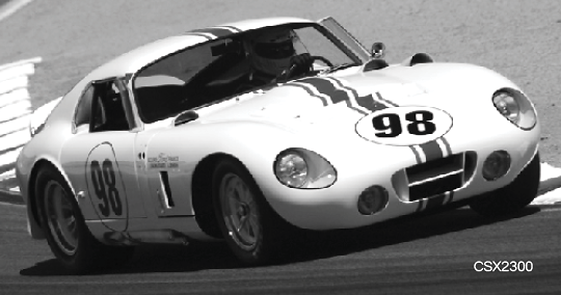
The last Daytona Coupe to be sold was CSX2299. It was still owned by Shelby American as of 1969. Truth be known, Shelby had long since tired of trying to sell it and it’s not known how much it had depreciated from the $4,000 price that it’s stablemates had received. Shelby was contacted by Mike Shoen of Vancouver, Washington who was interested in the car from a historical perspective. Although not in the best condition, this car turned out to have the most extensive race history of all six Coupes. Shoen restored the car and drove it on the street, including a trip from Arizona to Washington state.
In 1975 the car was prepped for racing by Mike McCluskey. Shoen asked Cobra racer and former SCCA National Champion Don Roberts to drive it in several west coast vintage events including Monterey, where it bested seven Ferrari GTOs that year. In 1976 a full restoration was begun. It was eventually completed by Geoff Howard in Danbury, Connecticut in 1982 and shown at SAAC-7 in Great Gorge, New Jersey. The car was subsequently put in storage and not brought out until 1992, at the Palm Springs Historic Races. It was also shown at the 1995 Sears Point Cobra Reunion. Following that event it was purchased by Bill Bauce of the Symbolic Motor Car Company in La Jolla, California and was shown at the Ritz-Carlton’s Amelia Island Concours near Jacksonville, Florida in April of 1996. In 1997 it was purchased by Peter Livanos of Greenwich, Connecticut but he quickly sold it to Bennett Dorrance. In January, 2000 the car was purchased by Larry Miller of Salt Lake City, UT and put on display at the Shelby American Collection in Boulder, CO. The car was prepared for vintage racing by Bill Murray and was most recently shown at SAAC-31 at Virginia International Raceway and SAAC-32 at Miller Motorsports Park in Tooele, UT.
The six Cobra Daytona Coupes have come to be the most famous Cobras of all. They are the embodiment of the spirit of America—success in the face of overwhelming odds by underdogs who initially were not given a sliver of a chance. But the team’s perseverance was rewarded, making Carroll Shelby’s dream a reality. The Cobra brought the United States its first—and only—World Manufacturers Championship.