We race because we are born with a competitive instinct. Anthropologists would probably tell us this dates back to our Neanderthal relatives who competed with each other for food. Theirs was a life-and-death competition; those who threw their spears with the most accuracy got the meat. They survived to pass on their genes to their offspring. The poorer spear-throwers fell by the wayside due to malnutrition, and were kept from passing their traits on – one of which was lack of skill with the spear. The concept is known as “natural selection.
Early men raced each other to reach the tree that held the fruit on the low branches. When they rode horses, they raced them side by side. And it probably wasn’t too long after the second car was invented that its driver squared off against the first one. Today we race for different reasons but the competitive urge within us can be traced back to those cave dwellers who competed on a daily basis for the food that sustained them.
In the early days of organized automotive competition, cars were raced to showcase the skills of the driver. In a sense they were tools, much like a runner’s track shoes. But it soon became evident to those who manufactured and sold them, that the cars which won races were the most popular. “Win on Sunday – Sell on Monday” became a truism in the automobile business. A second marketing concept, also related to racing, was called “product identification” and it also helped sell cars. Simply stated, it held that increased sales of all models made by a particular manufacturer could result from race victories won by one of that manufacturer’s models. In other words, if a Ford Galaxie won a race, that alone was sometimes enough to pull potential buyers into a Ford dealership and prompt them to purchase a Falcon or a Ford pick-up truck. One of the things they were buying was the manufacturer’s image of being a winner.
It was this arena that Carroll Shelby stepped into in 1962. At that time, unbeknownst to Shelby (or to the Automobile Manufacturers Association, the members of which had all signed a non-racing agreement in 1959), Ford was on the verge of embarking on a campaign they called “Total Performance.” It targeted Ford victories at Indianapolis, stock car racing, drag racing and sports car racing. The goal was not just to win races. It was to increase sales through racing; to provide Ford’s entire product line with the image of “winners” by dominating the most visible aspects of the sport with a handful of cars and engines.
Shelby fit very comfortably into this equation. At that time, Ford had no direct showroom competitor to Chevrolet’s Corvette. Shelby’s Cobra provided one, at a tiny fraction of what it would have cost Ford to create a sports car of its own from scratch. Shelby also brought with him experience in sports car racing, having won the prestigious LeMans 24-Hour race four years earlier. With Shelby American as an outside contractor, Ford could have it both ways: if Shelby’s effort failed they could distance themselves from it, citing that they were merely supplying him with engines. If he was successful – and there was every early indication he would be – Ford stood to gain a great deal of prestige, reap the twin benefits of publicity and product identification, and – the bottom line – sell more cars.
Carroll Shelby always said his intention in building the Cobra was to race it, and to beat the Corvette in this country and Ferrari in Europe. That didn’t happen right from the start. There were the expected teething problems and racing spotlighted the Cobras’ weaknesses as well as demonstrating its strengths. By the end of the first full year, Cobras began taking the checkered flag almost everywhere they raced. Often the question was not which car would win, but which Cobra.
It is a common misconception, today, that there were essentially two models of Cobras: street cars and race cars – as if the difference was as simple as checking off a option box on an order form. Nothing could be further from the truth. As soon as the first Cobras began arriving at Shelby American, one was pushed aside and conversion into a race car was begun. Aside from the obvious addition of a roll bar and removal of the windshield and bumpers, a number of small changes were made, each virtually unnoticeable to anyone except a Cobra mechanic. Standard pieces were strengthened, either in anticipation of failure or as a result of it. Most of these changes were incorporated into the specifications of all subsequent Cobras as running production changes.
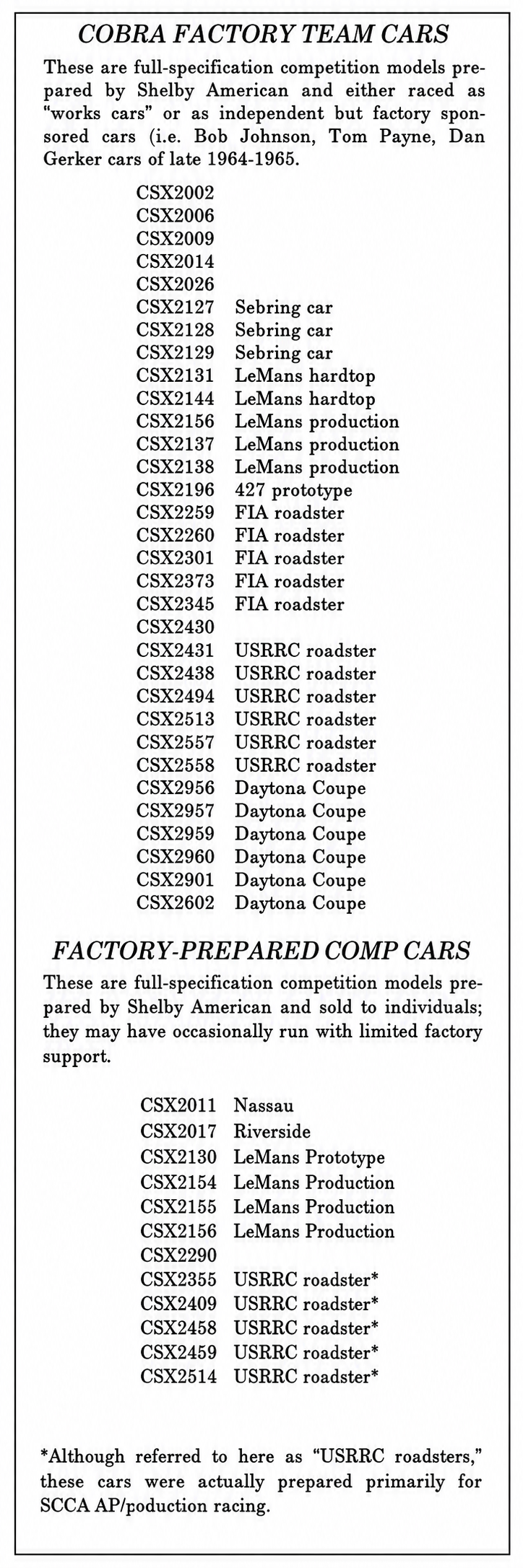
The Cobra “competition model” was actually the evolution of a series of cars, built over a period of time. And there weren’t as many of them as you think. Today it seems that more Cobras are fitted with roll bars, hood scoops and side pipes than not, owing to the hairy-chested, muscle-flexing competition image the cars have acquired as part of their persona. Out of a total of 655 leaf spring (small block) chassis, Shelby American and AC factory records show that only 45 were bona fide factory competition cars. Another 29 cars were originally purchased as street cars and then converted for competition independent of the factory. When we think of a Cobra roadster most of us picture a competition car with flared fenders trying unsuccessfully to cover oversized tires on wide magnesium wheels – like a weightlifter’s tight t-shirt straining to cover bulging biceps. A car emblazoned with large numbers inside of white meatballs on the doors. But in actual fact, only about seven percent of total Cobra production were competition cars – about the same ratio of 1965 GT350 competition models to street cars.
Not all Cobra competition cars were created equal. To understand them you have to understand three things: the time frame in which a particular car was built and raced, the race series it was intended to compete in, and who prepared the car.
The time frame is important because in the very beginning of Cobra production all competition cars started life as street cars. They were all produced to the same specifications at AC Cars, Ltd. in England. When they arrived at Shelby American in Venice, California, cars which were to be raced were moved into Shelby’s race shop and individually modified. Exactly what modifications they received depended on the race series they would be competing in. In the Sports Car Club of America’s production classes, windshields could be removed and replaced with small plexiglass windscreens but stock grilles were required. In FIA events like Sebring and Daytona, stock windshields were required but the grilles could be removed.
Homologation is the two-dollar word for certification. The manufacturer had to certify that certain options which varied from stock specifications were actual production parts and, therefore, allowable. These options had to be within the sanctioning body’s rules and regulations and the manufacturer had to formally file “Homologation Papers” describing exactly what parts were different from stock pieces and how. The list of racing options for the Cobra grew continually. Initially it included a single-hoop roll bar, a hood scoop, wider magnesium wheels on pin-drive hubs, exhaust headers and side exhausts, an extra capacity fuel tank, a large capacity baffled oil pan, an oil cooler, Koni shock absorbers, an electric fuel pump, brake cooling ducts, sway bars, stiffer springs and alloy brake calipers. These parts became standard on all factory-built competition versions and were available from Shelby American’s parts department to anyone wishing to convert a street car to a race car on their own, or to merely improve its performance.
It is readily accepted that “racing improves the breed.” As the Cobras were raced, some flaws were discovered which required strengthening or total redesign. Other items were found to increase the cars’ performance and if they were allowed, they were quickly added to the list of competition options. Within a few races the list of racing options swelled to include four Weber 48IDM carburetors on a special aluminum down-draft intake manifold, a steering brace kit, a cold air box and inlet kit, dual master cylinders and quick-jack pads to replace the front and rear bumpers.
By the beginning of the 1963 season (in time for Daytona) factory-built competition Cobras also had unique gauge layouts utilizing a Sun or Jones-Motorola tachometer and Stewart-Warner gauges, a differential cooler, quick-change brakes, additional fender flaring and a 3 1/2≤ competition fuel filler with splash guard. As the Daytona entries were being prepared for that race, a new batch of factory race cars were being completed at the AC Cars factory in England. These cars, dubbed the “Sebring cars” because that would be their first race, were the first ones to be built specifically as competition cars for Shelby American, although some of what would become standard competition features (fender flares, oil cooler openings and hood scoops) were built by Shelby’s race fabricators. They had the new rack-and-pinion steering along with all the other competition features which had evolved to date.
Another interesting point to note is that as a new generation of factory competition car arrived, the previous team cars were immediately sold to customers who raced them privately – often against the factory team. When the factory came out with new competition features, the new “options” on them usually found their way onto the privateer cars which were the most competitive. As a small company on a tight racing budget, Shelby American could not afford to keep a large stable of race cars. Less than a dozen factory team roadsters were on hand at any given time.
One part of Ford’s “Total Performance” program was sports car endurance racing. The pinnacle of that was the annual 24-hour event held at LeMans, France. In 1963 Ford provided funding for Shelby to test the waters, in an effort to determine what would be needed to win there. Two special Cobras were built for LeMans. Both had unique “fastback” aluminum hardtops which helped the cars’ top speed on the long, 3-mile Mulsanne Straight. As soon as these two cars were completed, six more “LeMans Replicas” were ordered. [Note: the name “LeMans Replica” was descriptive of these cars at the time they were built, but within the last 20 years, the use of this term to describe Cobra kit cars has rendered it unusable for original Cobras because of the confusion it causes; so these cars are now simply called “LeMans Cars.”] Three of them replaced the three factory “Sebring” team cars and the other three were sold to customers who wanted the latest in factory-prepared race cars. The LeMans Cars incorporated all of the competition features to that time, but they also had enlarged front and rear fenders, integral hood scoop, side vents, Weber 48IDA carburetors, a larger aluminum radiator with header tank, a fiberglass racing seat, a drive shaft safety loop, cast iron bellhousing and transmission case, modified steering arms and a modified rack & pinion unit utilizing aircraft-grade mounting bolts.
NASSAU CARS
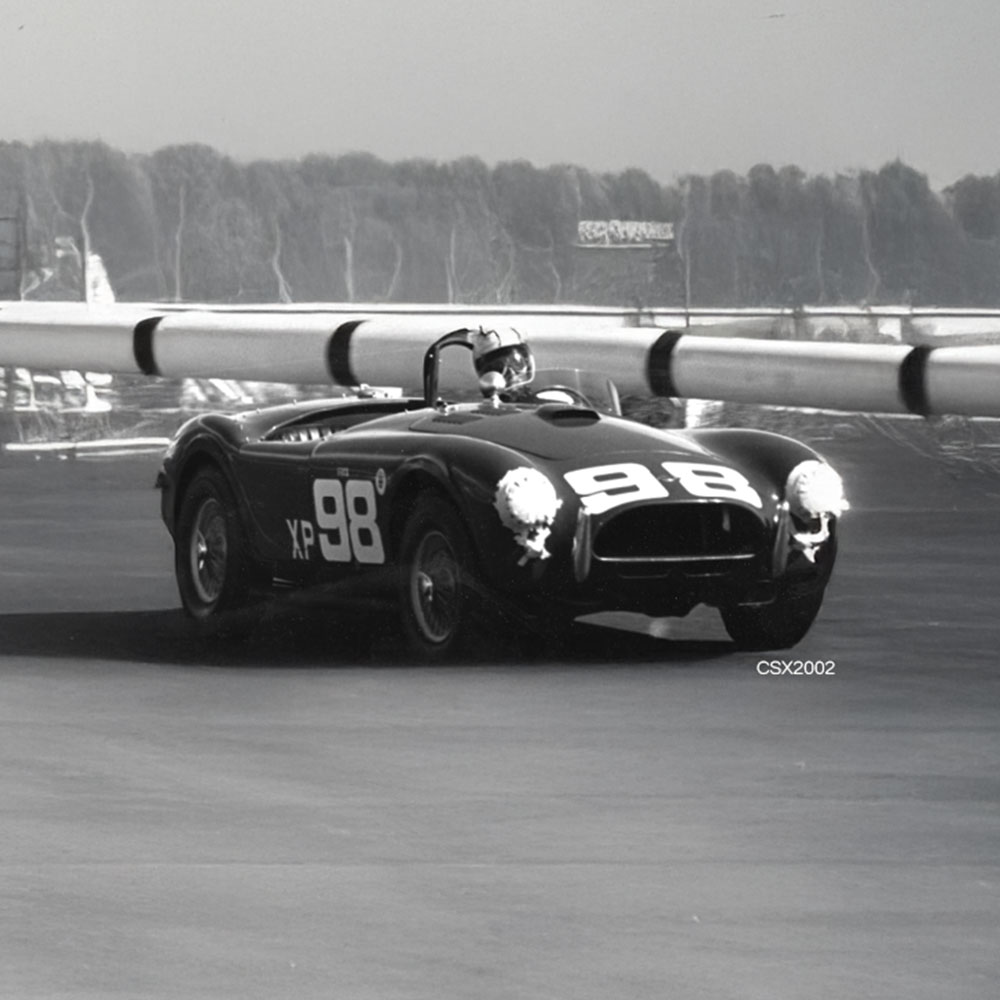
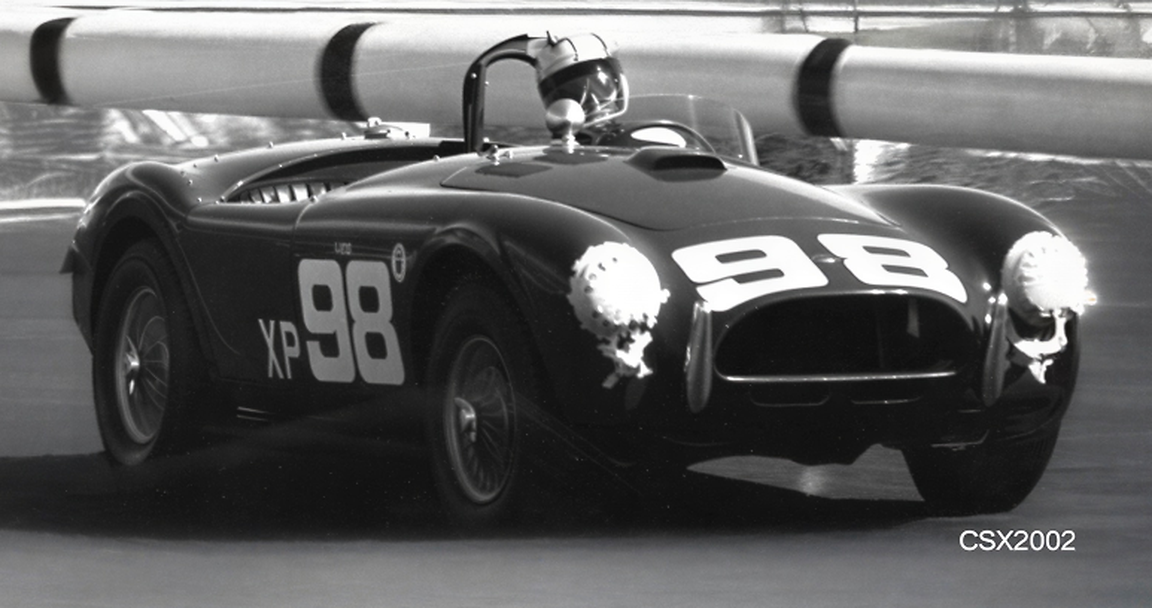
The first race in which a Cobra was entered was at Riverside, California in October of 1962. Carroll Shelby chose a talented west coast hot-shoe named Billy Krause to drive CSX2002. Krause, who had experience driving sports cars as well as modified circle track cars, immediately established a healthy lead over the competition, which included the brand new Corvette Sting Ray coupe. An hour into the race a rear stub-axle sheared and sidelined the car. Krause and the Cobra did not win that day but they did make everyone sit up and take notice of this new car called the Cobra. Two months later, in December, three Cobras were shipped to Nassau. Krause again drove the factory entry, CSX2002. A second factory-built competition car, CSX2009, was given to Holman-Moody to prepare and enter and it was driven by Augie Pabst. The third car, CSX2011, was also a factory-built race car. It had been purchased by independent racer John Everly. Only Everly was successful; he won the 5-lap preliminary event and finished 16th overall in the Tourist Trophy race. These first three race Cobras were built with the following specifications at variance from stock:
260 cubic-inch engine w/12:1 pistons and roller cam
“Nassau” headers and straight side exhaust
Stewart-Warner auxiliary electric fuel pump
Spalding “Flamethrower” ignition
Koni shock absorbers
37-gallon gas tank with competition cap
9-quart oil sump
oil radiator kit
front & rear brake scoops and ducting
alloy brake calipers
additional hood vents
3/4≤ front anti-roll bar
11/16≤ rear anti-roll bar
forward-braced roll bar(CSX2009 received a roll cage by Holman-Moody)
competition front & rear springs (narrower & stiffer)
competition windshield kit (full width)
“quick-open” hood latches
hood scoop (CSX2002 only)
Raydyot rear view mirror
trunk hold-down bungee cord
oil cooler vent under grille opening (CSX2002 only)top edge of driver’s door cut away for additional arm
clearance (CSX2002 only)
RIVERSIDE CARS
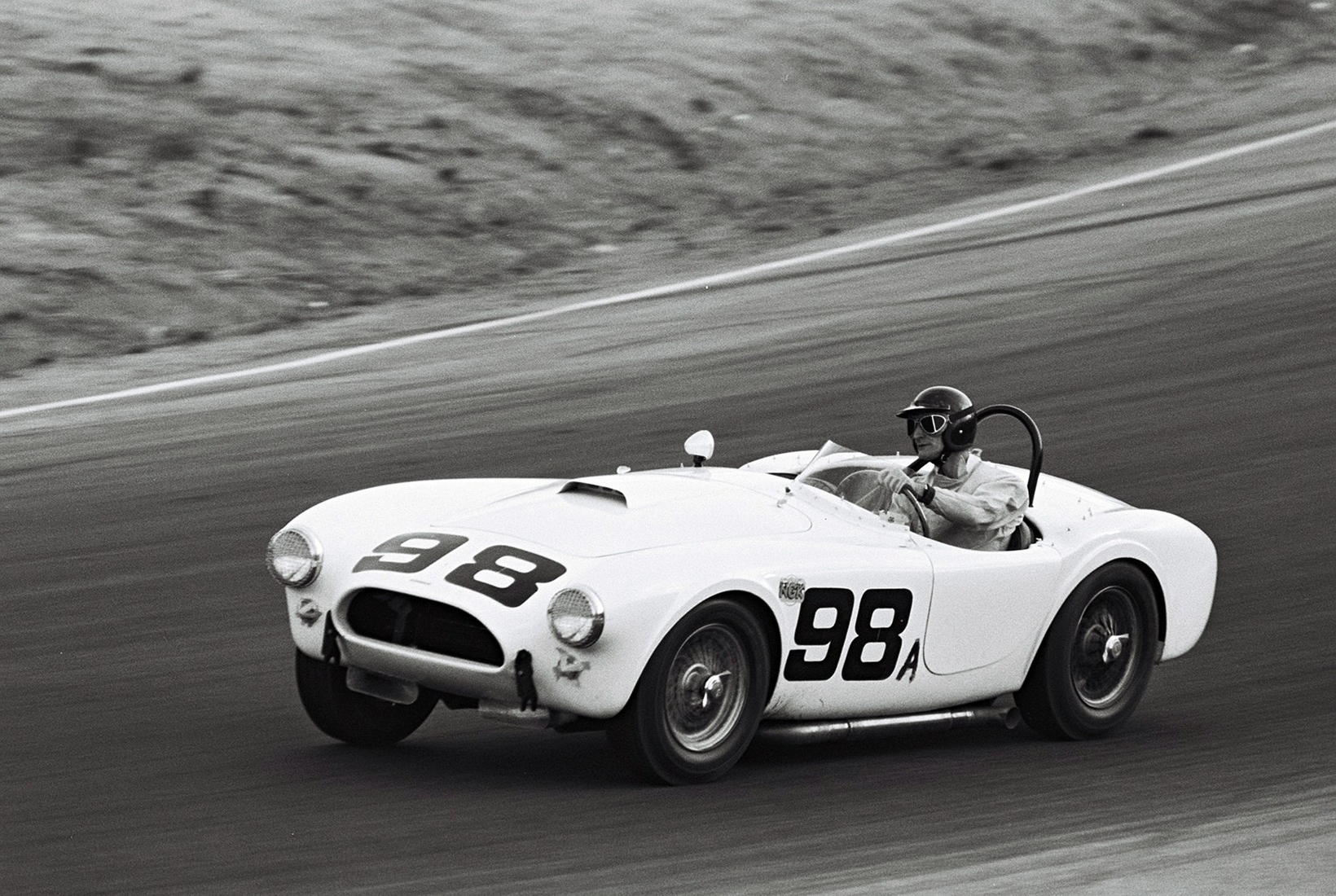
Two more competition Cobras were prepared in time for the SCCA divisional race at Riverside in January, 1963. CSX2026 was driven by Dave MacDonald and a second car, CSX2008, was driven by Ken Miles. MacDonald won the race and gave the Cobra its first competition victory. Not long after that, a Cobra ad appeared in Autoweek advertising Cobra “Riverside Replicas” – competition cars that were identical to the ones Miles and MacDonald had driven at Riverside. The Riverside cars were prepared the same as the Nassau cars, with the following exceptions:
Weber 48IDM carburetors on prototype manifold
steering brace kit
cold air box and air inlet kit
dual brake master cylinders
driver’s door top edge cut away for clearance
cross-mounted radiator header tank
Only one customer “Riverside Replica” was built. It was identical to the other two factory cars, except that Halibrand magnesium wheels (6 1/2≤ front and 7 1/2≤ rear) were offered as options. The “Riverside Replica” price tag was $9,000 (the optional Halibrands added another $500).
DAYTONA CARS
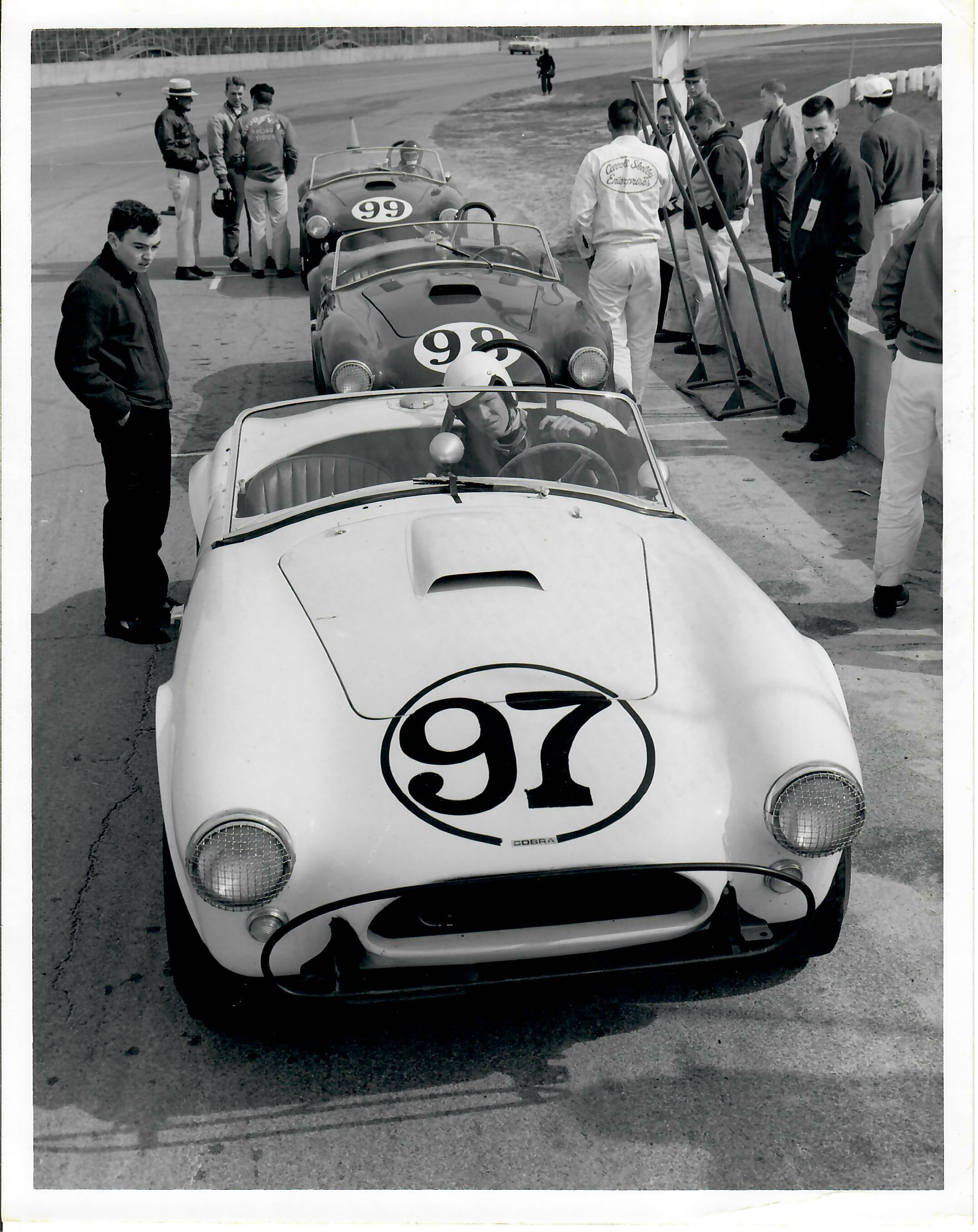
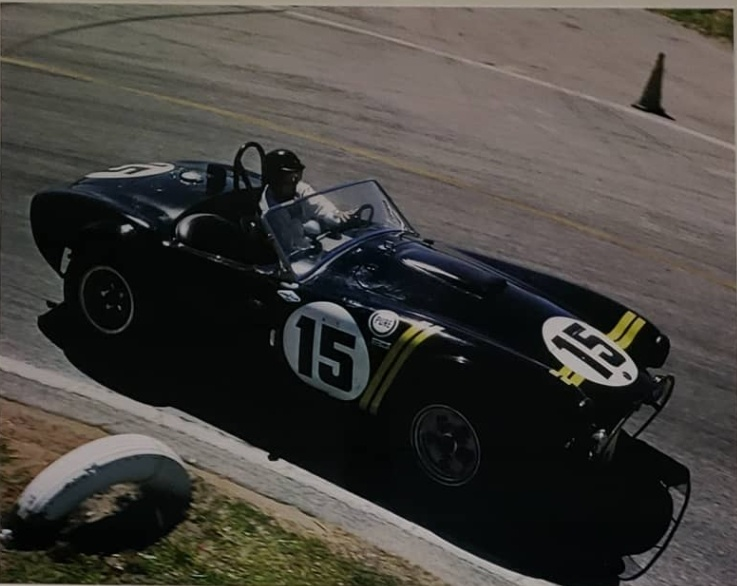
The 1963 Daytona Continental was a three-hour enduro and it was the first time that Cobras were required to compete over an extended period of time. Prior races had been a half-hour. Daytona was also the first FIA event for the Cobras. Three cars were entered representing the factory: Dan Gurney in CSX2002 (powered by an experimental engine with aluminum alloy block and heads at FoMoCo’s request), Dave MacDonald in CSX2026 and Skip Hudson in CSX2014. FIA rules required the use of full windshields, and updates to the Riverside Cars included:
Halibrand magnesium wheels on pin-drive hubs, 6 1/2≤ front and 7 1/2≤ rear (early pattern with five kidney
bean slots per wheel)
front fender “spats” (FIA rules specified that the fenders cover a certain percent of the tire; since the
Cobra body tucked under at the base of the wheel opening, extensions were pop-riveted to the lower rear edge
of the front fender wheel openings)
enlarged rear fender flares
modified steering arms
headlight stone guards
Daytona demonstrated to Shelby what would be required of his cars if they were to be competitive in long distance endurance racing. Gurney’s car blew a freeze-out plug just prior to the start of the race and a new engine was hastily installed. The crew had it running a few seconds after the green flag dropped, putting Gurney a half lap behind at the start. Ignition problems forced his retirement on the 48th lap. Skip Hudson exploded the clutch in his Cobra on 54th lap, jamming the steering and causing the car to nose into a guard rail, putting him out of the race. Dave MacDonald eventually finished 4th Overall.
SEBRING CARS
As Shelby American’s team cars were racing at Daytona, another generation of competition cars was being
built
back in California. Their first outing would be at Sebring, at the end of March. CSX2127 and CSX2128 (joined
two months later by CSX2129) would be used as team cars for the 1963 USRRC series. Eventually CSX2002 and
CSX2026 were sold to independents; the wrecked CSX2014 was parked in a corner at Shelby American and was
later
stripped of its body and used as the platform for the Daytona Coupe plywood buck.
The Sebring cars were based on the Riverside specifications, but they were totally new cars. They were the
first race cars to use the new rack-and-pinion steering as well as the 289 engine. Additional specifications
beyond the Riverside configuration were:
unique dash layout (Sun tach, Stewart Warner amp and fuel pressure gauges)
front brakes with quick-change pins
special hood hold-down clamp at rear center of hood
additional rear fender flaring
fabricated steel header tank, cross-mounted
fuel filler splash guard (retro-fitted to CSX2002 and CSX2026)
differential oil cooler (retro-fitted to CSX2002 and CSX2026)
leading edge of hood skin riveted to hood frame
top edge of driver’s door cut away for additional arm clearance (CSX2127 and CSX2128 only)
Six Cobras were entered at Sebring: five factory entries and one independent. CSX2002, CSX2009 and CSX2026 were joined by CSX2127 and CSX2128. The private entry was CSX2051, a converted street car. CSX2002, CSX2026 and CSX2051 dropped out during the 12-hour race. Three Cobras finished: Phil Hill/Lew Spencer/Ken Miles in CSX2127 – 11th Overall/8th GT; Dan Gurney/Dave MacDonald in CSX2128 – 28th Overall/22nd GT; Peter Jopp/Jocko Maggiacomo in CSX2009 – 38th Overall/32nd GT. From there the three Sebring cars (CSX2129 was completed shortly after the Sebring race) were campaigned in the 1963 USRRC series as well as every SCCA national event that could be squeezed into their schedule. Shelby American emerged as the 1963 USRRC Manufacturers Champion and 1963 driver honors went to team driver Bob Holbert. Ken Miles was runner-up.
LE MANS CARS
After Daytona and Sebring, Shelby knew what he would be up against in FIA races in Europe. Rather than go over with an inexperienced team in untried cars, he opted to wait for the 1964 season when the Cobras would be fully developed and dead reliable – and his drivers would would have even more experience in the cars. Even so, it was difficult not to take a shot at LeMans.
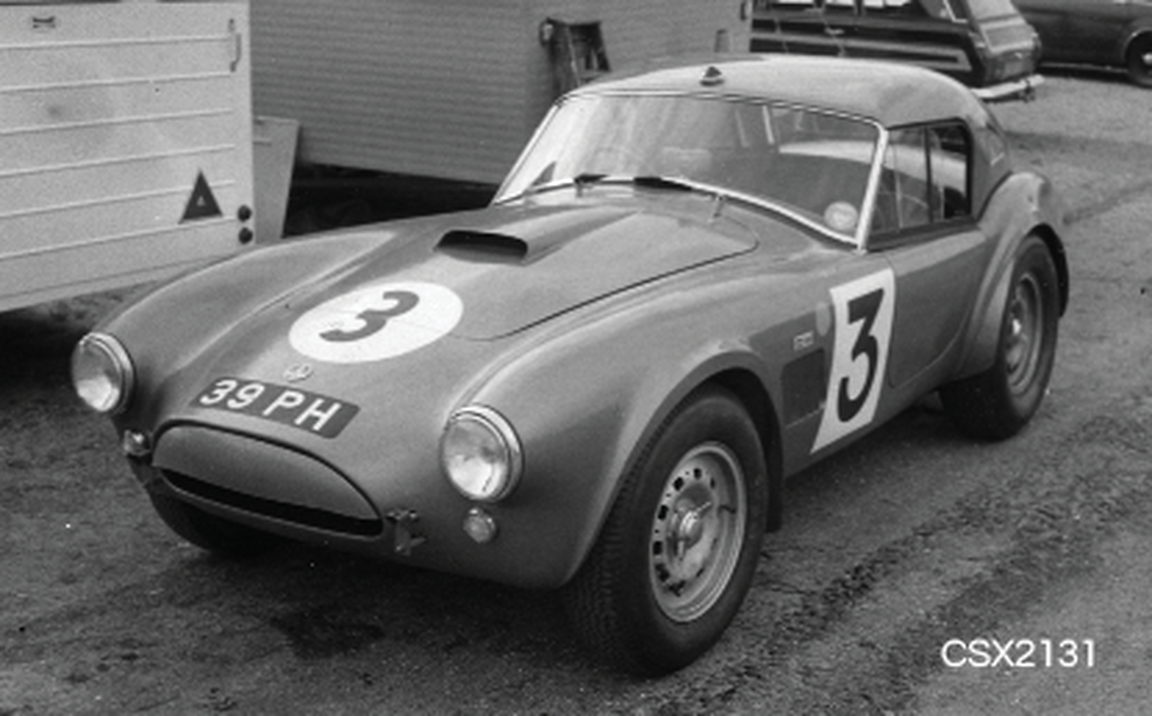
The LeMans 24-Hours was the high point of international endurance racing. No other event received so much publicity around the world. The only thing even close in the United States was the Indianapolis 500. Rather than risk his factory’s name, Shelby got AC Cars to enter one car and had a second car built to be entered by Cobra dealer and racer Ed Hugus of Pittsburgh. AC’s car was CS2131 and the Hugus car was CSX2142. Both cars were built expressly for LeMans and had specially fabricated, removable “fastback” aluminum hardtops which would increase the cars’ ability to attain high speeds along the track’s famous Mulsanne Straight. Because of the elongated tops, these cars had special, shortened trunks which were hinged at the bottom, swinging down to open.
About a month before LeMans another Cobra was raced at Silverstone, England, by John Willment’s race team. It was a competition car built by AC, carrying the serial number CSX2130. Many of the features which would be incorporated onto the LeMans cars would be used: an integral hood scoop (as opposed to one which was riveted on) and large side vents which were needed to keep the batteries from being cooked. The larger vents preceded the smaller ones which would eventually find their way onto all production Cobras. Willment’s car had a standard trunk but later incorporated an aluminum hardtop (as was used on CS2131 and CSX2142). CSX2130 was raced by the Willment Team in England throughout 1964, along with CS2131, which was purchased by Willment following LeMans.
The LeMans prototype (CS2130) and the LeMans cars (CS2131 and CSX2142) were the first Cobras specifically built as competition cars from the time of initial assembly at AC Cars. Specifications at variance from stock were:
removable “fastback” aluminum hardtop with vents and integral fuel filler (not initially used on
CSX2130)
shortened trunk lid to accommodate hardtop (modified standard trunk lid on CS2131; specially fabricated
trunk
lid on CSX2142; standard length trunk lid on CSX2130)
larger diameter gas cap (mounted in roof of hardtop with 3 1/2≤ dia. tube between cap and tank)
“FIA” hood scoop
large side vents in front fenders
enlarged front & rear fenders
extra section of fender added as per FIA requirement(to the rear edge of the front fenders and the front
edge
of the rear fenders)
Dunlop one-piece magnesium wheels (not CSX2130)
37-gallon gas tank
Ford Rotunda tachometer mounted in glove box door
289 Cobra race engine with Lucas generator (supplied by Shelby American, built to same specifications as
Sebring cars)
cross-mounted aluminum Harrison radiator header tank
Harrison radiator
rear-exiting exhaust
The Ed Hugus entry, driven by Hugus and Englishman Peter Jopp, expired after 10 hours with a blown engine. AC’s entry, driven by Scotsman Ninian Sanderson and Englishman Peter Bolton, finished 7th Overall (behind six Ferraris) and 3rd in the GT Class.
LE MANS PRODUCTION CARS
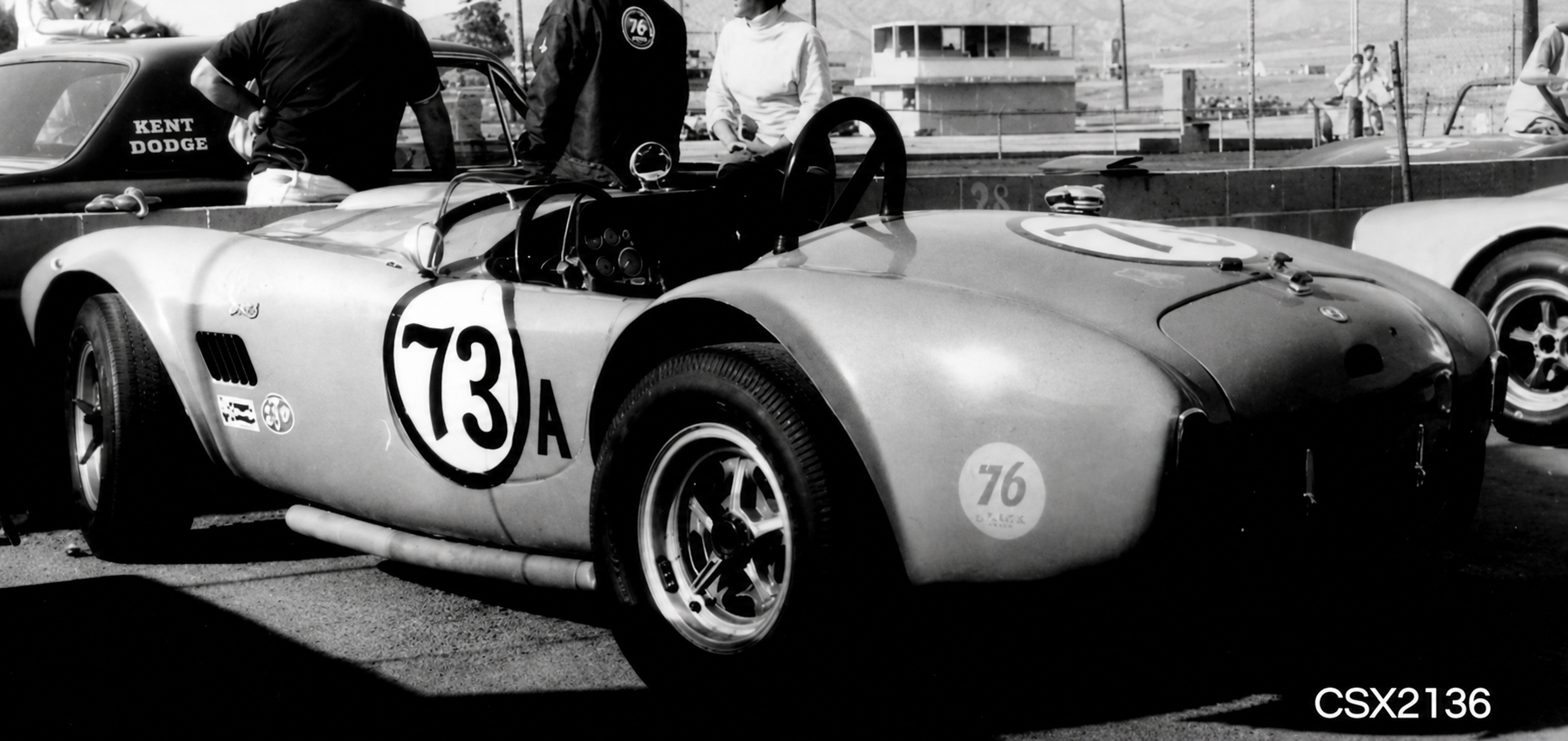
Six race cars based on the LeMans specifications were built shortly after the LeMans Cobras were started. They were referred to as “LeMans Replicas” by the factory. [The term “replica” has become blurred due to its use to describe Cobra kit cars, so we now use the term “LeMans Production Cars” to describe these cars.] The first three (CSX2136, CSX2137 and CSX2138) became factory team cars which were used in the USRRC series during the last half of 1963. After five months of service they were replaced by the next generation of competition cars (FIA and USRRC competition roadsters) and sold to independent racers who campaigned them in 1964 SCCA events as well as in some USRRC races.
Three more LeMans Production Cars (CSX2154, CSX2155 and CSX2156) were completed at AC Cars and shipped to Shelby American where they were sold directly to customers. CSX2154 and CSX2156 were purchased by Don Russell, Jr. and George Butler, respectively, and were campaigned in SCCA events (with Butler additionally running at Daytona in 1964 where he finished 7th Overall/6th GT). CSX2155 was purchased by Tom Hitchcock and set up to comply with FIA regulations. Hitchcock ran at Daytona and Sebring in 1964 (teamed with Prince Tchkotoua, son of the Emperor of Thailand). They finished 10th Overall/8th GT at Daytona and 14th Overall/6th GT at Sebring. The car was then shipped to Europe where Hitchcock/Tchkotoua entered the Targa Florio where they failed to finish. Hitchcock set the GT qualifying record at Nürburgring but crashed during the race.
All of the LeMans Production Cars were shipped to Shelby American in primer. The specifications at variance with stock were:
289 engine with 12:1 compression and roller cam
Weber 48IDM carburetors with Cobra intake
Nassau headers (made by Derrington) and straight, side-exiting exhaust
Stewart-Warner auxiliary electric fuel pump
Koni shock absorbers
37-gallon gas tank (CSX2136 and CSX2137 had one-piece tanks; CSX2138 had 2-piece tank)
3 1/2≤ diameter “Monza” snap-open gas cap
9-quart oil sump
oil radiator kit
front & rear brake scoops
front & rear anti-roll bars
competition front & rear springs
forward-braced roll-over bar
“quick-open” hood latches
Raydyot outside mirror
trunk tie-down bungee cord
Sebring dash gauge layout
16P front brake calipers with quick-release pins
dual brake master cylinders
Halibrand magnesium wheels (6 1/2≤ and 7 1/2≤)
Halibrand magnesium wheels (6 1/2≤ and 7 1/2≤)
pin-drive hubs
front fender FIA “spats”
quick-jacking pads replacing bumpers
cross-mounted steel radiator header tank
ducting to master cylinders
fiberglass racing seat
differential oil cooler
drive shaft safety loop
steel gas pedal
cast iron bellhousing (scattershield)
cast iron transmission case
modified gear shift knob
side vents (production type small vents on CSX2136; large vents on all others)
windshield center brace
leading edge of hood riveted to hood frame
modified steering arms
modified rack-and-pinion unit (grade-8 mounting bolts)
LeMans Production Cars sold to private customers had details at variance with team cars:
two-piece 37-gallon gas tank
standard dash layout except for Sun tachometer and Stewart-Warner fuel pressure gauge in place of clock
bumpers in place of quick-jacking pads
FIA ROADSTERS
In 1964, Shelby set his sights on the FIA World Manufacturers Championship for GT cars and a new generation of Cobra competition roadsters was built expressly for this purpose. Like the LeMans cars, these cars were designated as competition cars at the time of their initial construction at AC Cars. The main differentiating characteristic was wider and more prominently flared rear fenders – necessary because 8 1/2≤ wide rear wheels would be used along with larger tires. The rear fenders required special “cutback” doors. The front fenders were flared out at the top. They still needed the “spats” at the lower rear edge of the front wheel opening but they were reworked when the early cars went to Europe. The later cars received what has come to be known as “427-style” front fenders.
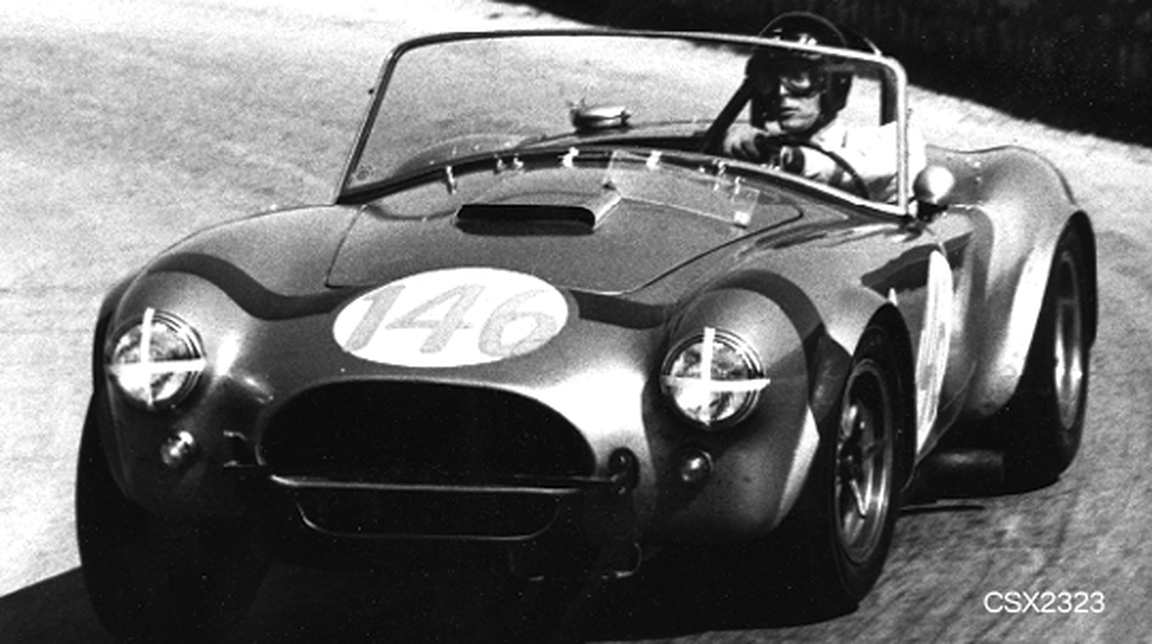
Five FIA competition roadsters were built in 1964. CSX2259 and CSX2260 were completed in time for Daytona, the first FIA event on the 1964 calendar. Dan Gurney and Bob Johnson drove CSX2259 and they finished 4th Overall/4th GT. Jo Schlesser and Jean Guichet in CSX2260 failed to finish. A month later at Sebring, the same two cars were entered (Gurney/Johnson in CSX2259 and Phil Hill/Jo Schlesser in CSX2260). Hill/Schlesser placed 6th Overall/3rd GT. Johnson crashed CSX2259 and the car was so badly wrecked that it was considered beyond repair. It was brought back to Shelby American in Venice and after the handful of salvageable parts were removed, it was cut up and thrown into a dumpster. Lew Spencer and Bob Bondurant drove a third FIA roadster, CSX2301, to 5th Overall/2nd GT.
Two more FIA roadsters were completed by April: CSX2323 and CSX2345. They joined CSX2269 and CSX2301 in Europe. The 1964 Shelby American team color was Viking Blue, a light (almost silver) blue metallic. To help the crews tell the difference between cars, each roadster had a different colored stripe painted across its front fenders and nose: CSX2259 - white, CSX2260 - yellow, CSX2301 - maroon, CSX2323 - orange, CSX2345 - white. Specifications at variance with stock were:
12:1 compression and roller cam
Weber 48IDM carburetors and Cobra intake
Nassau headers (made by Derrington) and straight, side-exiting exhaust
Stewart-Warner auxiliary electric fuel pump
Koni shock absorbers
37-gallon gas tank
3 1/2≤ diameter “Monza” snap-open gas cap
9-quart oil sump
oil radiator kit
front & rear brake scoops and ducting
front & rear anti-roll bars
competition front & rear springs
forward-braced roll-over bar
competition windshield “kit” (hole drilled in brackets)
Raydyot outside mirror
trunk tie-down bungee cord
air intake kit (hood scoop)
unique dash layout (CSX2259 and CSX2260 had tachometer over steering column, one gauge to the left and four
gauges to the right, horizontally, with the speedometer at the extreme right. CSX2301, CSX2323 and CSX2345
had the tachometer over the steering column and two gauges to the left and three gauges to the right, two
set
diagonally with the speedometer at the extreme right; dash painted black
Halibrand magnesium wheels (6 1/2≤ and 7 1/2≤)
pin-drive hubs
quick-jacking pads replacing bumpers
cross-mounted steel radiator header tank
master cylinder heat shield
fiberglass racing seat
electric rear end oil cooler
drive shaft safety loop
fire extinguisher
cast iron bellhousing
steel throttle pedal
leading edge of hood riveted to hood frame
modified steering arms
modified rack-and-pinion unit
alloy brake calipers (CR - front, ORA - rear)
racing distributor & heavy duty starter
degreed crankshaft damper
By the time the European FIA roadsters were completed, specifications had been updated slightly, to include
the following:
Weber 48IDA carburetors (replacing 48IDMs)
Halibrand magnesium wheels (6 1/2≤ and 8 1/2≤)
oil cooler scoop molded into lower valence (rather than riveted on)
altered trunk contour (to accommodate “FIA suitcase” (CSX2259, CSX2260 and CSX2345 only)
Fender Flare Note: the first FIA roadsters (CSX2259 and CSX2260) were built with standard front fenders and
spats and ran that way at Daytona. For Sebring, the flares were pounded out and additional flaring was
riveted
to CSX2259, CSX2260 and CSX2301. The last two cars, CSX2323 and CSX2345, were built with what has come to be
called “427-style” front fenders.
The Cobra FIA competition roadster was the mainstay of Shelby American’s factory FIA team in 1964. One
roadster was destroyed at Sebring in March (CSX2259) and another at Nürburgring in May (CSX2323 – which was
rebodied by AC Cars, shipped to New York less engine, transmission and interior, and subsequently delivered
to
Graham Shaw). This left only three FIA roadsters to run half of the European events. Only one Daytona Coupe
was completed at the beginning of the 1964 season (CSX2287). A second coupe was added to the team for LeMans
(CSX2299) and it also ran at Reims and Goodwood. A third coupe (CSX2300) was entered in the Tour de France
in
September.
Only one roadster competed in Europe during the 1965 season. CSX2345 placed 1st at Oulton Park in England
and at the Rossfeld Hillclimb in Germany. Shelby American entered Daytona Coupes in all other 1965
FIA events
except Bridgehampton, where USRRC roadsters were entered.
USRRC ROADSTERS
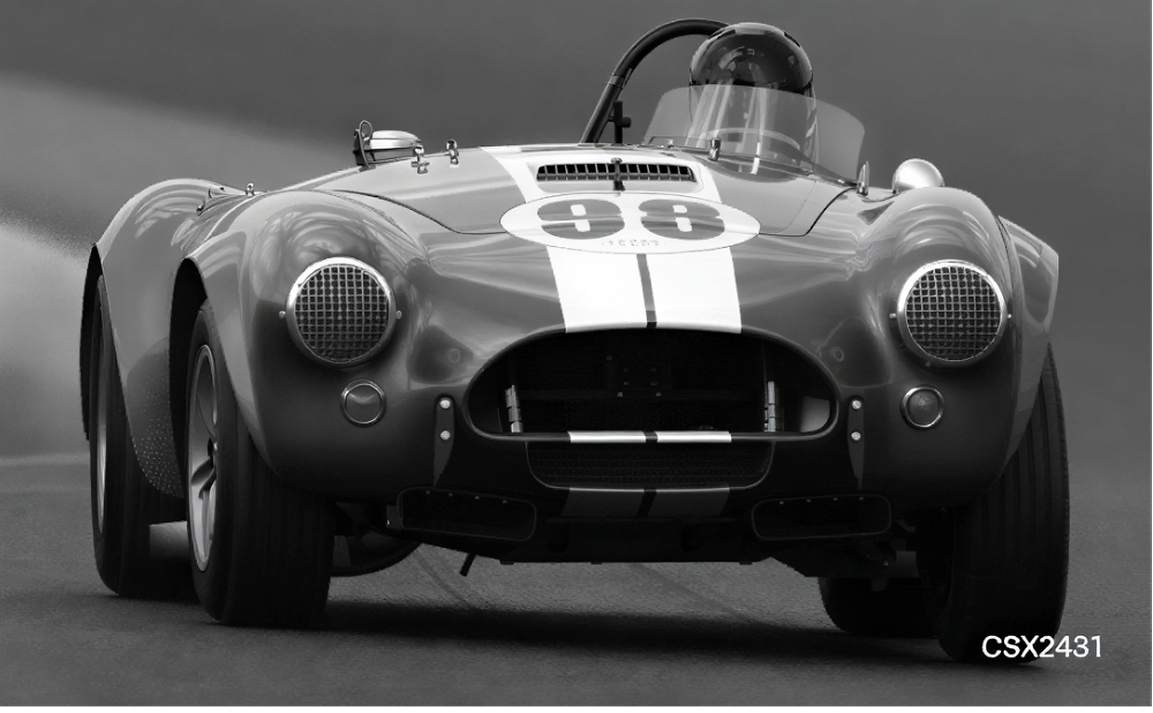
The USRRC team cars were completed near the end of the 1964 season, in time for Shelby American to enter them in the last few races. Ken Miles took the first one that arrived, CSX2431, and modified the suspension using adjustable Heim-joints and relocating the A-arms. Miles ran this car in USRRC events at Watkins Glen, Greenwood (Iowa), Meadowdale (IL), Mid-Ohio, Elkhart Lake and Bridgehampton. He gathered up four 1st Place finishes, one 2nd and one 4th.
By August, two more USRRC team cars, CSX2488 and CSX2494, were completed and were entered at Mid-Ohio and Elkhart Lake. CSX2494 placed 1st in both. All six team USRRC roadsters were brought to Bridgehampton because it was an FIA sanctioned race. Shelby American’s chances of winning the 1964 World Manufacturer’s Championship hinged on the Tour de France (the most difficult event on the FIA calendar; 3 Daytona Coupes entered and none finished). Even though there was no chance for Shelby to win the championship – regardless of how well the Cobras placed at Bridgehampton – he wanted to put on a good show in the U.S. A total of ten Cobra roadsters were entered.
Five USRRC roadsters were completed by mid-summer of 1964 and immediately sold to private parties. They were used primarily for SCCA racing but scattered through their schedules were some USRRC events. These cars were built to the same basic specifications as the FIA roadsters, with a few differences dictated by the rules of whatever series the cars were entered in. Specifications at variance with the FIA specs were:
USRRC CARS
mechanical rear end coolers
modified dash gauge layout
fuel filter shield
dual exhaust pipes on each side (like Daytona Coupe) on two cars
SCCA CARS
standard brakes rather than CR/ORA calipers
small competition windscreen
Halibrand magnesium wheels (6 1/2≤ and 7 1/2≤)
oil cooler scoop delete
electrical differential cooler
dash gauge layout with Sun FX tachometer, mechanical gauges with added fuel pressure gauge
Shelby American withdrew from the USRRC series in 1965, leaving it open to the independents and factory-sponsored drivers like Bob Johnson, Tom Payne and Dan Gerber. The Cobras were overshadowed in this series by the modified sports-racing cars and although there was still a GT class, it no longer had the prestige that had been attached to it the previous year. Things change quickly in racing.
Not that this upset Shelby American’s applecart. By that time they were up to their corporate ears in the Ford GT program as well as campaigning a factory team of Cobra Daytona Coupes in FIA events in the U.S. and Europe. Shelby American had developed the Cobra competition roadster to the point where a continued factory campaign would have been self-defeating. They wisely turned the cars over to independents, who would soon have their hands full taking on Shelby’s final evolution of the Cobra roadster – the 427 Cobra.
PIT STRIPES
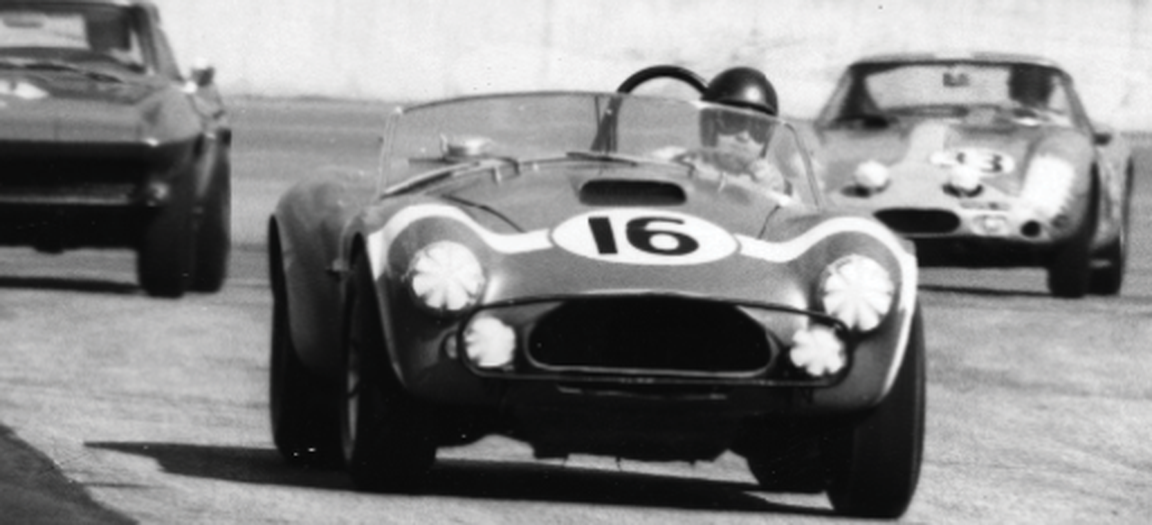
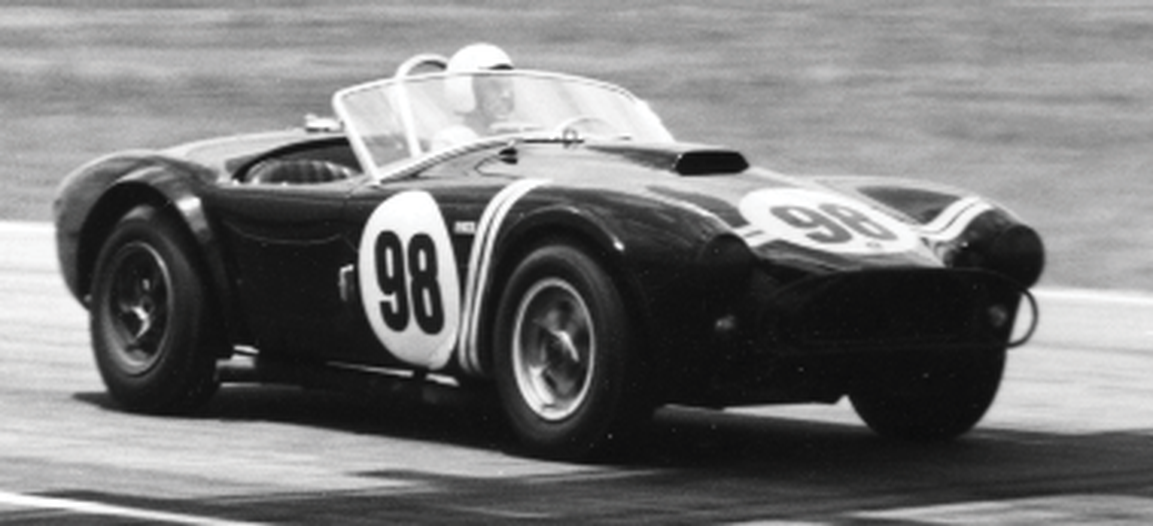
As Shelby American began racing Cobras, when more than one was entered they were usually different colors and the crews had no trouble telling them apart. But as Cobras became more plentiful and more than one in a race were the same color, it became more difficult to differentiate them when they were coming into the pits. The solution to the problem on the Cobra team cars were pit stripes—contrasting colored stripes painted across the front fenders (as on the FIA cars when several raced in 1964) or down the sides of the fenders (as was done to some cars in USRRC events).
Independents rarely used these color schemes because their cars tended to be painted different colors and as independents, they did not race as part of a team. So, by their nature, each car was different.