The 427 Cobra competition car was going to be Carroll Shelby’s secret weapon for 1965. The seed had been planted during a “What if.... ?” session at Shelby American in late 1963. And Ken Miles was the farmer. Before joining Shelby American, Miles had been responsible for a long line of modified sports car “specials” and that was where his talents shone especially bright. Stuffing a big, 427 Ford NASCAR engine into a Cobra chassis appeared to be the quickest solution to the problem of how to make the Cobra go faster.
The reliability of the Cobra’s 289 engine fell off just short of 400 horsepower, and more horsepower would be essential to whip Ferrari on the long European circuits like the Nürburgring, Monza and LeMans. Rumors circulated that Ferrari was building a slippery, mid-engined coupe which would eventually be homologated as competition for the Cobras. There were also whispers about a handful of gutted Corvettes being built in secret by Chevrolet—who was also playing with a big block stock car engine in the 400+ cubic-inch neighborhood. It did not take much of an imagination to picture what such an engine would do in a lightweight Corvette. Miles and the boys at Shelby American had plenty to think about.
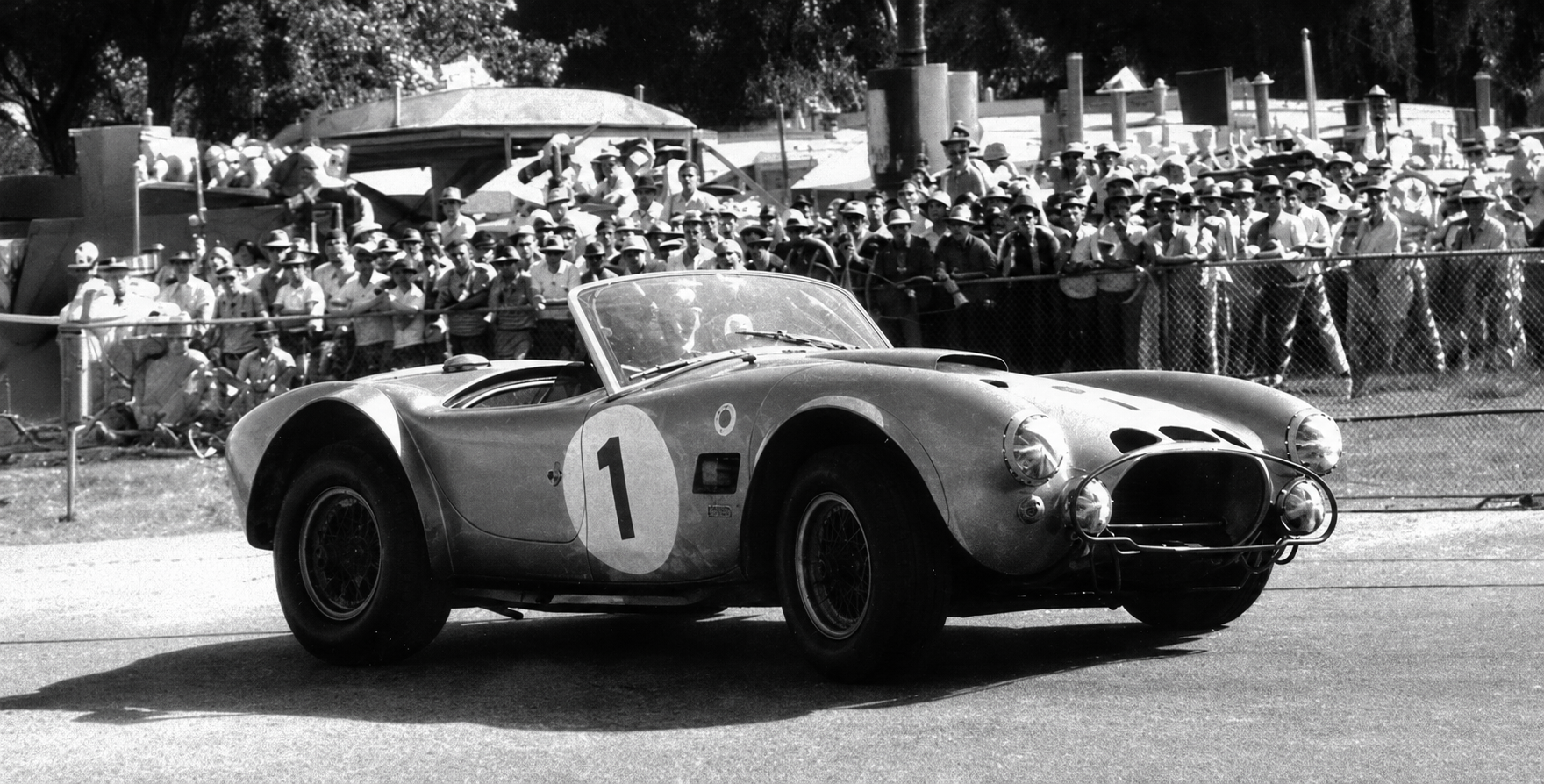
The first foray into the Twilight Zone of 485 horsepower Cobras was at the shank end of 1963. The Shelby team returned from getting its come-uppance in the Bahamas, where nothing went right during the annual “Speed Weeks.” The 1964 FIA season was just around the corner and as good as the latest generation of FIA Cobra competition roadsters looked, Miles could see ahead of them, down the road to Big Block Land. When Shelby caught wind of the idea he smiled and gave the nod to go ahead. Miles lost no time in appropriating a 289 Cobra roadster, CSX2196, which was quickly stripped of its engine. New motor mounts were fabricated which would accept a Ford big block engine. Shelby had been promised an experimental 390 CID aluminum engine which put out 100 more horsepower than the 289 Cobra race engine – while weighing roughly the same. This engine never arrived, due to Ford inside politics: the NASCAR faction did not want to be upstaged by a new engine made available only to Shelby. So a 427 NASCAR side-oiler had to suffice. The small-block Cobra’s suspension was strengthened as best as it could be, and the car was taken out to Riverside for testing. Bondurant and Miles shared the driving. It sounded like nothing on earth and it went like a rocket. But it was more than a little rough around the edges. With so much weight on the front wheels the handling was described as “mushy” and the car quickly acquired a nickname: “The Turd.” Nevertheless, Miles pronounced it worthy of further consideration so they raided the competition parts shelves: pin-drive Halibrand wheels, fender flares to accommodate wider wheels, a hood scoop and as many other competition features as could be grafted onto it. Extra slots were cut into the nose and hood to aid cooling. The Turd was painted light blue metallic and loaded onto the Cobra team transporter along with the rest of the FIA team cars and shipped off to Sebring.
The evolution of the 427 Cobra can actually be told in four photos.
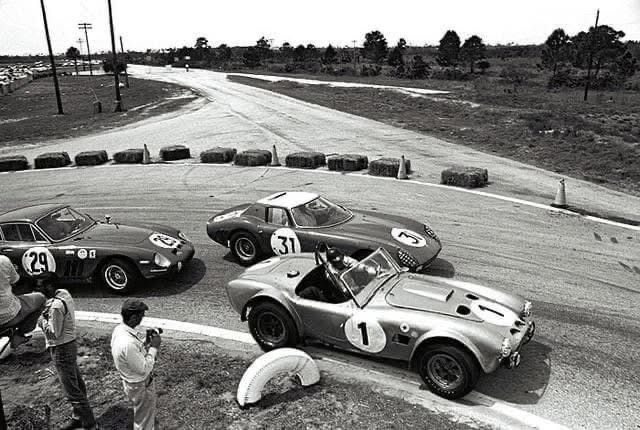
1) The first prototype, CSX2196, was essentially a 289 Cobra with a 427 shoe-horned into the engine bay. It was crude but it showed that 100 more horsepower was the answer.
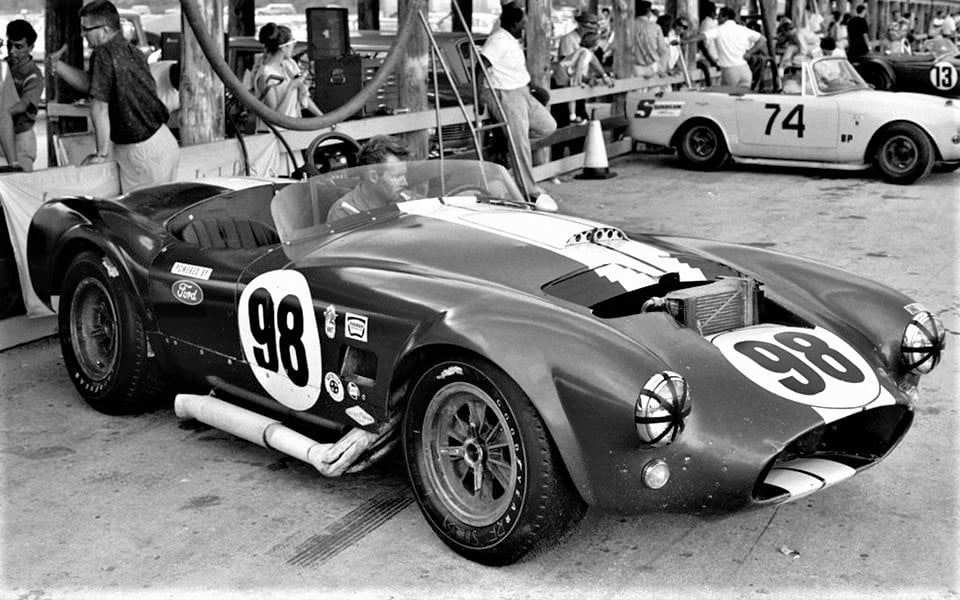
2) Eight months later, CSX2196 appeared at Nassau Speed Week as the Flip Top – a super lightweight “special” designed by Ken Miles as payback for the Corvette Gran Sports that had ambushed the Cobra team a year earlier.
In central Florida, even Miles had trouble handling the beast. It got away from him a few of times in practice and one spin was finally stopped by the only tree on the course. The damage was extensive but not enough to sideline the car. Miles stayed up all night working on it all by himself. By morning it was ready. Not very pretty, but ready. Miles chose as his co-driver a young Shelby American fabricator who aspired to be a driver. It was John Morton’s first big race – and the first time he had ever driven a Cobra! The accident had fractured a few of Miles’ ribs so after a couple of hours in the ill handling car he turned it over to Morton. Some of the higher-ups at Ford were aware of what Shelby’s care and feeding could do to the reputation of an engine and they were anxious to see him do for the 427 what he had done for the 289. They made everyone aware that that they wanted, very badly, to see the car finish. Morton made a valiant effort despite losing his brakes and a bone-jarring vibration, but when a connecting rod finally let go the car had to be retired.
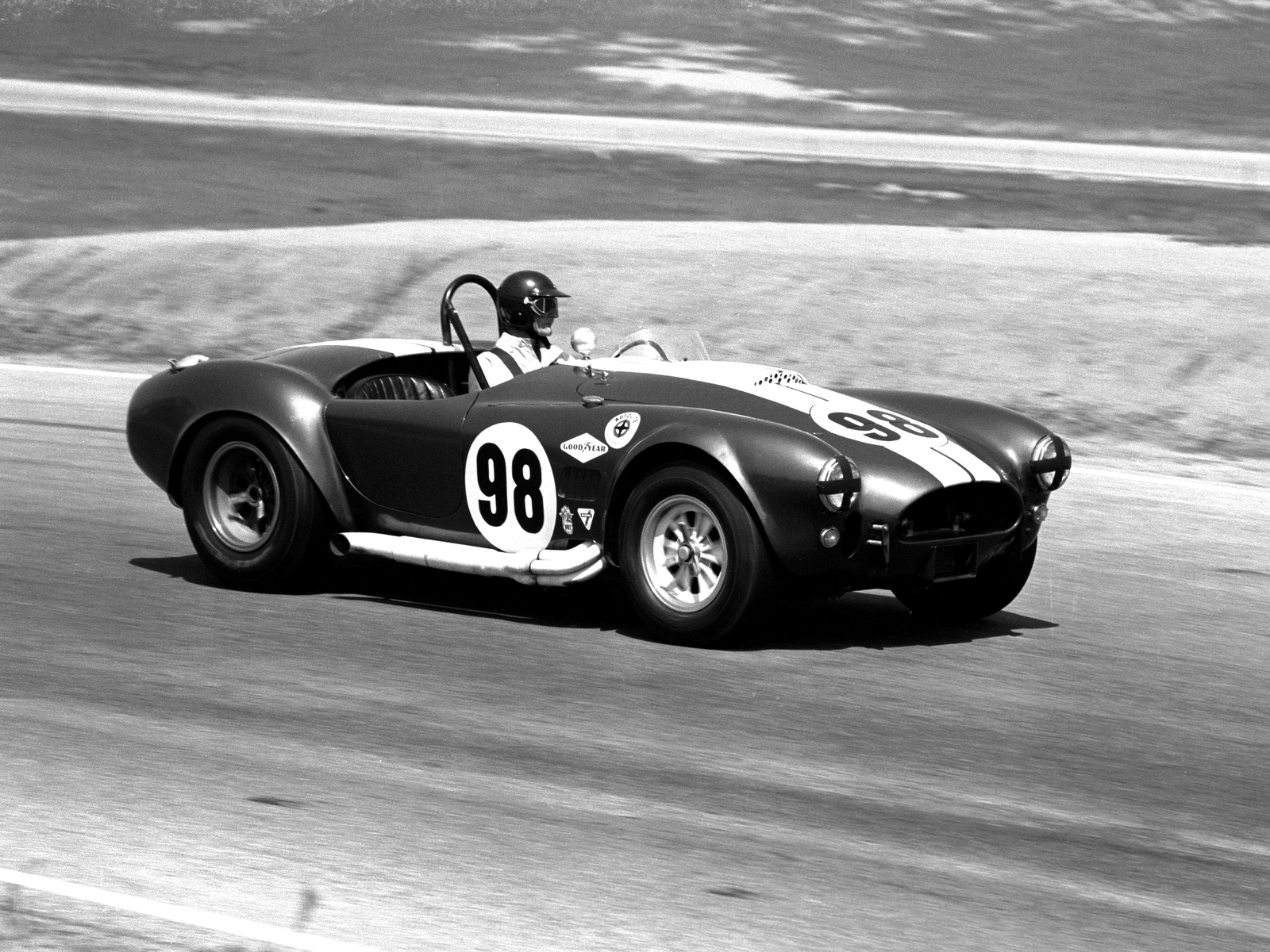
3) The prototype coil spring chassis, CSX3002, became a factory team car and was used to test many of the components and pieces that were standard on the finalized competition models.
Chapter Two in the 427 Cobra story saw Miles once again in the center spotlight. The previous year, at Nassau, GM sandbagged Shelby when they brought three of their secret, lightweight Grand Sport Corvettes and trounced the competition. It was something of a humiliation for the Cobra Team and it was remained fresh in Miles’ mind. He stripped CSX2196 down to its bare frame and turned it into a bare-bones rocketsled – little more than an engine on four wheels. A new body was made of the thinnest aluminum available. It was assembled in two pieces, hinged at the front and the rear so both sections could be flipped open to expose the car’s internals. It was still called “The Turd” by the race mechanics and fabricators but in public it was referred to as the “Flip-Top.” It weighed about 1600 lbs. Shelby finally got hold of one of those experimental aluminum 390s. It was fitted with a set of 58mm IDA Weber down-draught carburetors. This engine, with a compression ratio of 14:1, put out as much horsepower as a full-house 427 high-riser, while weighing no more than a 289.
When Miles showed up with the Flip-Top at Nassau, in November of 1964, everyone else was slack-jawed. And with good cause. By the end of the first lap, Miles had almost a half-mile lead on the rest of the pack which included a pair of the infamous Grand Sports. Although the Flip-Top only lasted 16 laps (a differential pump failed, frying the rear end), Shelby American had given everyone a peek into the future.
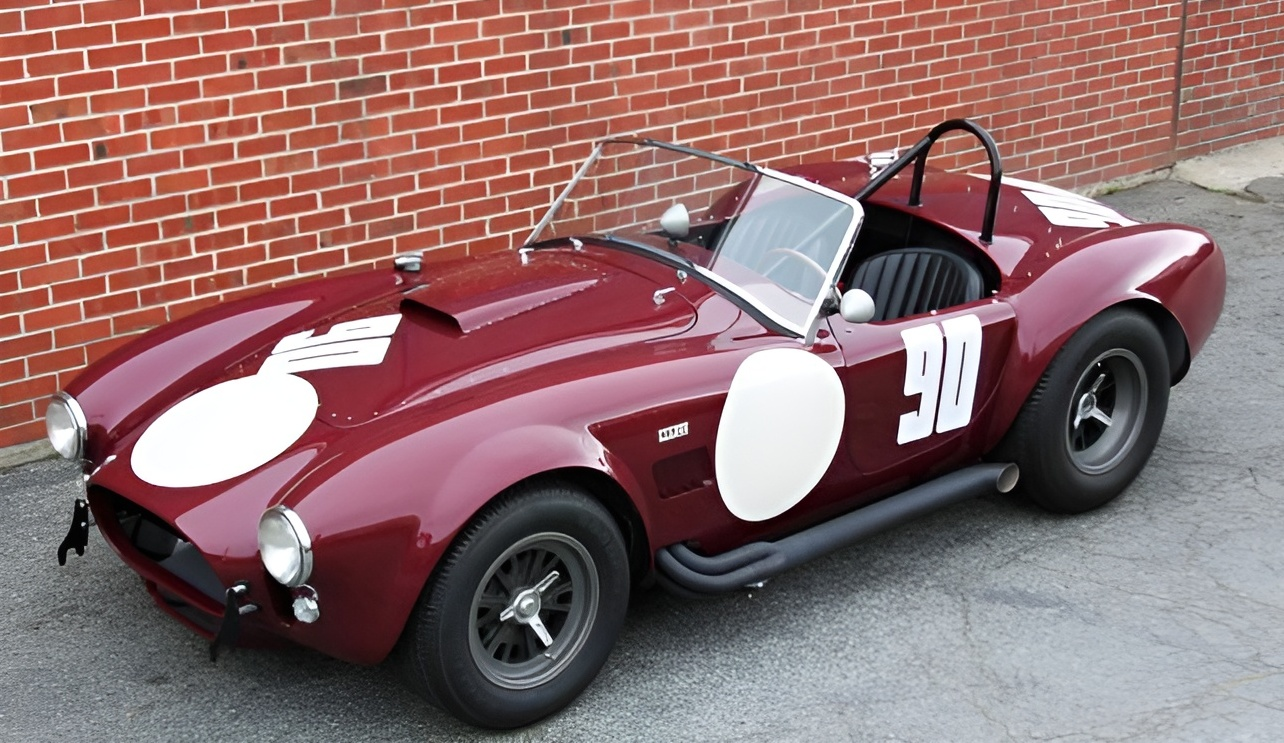
4) The production competition model. CSX3004, a typical example, was used for factory PR photos prior to being shipped to its first owner, Francisco Godia, in Barcelona, Spain.
Construction of the first two coil spring Cobra prototypes was begun at AC Cars, Ltd. in October of 1964. The distance between the two main chassis tubes was widened to accept a big block engine (Shelby had been told the aluminum 390 engine would be made available to him but it was not, so the 427 was used in its place). The larger engine required the entire car to be widened accordingly. New body bucks were needed but had not yet been created, so the body skin for the prototypes was based on the 289 FIA competition car. A pair of two-inch wide strips were added along the top of each fender and one of the cars, CSX3002, even received a 289 nose. The cars were shipped to Shelby as soon as they were finished. Engines and transmissions were installed and one car, CSX3001, was shipped to Ford Styling in Dearborn. The other, CSX3002, was built into Shelby’s 427 Cobra team car (the only one Shelby American would have). It was painted Guardsman Blue with white stripes.
At Ford Styling, the body for CSX3001 was removed and discarded. That means it was set outside next to a dumpster and it promptly disappeared. The rest of the car was used as the platform for a one-off show car which was called the “Bordinat Cobra” in honor of Ford’s head of styling, Gene Bordinat. It received a 289 Hi-Po engine and an automatic transmission and after completion made the rounds of the show circuit before it was returned to Ford Styling. Orders were given to disassemble it prior to having it sent to the crusher, but the next day – before very much work could be done – new orders came down. The car was donated, as it was, to the Dearborn Historical Museum. There it remained, in a warehouse, for forty years. [See details in a separate chapter titled “The Bordinat Cobras.”]
It was decided that a run of 100 427 Cobra competition models would lead production at AC Cars, Ltd. in January of 1965. It was important to meet FIA requirements to get the cars homologated so they could be raced in the 1965 events in Europe. Competition production would be followed by street cars. As the comp cars were shipped to Shelby American (all were shipped by air freight) they were finished off and delivered to the first round of buyers – all racers of some note. But rather than being unleashed in a torrent, the 427 Cobra race cars came out of Shelby American in more of a trickle. When the FIA inspectors arrived at Shelby American on April 29, 1965 only 51 cars had ben completed and were on hand for the inspection. Homologation was denied and this was the reason the 1965 Cobra team raced its previous year’s 289-powered roadsters and Coupes.
Without the need to finish any cars to comply with FIA specifications, they were all built as SCCA racers. However, there proved not to be a large number of buyers waiting with baited breath for the newest Cobra race car. Comp models were essentially built to order and once the initial orders were filled, the remaining cars sat on the tarmac behind one of Shelby American’s hangars parked in long rows. By the end of the 1965 race season, only sixteen 427 Cobra competition models were being actively raced across the United States.
Of this first handful of 427 Cobras, only two were raced in SCCA National events with enough consistency and success to win invitations to the American Road Race of Champions, held in late November, 1965, at Daytona: George Montgomery’s CSX3003 and Hal Keck’s CSX3008. Keck won the A/Production race and became the 1965 SCCA National Champion with Montgomery finishing second. There were nine other cars in the class: five 289 Cobras, 3 Corvettes and one Porsche 904. The 427 Cobra and 289 Cobra were both classed in A/Production until 1967, when the 289 Cobra was dropped down into B/Production (without Weber carburetors, a hood scoop, flared fenders and wider wheels).
CSX3002 was raced in three SCCA events early in the 1965 season. Rather than race towards an invitation to the SCCA run-offs, CSX3002 was used to test many of the competition components that would be used on the production 427 Cobra race cars... and also to get a little publicity for this new model. Bob Bondurant drove it at Green Valley Raceway, in Texas, on February 14, 1965. Phil Hill competed at Candlestick Park in April and Ken Miles was entered in the Riverside USRRC event in May. The car failed to finished each time. In November, Miles and CSX3002 went to Australia where the car was entered in the Australian Tourist Trophy. The Australian event organizers had prevailed on Shelby to send a works car to enliven the proceedings. Miles and his monster Cobra proved to be just the right combination. Although the tight course was not suited to the 7-litre Cobra, Miles held third place, pushing a smaller sports-racing Lotus and a Lola until an upper link of the suspension gave way on the 34th lap. With the bodywork rubbing on the rear tire, it soon blew and Miles was forced to make the final lap of the circuit on three tires and one magnesium wheel.
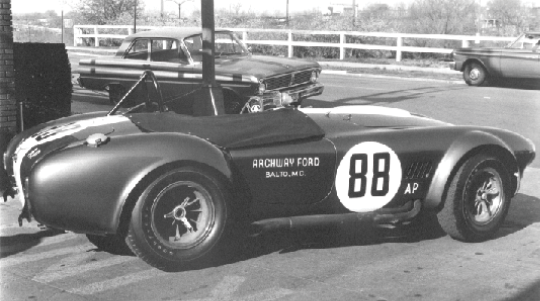
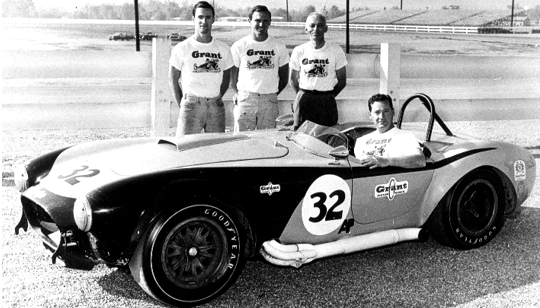
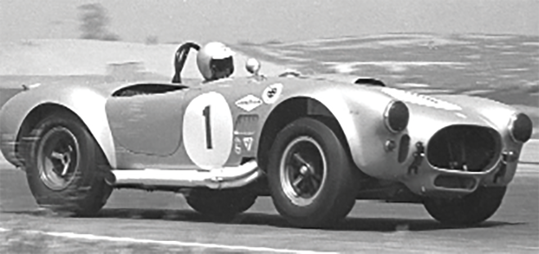
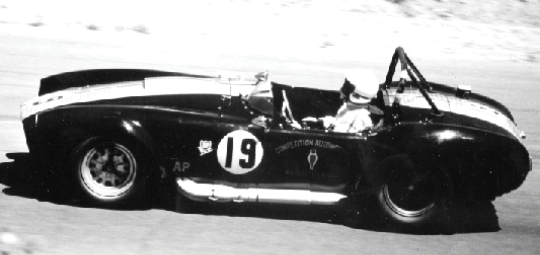
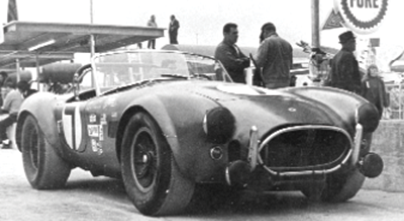
The first 427 Cobra competition car delivered to an SCCA racer was CSX3008 [above left]. It went to Hal Keck. Sponsors were hard to come by in those days – it was still amateur racing. Keck bought the car and Archway Ford in Baltimore, MD provided a truck, tow money and occasionally some parts but “sponsor” did not yet have the significance it does today. CSX3003 [above right] went to George Montgomery of St. Paul, MN. This photo was taken at the 1966 ARRC at Riverside Raceway. Shelby American had a photographer at the track on Saturday and one by one, cars and their teams were brought to one end of the paddock for team photos. Shelby autographed one for each driver and they were mailed out after the event. Lothar Motschenbacher drove just about everything in the 1960s. When the 427 Cobra was introduced, he had to have one and before too long he was behind the wheel of CSX3012 [below left]. Peter Consiglio bought CSX3010 [below right] in 1966 was very successful with it, winning the SCCA National Championship in 1968.
CSX3009 was delivered to Town & Country Ford, near Philadelphia, and picked up by Skip Scott, who raced it under the sponsorship of the Essex Wire Corporation. Scott campaigned the car in the USRRC series but it was no match for the mid-engined sports racers with names like Lola, McLaren and Chaparral. Scott got a Ford GT as soon as one was available (also racing it under the Essex Wire banner). CSX3009 was quickly sold to SCCA racer Ed Lowther, another Pennsylvanian. Lowther soon became the scourge of the SCCA’s Northeast Region, capturing the Regional Championship in 1966. The car got the nickname “Ollie the Dragon” because of its propensity to belch flames through its hood scoop during cold starts. The championship allowed him to compete in the ARRC at Riverside that November and he drove away with the A/Production National Championship. Lowther finished 3rd in the 1967 ARRC and later sold the car to yet another Pennsylvanian, Sam Feinstein. Feinstein began campaigning the car in 1969 and eventually went on to win the National Championship in 1973.
Once the production run of 427 Cobra competition cars was completed at AC Cars, Ltd. (the last complete car was CSX3053, but three additional chassis were built after that), the production line was converted to building street cars. As buyers for full race models materialized, the cars were finished off, painted to the customer’s specifications, and shipped. Buyers for these cars, priced at $9,995, were not exactly tripping over each other in 1965, and the row of uncompleted cars parked behind Shelby American’s hangars did not appear to be getting any smaller. As a result, the 427 “Semi-Competition” model was dreamed up.
Since Shelby American did not seriously campaign a 427 Cobra works car (other than CSX3002, as previously mentioned), there was little ongoing factory development of these cars through 1966 – and virtually none after that. The 427 Cobras that competed in SCCA events between 1965 and 1970 were basically prepared to 1965 racing specifications, with upgrades as allowed by the SCCA’s continually evolving rules. Hal Keck was one of the first to race a 427 Cobra in SCCA events. He won the 1965 A/Production National Championship with CSX3008. He finished 2nd in the Northeast Region in 1967 and 1st in 1968. Ed Lowther began racing CSX3009 in 1966, as mentioned earlier. George Montgomery raced CSX3003, Lothar Motschenbacher drove CSX3012 and Tom Payne drove CSX3020 in SCCA events in 1966. Jack Hurt was Central Division Champion in CSX3028 in 1967. Hurt finished 3rd in 1968. Gene Fisher finished 4th in the Northeast Division in 1968. Charles Lowe finished 5th in CSX3023 in the Central Division in 1968, and Richard Messersmith finished 11th that year in CSX3018.
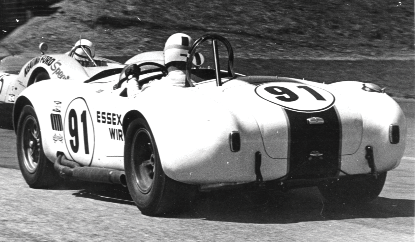
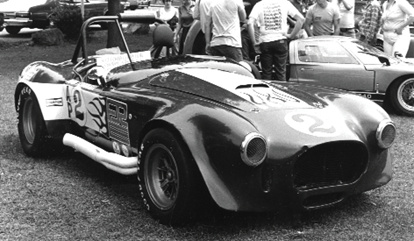
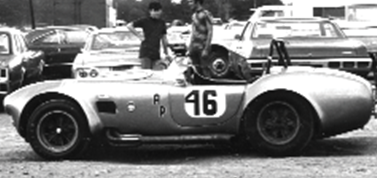
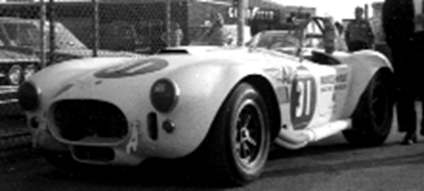
The second 427 delivered was CSX3009 [above left] was purchased by Skip Scott who initially entered it in USRRC events but it was not successful racing against modified sports-racers. It was campaigned through the 1960s and by 1973 it had grown large flares and chin spoiler [above right]. CSX3026 [below left] had also begun its metamorphosis and by 1971 had the required four-point roll bar and wider wheels. CSX3028 [below right] is pictured at the 1966 ARRC. It was driven by Jack Hurt of Indianapolis, IN. Hurt had purchased CSX3012 but it had been rented to MGM for the Elvis Presley movie “Spinout” and had been damaged. MGM agreed to pay a portion of the replacement, which turned out to be CSX3028.
By the early 1970s, all cars had to conform to the SCCA’s safety requirements (such as four-point roll-over bars and fuel cells). Upgrades and modifications which were allowed within the rules (flared fenders, wider wheels and air dams) had to be fabricated by individual owners. There was no longer a factory to turn to.
General Motors, on the other hand, carried on a little-known development program for racing Corvettes and was able to supply parts and technical information to Corvette owners. GM was also able to lobby for rules which were favorable to the Corvette. Each succeeding year saw fewer and fewer Cobras compete in SCCA events, and more and more Corvettes. By the middle of the 1970s, the 427 Cobra, the fastest production car ever sold to the general public, had gone the way of the dinosaurs.
The 427 Cobra was not relegated solely to SCCA amateur competition events. A few cars were campaigned in international, long distance endurance events after 1966, where they were eligible to compete in the FIA’s “Competition GT” class. Hal Keck teamed with Ed Lowther and Oscar Koveleski for Daytona in 1966 but CSX3008 failed to finish the event. No less than four 427 Cobras were entered in the Sebring 12-Hour race a month later: Bob Grossman/Ed Lowther (in Grossman’s CSX3016), John Bentley/Herb Byrne/Arthur Latta (CSX3176) and Hal Keck/Gary Morgan (in Keck’s CSX3008). Tom Payne’s name also appeared on the entry list but his car, CSX3020, was sold prior to the race and was never brought to Sebring. Records show that the Grossman/Lowther car qualified 19th and moved up steadily during the race to finish a respectable 10th Overall. The Bentley/Byrne/Latta car finished 22nd Overall and the Keck/Morgan car failed to finish.
Jo Schlesser drove a 427 Cobra (CSX3013) in the Angolan Grand Prix in Luanda, Angola in late 1965. The car broke an A-arm and retired before the end of the event. Another Cobra, CSX3019, was entered in several European FIA events in 1966 by the American team of Tony Settember and Ed Freutel. They were based in Europe at the time. At the Targa Florio they retired after one lap (a lap there being 44.7 miles long, over rough Sicilian public roads). At the Nürburgring 1000KM, CSX3019 retired after 32 laps (out of 44). The car was also raced at Spa.
In 1966, Bob Bondurant drove CSX3006 in several English events. At the Ilford Films 600 at Wroughtham, in May, Bondurant and David Piper finished 1st Overall. This car was originally left-hand drive but had been converted to right-hand drive. The Herb Byrne 427 Cobra was entered the 1967 Daytona race but failed to finish. The 427 Cobras failed to attain anything near the successes of their small block predecessors, probably because there was no factory team or ongoing development. Private efforts tended to be sporadic and small scale. The cars that did race were, however, incredibly exciting to watch.
Most of the 427 Cobra competition cars were purchased by SCCA racers. The A/Production class was the most prestigious in amateur racing. The cars were loud and fast and the racing was always exciting. National events usually combined A/P, B/P, C/P, A/Sedan and B/Sedan and the big block Cobras and Corvettes were kings. Unlike the Corvettes, which stayed in production and benefitted from continual improvements and upgrades from the factory – which the factory homologated so they became legal modifications – the Cobras received no such benefits. The race cars essentially went out of production by the end of 1966. There were no factory upgrades, no continuing homologation program, and there were no new models. Each year that went by, the Cobras that were racing got a year older.
Owners were allowed to make subtle modifications which evolved year after year and had a cumulative effect. Wheels didn’t jump from 9 1/2˝ to 12˝ all at once. They gained a half an inch a year, with fender flares growing proportionally to cover them. When chin spoilers showed up, they were allowed on cars that never had them. Roll cages were required and they changed the classic look of the Cobra roadster. By the mid-1970s only a handful of 427 Cobras were still racing, and many of those started life as street models. They were no longer competitive with the Corvettes. But the good news was that there was a new kind of racing taking hold: vintage racing. The 427 Cobra competition cars did not need continual upgrades to be competitive. In fact, they went the other way. They were brought back to the way they were when they first started to race – in 1965 and 1966. And as Cobra values began to rise, those at the top of the pyramid were the factory competition models with race history.
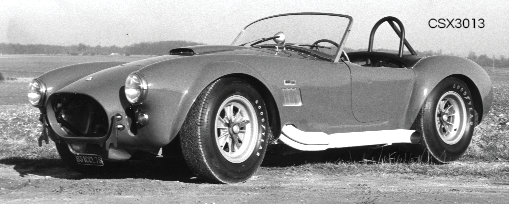
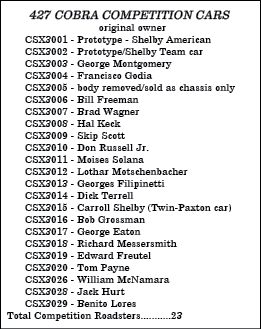
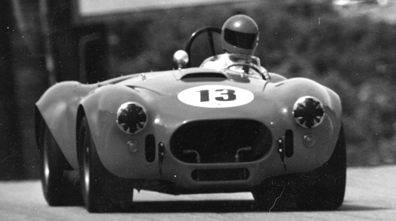
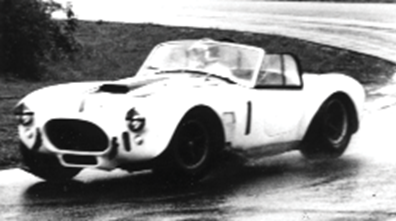
Gentleman Tom Payne drove CSX3020 in U.S. events [above]. 427 comp cars were also raced in Europe. Bob Bondurant drove CSX3006 [above] at Brands Hatch. Herbert Müeller was one of the drivers for Georges Filipenetti’s CSX3013 [above 13]. Ed Freutel and Tony Settember drove CSX3019 [below right] extensively in Europe in 1966. It was a dry-sump car.
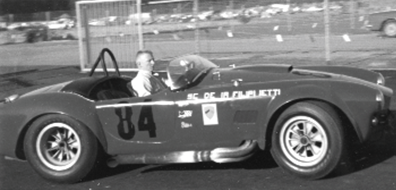
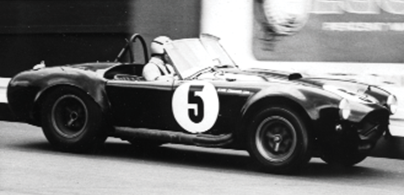
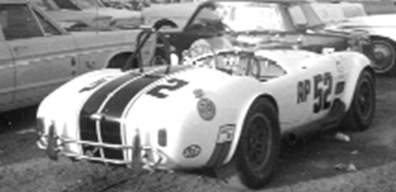
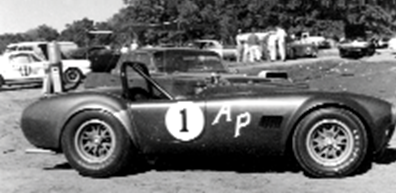
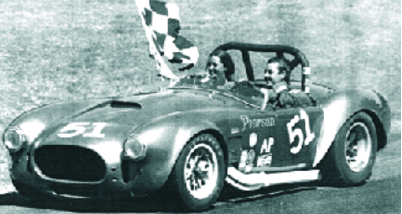
Not all 427 Cobras that raced in 1965-1968 were comp cars and S/Cs. Street cars could be easily modified to race and were quite competitive. CSX3125 [above left] was raced by Ron Lambeth (Dallas, TX) It was sold to John Paul who was NE Divisional Champion in 1968 and 1969. Nick Nero (Kansas City, KS) bought CSX3135 [above right] and because it was a narrow-hipped car had to run 7.5˝ Halibrands all around. Street brakes were adequate but an Aviaid 12-quart pan and oil cooler were installed. Col. Loren Pearson raced CSX3343 [below left] extensively in the midwest in the late 1960s CSX3176 [below right] was purchased by John Bentley and immediately raced at Sebring in 1966, finishing a very credible 22nd overall. What made that finish all the more impressive was that the car ran on Sunburst wheels, with full bumpers and a stock, rear-exiting exhaust.
Join the Cobra Registry Preserve the History & Heritage of the Cobra
Get Started